
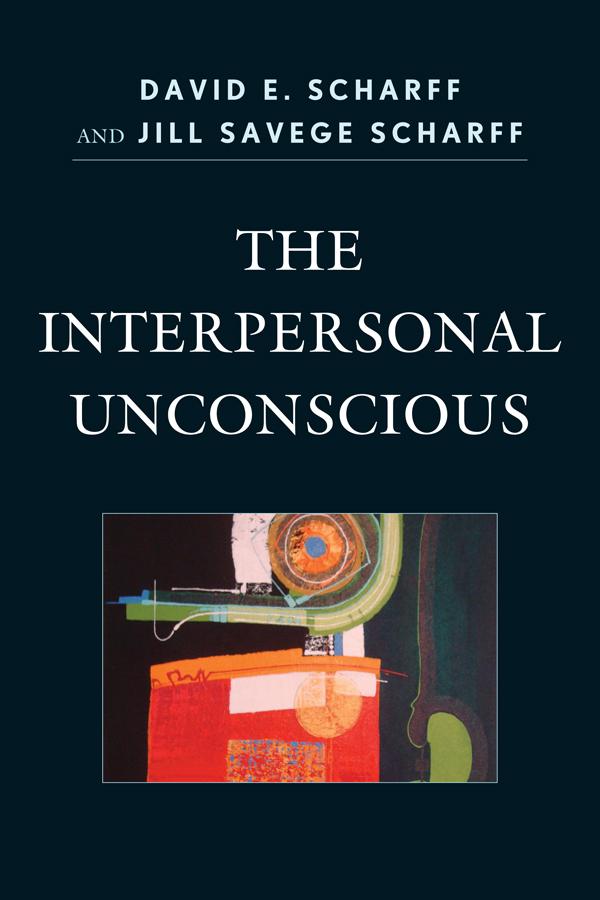
In The Interpersonal Unconscious, the Scharffs explore the construction and expression of the unconscious in interpersonal interaction. The authors draw from individual analysis, conjoint psychotherapy with families and couples, and from the use of group process in teaching. They introduce chaos theory applied to dynamical systems and South American theories of the link and the analytic field, now available in English. Advances in development, neuroscience, ethology, and attachment theory all contribute to their expanded view of the unconscious mind and its relationships. In turn, the Scharffs' view of the interpersonal unconscious revises current views of development, clinical theory, and unconscious psychic organization.
The unconscious is not individual as Freud thought: It is fundamentally interpersonal at the same time that it feels intensely our own. We live in an unconscious field. Each of us contributes to it, and each is structured and enriched by it. We are social creatures, not only in our behaviors and interactions, but in the deepest recesses of our minds.
We can no longer conceive of the unconscious as an individual property according to Freud's original topographic and structural theories. Even though the individual unconscious is unique, paradoxically it is also shared in reciprocal interactions with intimate partners, work groups, and social groups. In this state of mutual influence, our unconscious minds are constantly under construction across the life cycle.
The unconscious is not individual as Freud thought: It is fundamentally interpersonal at the same time that it feels intensely our own. We live in an unconscious field. Each of us contributes to it, and each is structured and enriched by it. We are social creatures, not only in our behaviors and interactions, but in the deepest recesses of our minds.
We can no longer conceive of the unconscious as an individual property according to Freud's original topographic and structural theories. Even though the individual unconscious is unique, paradoxically it is also shared in reciprocal interactions with intimate partners, work groups, and social groups. In this state of mutual influence, our unconscious minds are constantly under construction across the life cycle.
Betaal eenvoudig met kaart, Klarna, Apple Pay of Google Pay. Niet tevreden? Je hebt altijd 14 dagen bedenktijd. Lees meer in onze voorwaarden. Heb je vragen, mail ons dan via hello@memmo.org.
Memmo maakt studeren makkelijker – waar je ook bent ter wereld. Wij brengen je cursusboeken en slimme studietools samen op één plek: samenvattingen, quizzen, podcasts en flashcards. En Ted, je studievriend die antwoord geeft op alles wat je je afvraagt. Meer dan 50.000 studenten studeren hier al – gebouwd om je sneller te laten leren en minder stress te geven.