
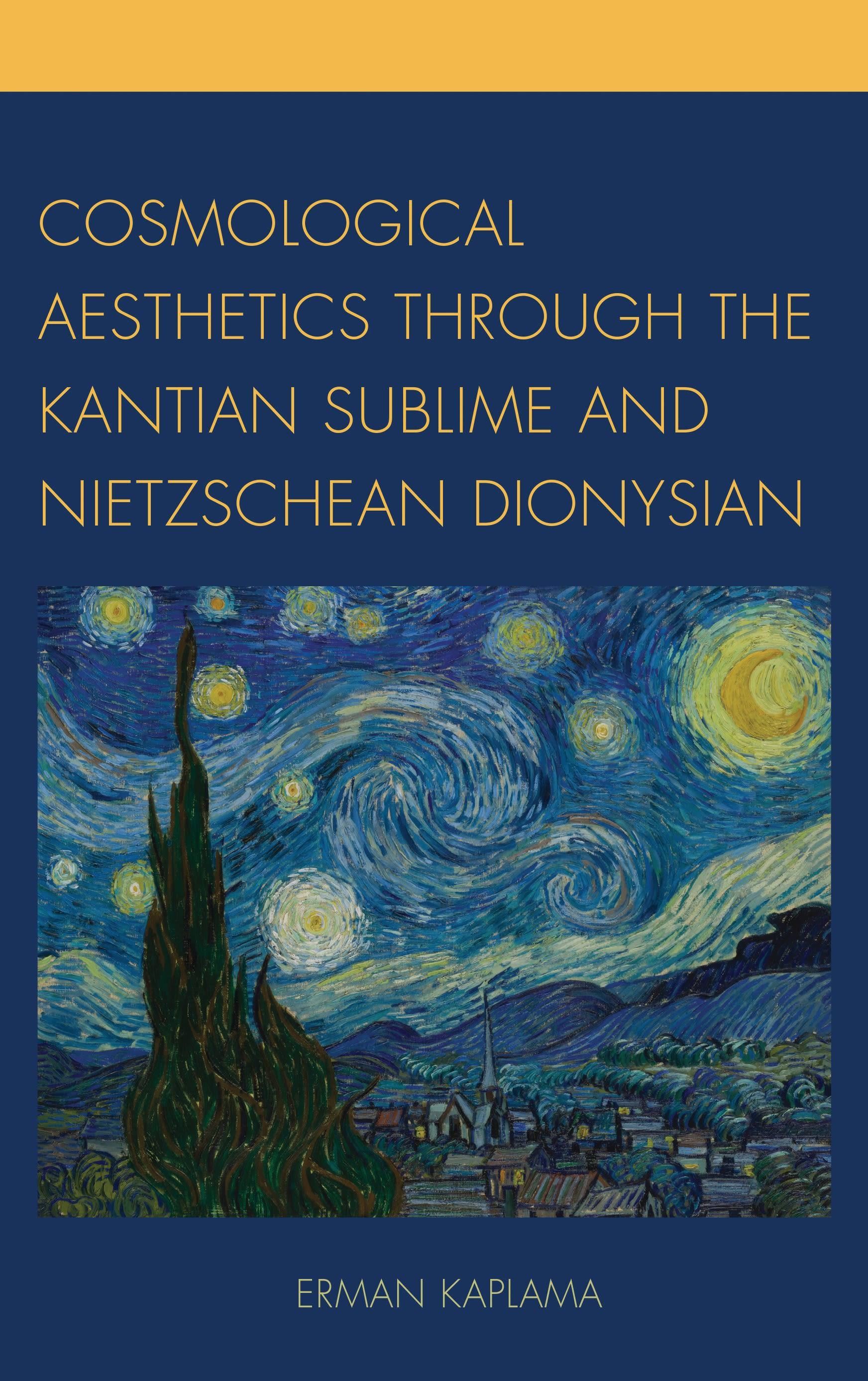
Erman Kaplama explores the principle of transition (Übergang) from metaphysics to physics developed by Kant in his unfinished magnum opus, Opus Postumum. Drawing on the Heraclitean logos and Kant’s notions of sense-intuition (Anschauung) and reflective judgment, Kaplama interprets transition as an aesthetic principle. He revises the idea of nature (phusis) as the principle of motion referring to Heraclitus’ cosmology as well as Heidegger’s and Nietzsche’s lectures on the pre-Socratics. Kaplama compares the Kantian sublime and Nietzschean Dionysian as aesthetic theories representing the transition from the sensible to supersensible and as cosmological theories that consider human nature (ethos) as an extension of nature. In light of such Nietzschean notions as the eternal recurrence and will to power, the Dionysian is shown to trigger the transition by which nature and art are redefined. Finally, Cosmological Aesthetics employs the principles of transition and motion to analyze Van Gogh’s Starry Night in an excursus.
Pagina's: 222
Categorie: Filosofi
e-ISBN: 9780761862598
Verzendgewicht: 1.2 kg
Verzending binnen: 1-2 dagen
Betaal eenvoudig met kaart, Klarna, Apple Pay of Google Pay. Niet tevreden? Je hebt altijd 14 dagen bedenktijd. Lees meer in onze voorwaarden. Heb je vragen, mail ons dan via hello@memmo.org.
Memmo maakt studeren makkelijker – waar je ook bent ter wereld. Wij brengen je cursusboeken en slimme studietools samen op één plek: samenvattingen, quizzen, podcasts en flashcards. En Ted, je studievriend die antwoord geeft op alles wat je je afvraagt. Meer dan 50.000 studenten studeren hier al – gebouwd om je sneller te laten leren en minder stress te geven.