
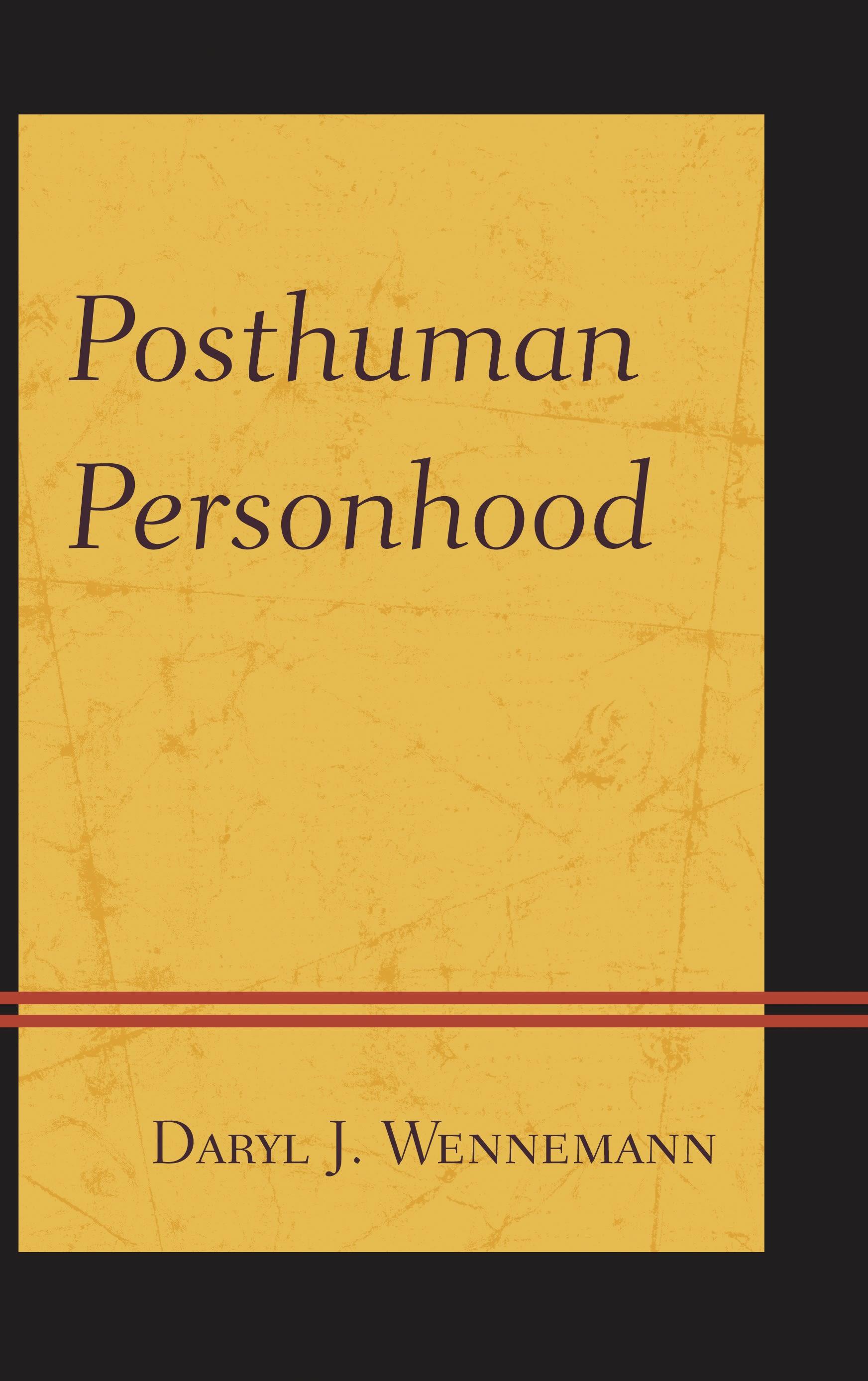
Posthuman Personhood takes up the ethical challenge posed by Francis Fukuyama’s work, Our Posthuman Future. Daryl J. Wennemann argues that the traditional concept of personhood may be fruitfully applied to the ethical challenge we facein a posthuman age. He draws upon Wilfrid Sellars’ treatment of the concept of a person within “the manifest image of man in the world.” Sellars proposed that we develop a stereoscopic view of reality that includes both a scientific understanding of the world and a meaningful place for persons living and acting in the world. Following Mary Anne Warren, Wennemann develops a distinction between two meanings of the term “human,” a biological meaning and a moral meaning, and maintains that all (biologically) humanbeings are persons. But, it is not necessarily the case that all personsmust be (biologically) human. After drawing on a contemporary version of Kant’s distinction between a theoretical possibility and a real possibility, the book posits that biologically non-human persons like robots, computers, or aliens are a theoretical possibility but that we do not know if they are a real possibility. Finally, Wennemann describes an ethic of self-limitation for the posthuman age.
Pagina's: 170
Categorie: Filosofi
e-ISBN: 9780761861041
Verzendgewicht: 1.2 kg
Verzending binnen: 1-2 dagen
Betaal eenvoudig met kaart, Klarna, Apple Pay of Google Pay. Niet tevreden? Je hebt altijd 14 dagen bedenktijd. Lees meer in onze voorwaarden. Heb je vragen, mail ons dan via hello@memmo.org.
Memmo maakt studeren makkelijker – waar je ook bent ter wereld. Wij brengen je cursusboeken en slimme studietools samen op één plek: samenvattingen, quizzen, podcasts en flashcards. En Ted, je studievriend die antwoord geeft op alles wat je je afvraagt. Meer dan 50.000 studenten studeren hier al – gebouwd om je sneller te laten leren en minder stress te geven.