
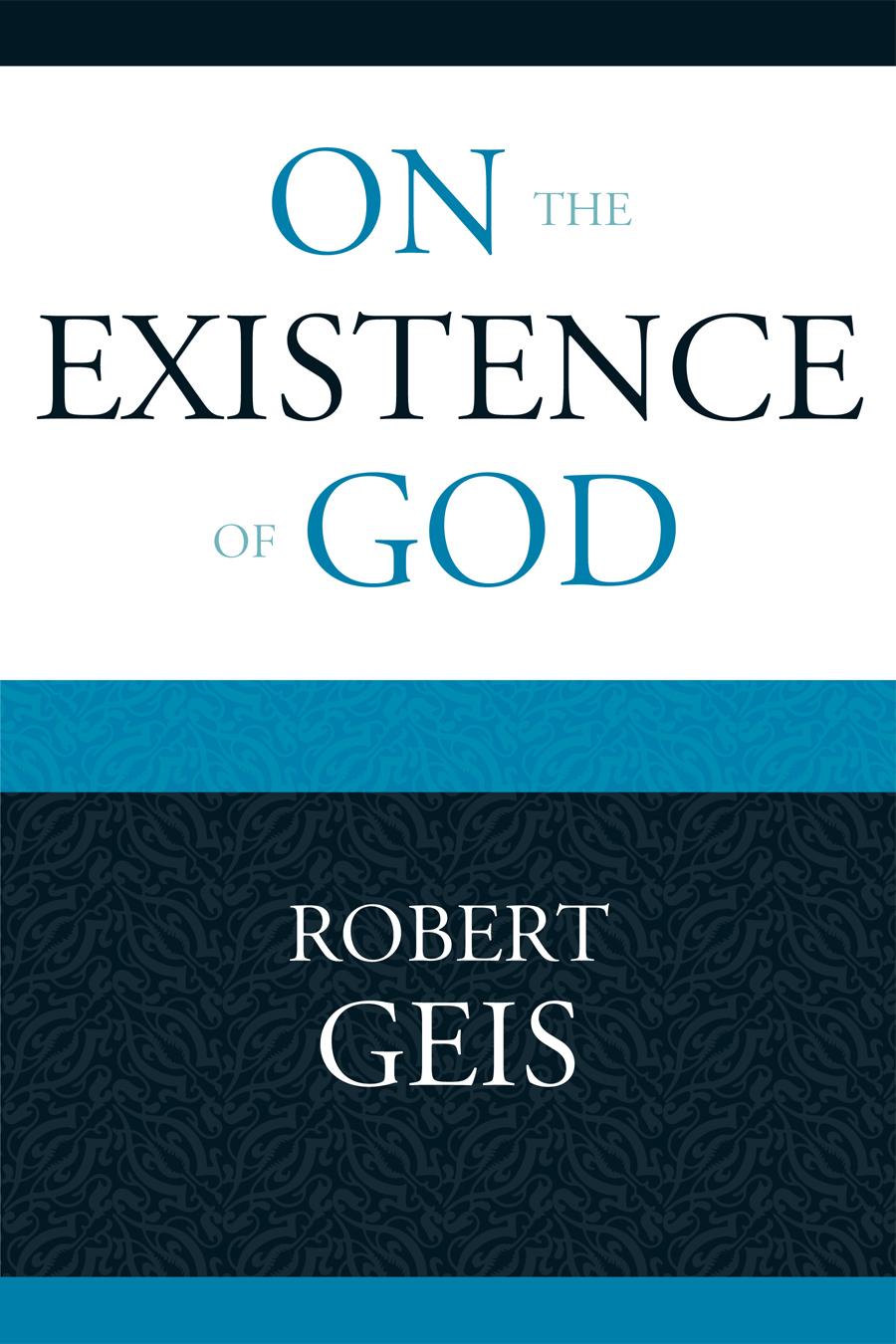
The existence of God raises many questions. Geis' work addresses queries that arise from the gratuitous claims of empiricism in Hume, unfounded assumptions in Kant, presumptions of science, and the improbabilities it identifies in Darwinism. By focusing on number and proportion as intrinsic to material and atomic constituency, any argument from chance as instrumental to the cosmos' emergence and sustainability becomes invalidated. The arguments from contingency and the nature of intellection provide more clarity than the ratio Anselmi for acknowledging a transcendent causality, taking the reader to the problem of evil and present-day nihilism. These concepts present great, but not insuperable, difficulty for theism. Geis argues that evil, when one uses it as a means to the betterment of oneself and the world, takes on the rôle commensurate with the doctrine of an omnibenevolent deity. Accordingly, one can use evil as a means to a greater understanding of God, Providence, and eternal destiny.
Betaal eenvoudig met kaart, Klarna, Apple Pay of Google Pay. Niet tevreden? Je hebt altijd 14 dagen bedenktijd. Lees meer in onze voorwaarden. Heb je vragen, mail ons dan via hello@memmo.org.
Memmo maakt studeren makkelijker – waar je ook bent ter wereld. Wij brengen je cursusboeken en slimme studietools samen op één plek: samenvattingen, quizzen, podcasts en flashcards. En Ted, je studievriend die antwoord geeft op alles wat je je afvraagt. Meer dan 50.000 studenten studeren hier al – gebouwd om je sneller te laten leren en minder stress te geven.