
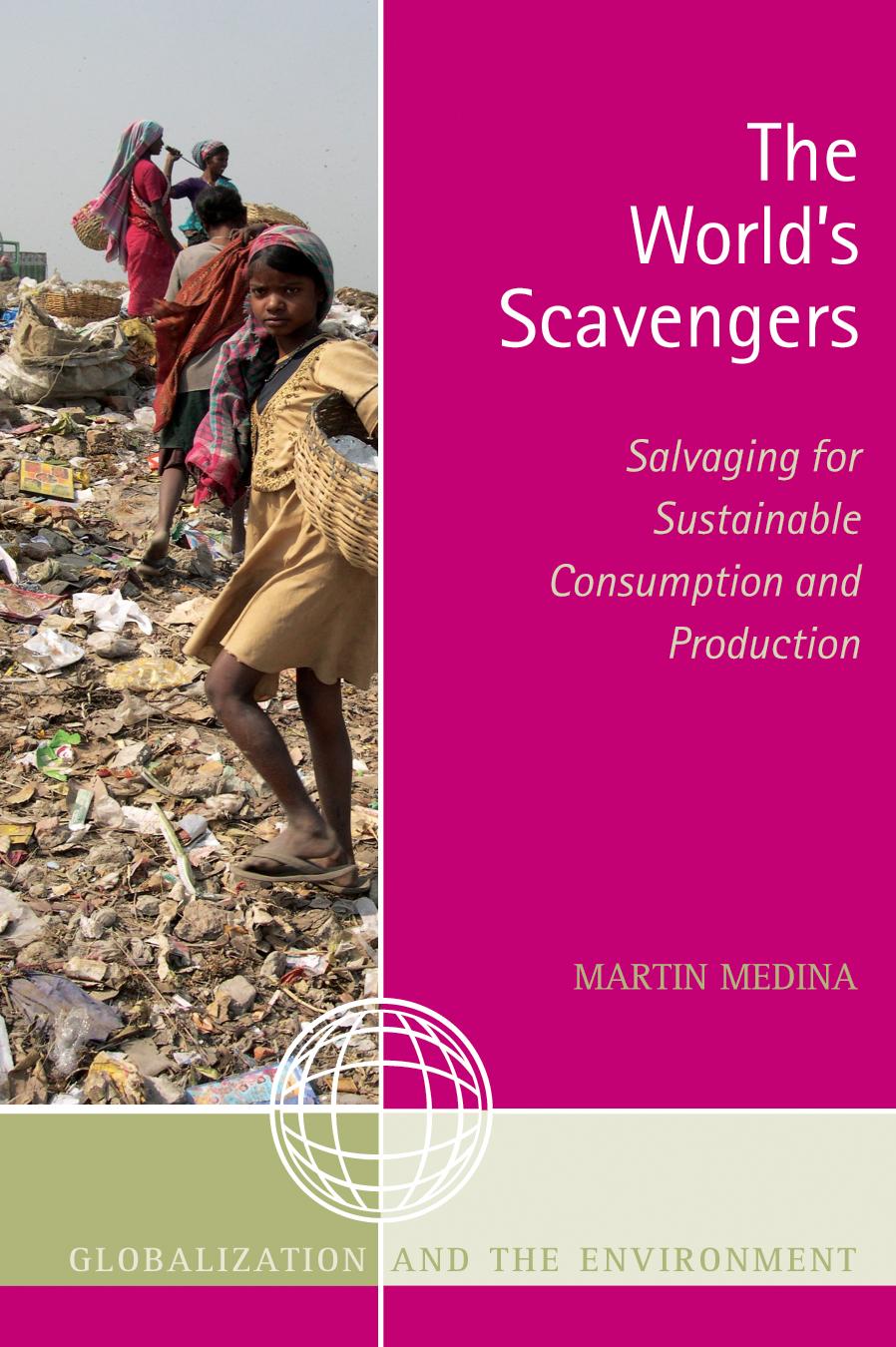
Medina tells us that up to 2% of the urban population in developing countries survives by salvaging materials from waste for recycling, which represents up to 64 million scavengers in the world today. Despite these numbers, we know little about the impact of scavenging on global capitalism development. The author examines its historical evolution and its linkages with formal and informal sector productive activities in capitalist and non-capitalist societies, in case studies from Mexico, Brazil, Colombia, Argentina, Egypt, the Philippines, and India. His new book radically alters popular perceptions on scavenging, demonstrating that many widely-held beliefs are wrong: scavenging is not primarily the activity of the poor nor is it a strictly marginal activity; the economic impact of scavenging is significant and can increase industrial competitiveness; and scavenging can be compatible with a sustainable waste management system. Scavenging represents an adaptive response to poverty, yet at the same time it can be a resource to cities, whose contributions should be recognized and understood.
Pagina's: 318
Categorie: Ekonomi & Utveckling
e-ISBN: 9780759113800
Verzendgewicht: 1.2 kg
Verzending binnen: 1-2 dagen
Betaal eenvoudig met kaart, Klarna, Apple Pay of Google Pay. Niet tevreden? Je hebt altijd 14 dagen bedenktijd. Lees meer in onze voorwaarden. Heb je vragen, mail ons dan via hello@memmo.org.
Memmo maakt studeren makkelijker – waar je ook bent ter wereld. Wij brengen je cursusboeken en slimme studietools samen op één plek: samenvattingen, quizzen, podcasts en flashcards. En Ted, je studievriend die antwoord geeft op alles wat je je afvraagt. Meer dan 50.000 studenten studeren hier al – gebouwd om je sneller te laten leren en minder stress te geven.