
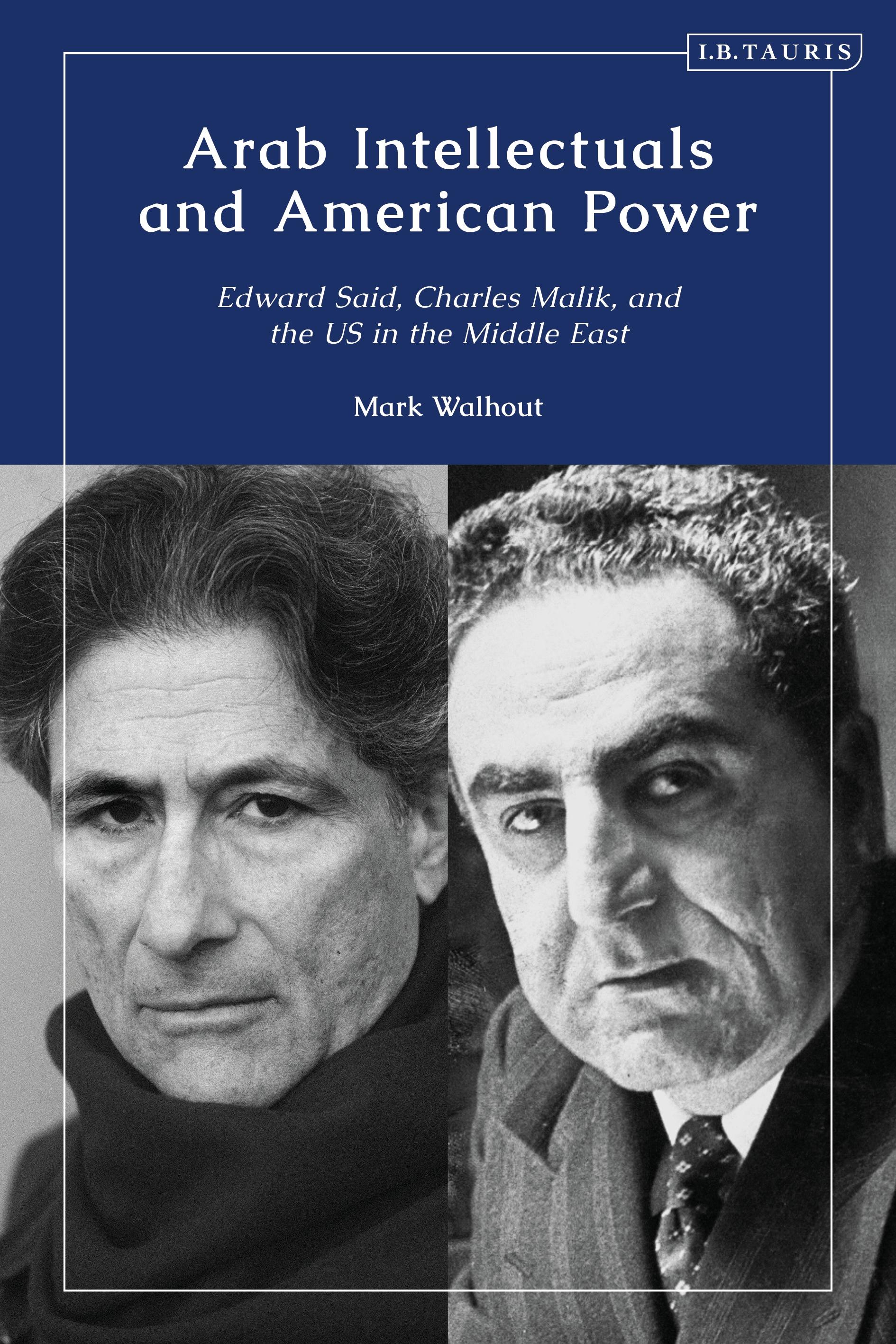
Edward Said, the famous Palestinian American scholar and activist, was one of the twentieth century's most iconic public intellectuals, whose pioneering and – to some – controversial work on Orientalism shaped Middle Eastern and postcolonial studies and beyond. But how exactly did he arrive at his famous maxim to 'speak truth to power'?
This dual biographical study examines the lives of Edward Said and the eminent Lebanese philosopher and diplomat Charles Malik, a distant relative 30 years his senior whom Said knew from childhood as “Uncle Charles.” To Said, Malik was no ordinary relative; in his memoir, he called Malik “the great negative intellectual lesson of my life”, and was to describe him as “an ideal as I was growing up” only to later claim Malik “went through an ugly transformation that I could never come to terms with”. M.D. Walhout charts the development of these two remarkable figures, reconstructing in the process the way in which American power in the Middle East came to have a defining effect on Arab intellectuals in the twentieth century. Exploring issues of religion and nationalism, Walhout shows how Said came to reject much of what Malik stood for: Christian faith, hardline anti-Communism and the benign nature of American power. He argues that the example of Malik was instrumental in the development of Said's later belief that the true vocation of the intellectual was not to compromise with power, but to resist it.
This dual biographical study examines the lives of Edward Said and the eminent Lebanese philosopher and diplomat Charles Malik, a distant relative 30 years his senior whom Said knew from childhood as “Uncle Charles.” To Said, Malik was no ordinary relative; in his memoir, he called Malik “the great negative intellectual lesson of my life”, and was to describe him as “an ideal as I was growing up” only to later claim Malik “went through an ugly transformation that I could never come to terms with”. M.D. Walhout charts the development of these two remarkable figures, reconstructing in the process the way in which American power in the Middle East came to have a defining effect on Arab intellectuals in the twentieth century. Exploring issues of religion and nationalism, Walhout shows how Said came to reject much of what Malik stood for: Christian faith, hardline anti-Communism and the benign nature of American power. He argues that the example of Malik was instrumental in the development of Said's later belief that the true vocation of the intellectual was not to compromise with power, but to resist it.
Betaal eenvoudig met kaart, Klarna, Apple Pay of Google Pay. Niet tevreden? Je hebt altijd 14 dagen bedenktijd. Lees meer in onze voorwaarden. Heb je vragen, mail ons dan via hello@memmo.org.
Memmo maakt studeren makkelijker – waar je ook bent ter wereld. Wij brengen je cursusboeken en slimme studietools samen op één plek: samenvattingen, quizzen, podcasts en flashcards. En Ted, je studievriend die antwoord geeft op alles wat je je afvraagt. Meer dan 50.000 studenten studeren hier al – gebouwd om je sneller te laten leren en minder stress te geven.