
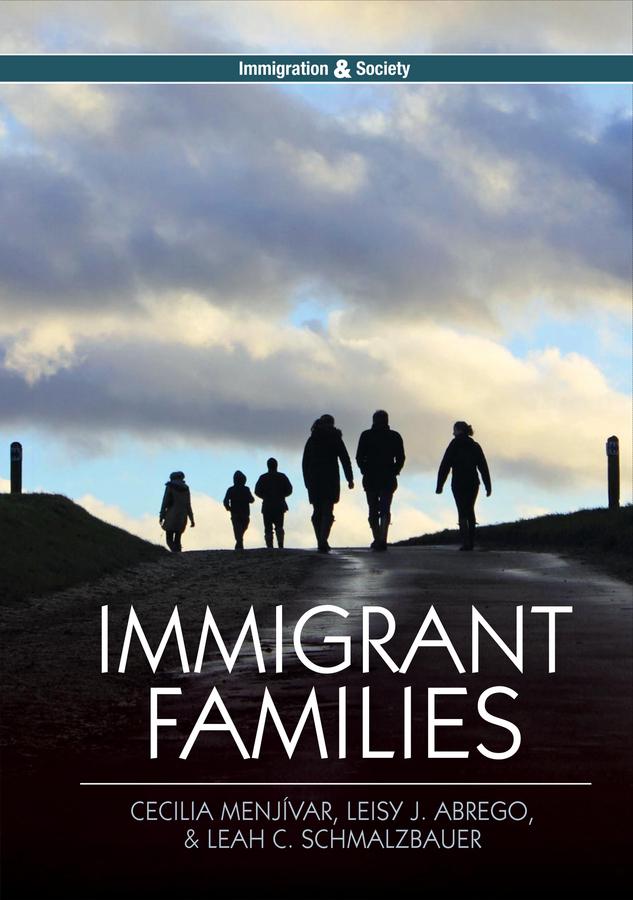
Immigrant Families aims to capture the richness, complexity, and diversity that characterize contemporary immigrant families in the United States. In doing so, it reaffirms that the vast majority of people do not migrate as isolated individuals, but are members of families.
There is no quintessential immigrant experience, as immigrants and their families arrive with different levels of economic, social, and cultural resources, and must navigate various social structures that shape how they fare. Immigrant Families highlights the hierarchies and inequities between and within immigrant families created by key axes of inequality such as legal status, social class, gender, and generation. Drawing on ethnographic, demographic, and historical scholarship, the authors highlight the transnational context in which many contemporary immigrant families live, exploring how families navigate care, resources, expectations, and aspirations across borders. Ultimately, the book analyzes how dynamics at the individual, family, and community levels shape the life chances and wellbeing of immigrants and their families.
As the United States turns its attention to immigration as a critical social issue, Immigrant Families encourages students, scholars, and policy makers to center family in their discussions, thereby prioritizing the human and relational element of human mobility.
There is no quintessential immigrant experience, as immigrants and their families arrive with different levels of economic, social, and cultural resources, and must navigate various social structures that shape how they fare. Immigrant Families highlights the hierarchies and inequities between and within immigrant families created by key axes of inequality such as legal status, social class, gender, and generation. Drawing on ethnographic, demographic, and historical scholarship, the authors highlight the transnational context in which many contemporary immigrant families live, exploring how families navigate care, resources, expectations, and aspirations across borders. Ultimately, the book analyzes how dynamics at the individual, family, and community levels shape the life chances and wellbeing of immigrants and their families.
As the United States turns its attention to immigration as a critical social issue, Immigrant Families encourages students, scholars, and policy makers to center family in their discussions, thereby prioritizing the human and relational element of human mobility.
Betaal eenvoudig met kaart, Klarna, Apple Pay of Google Pay. Niet tevreden? Je hebt altijd 14 dagen bedenktijd. Lees meer in onze voorwaarden. Heb je vragen, mail ons dan via hello@memmo.org.
Memmo maakt studeren makkelijker – waar je ook bent ter wereld. Wij brengen je cursusboeken en slimme studietools samen op één plek: samenvattingen, quizzen, podcasts en flashcards. En Ted, je studievriend die antwoord geeft op alles wat je je afvraagt. Meer dan 50.000 studenten studeren hier al – gebouwd om je sneller te laten leren en minder stress te geven.
Misschien vind je dit ook leuk
Koop het boek0