
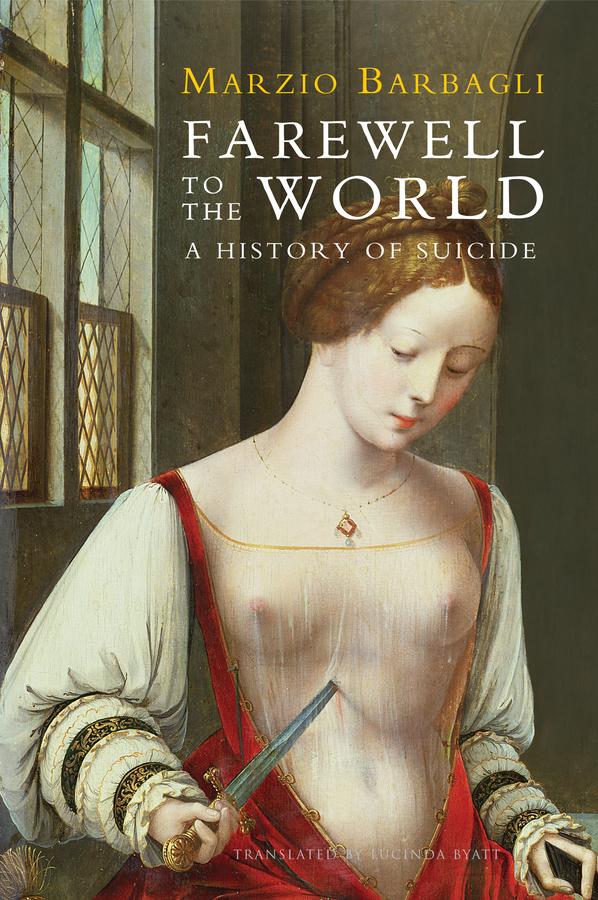
What drives a person to take his or her own life? Why would an individual be willing to strap a bomb to himself and walk into a crowded marketplace, blowing himself up at the same time as he kills and maims the people around him? Does suicide or ‘voluntary death’ have the same meaning today as it had in earlier centuries, and does it have the same significance in China, India and the Middle East as it has in the West? How should we understand this distressing, often puzzling phenomenon and how can we explain its patterns and variations over time?
In this wide-ranging comparative study, Barbagli examines suicide as a socio-cultural, religious and political phenomenon, exploring the reasons that underlie it and the meanings it has acquired in different cultures throughout the world. Drawing on a vast body of research carried out by historians, anthropologists, sociologists, political scientists and psychologists, Barbagli shows that a satisfactory theory of suicide cannot limit itself to considering the two causes that were highlighted by the great French sociologist Émile Durkheim – namely, social integration and regulation. Barbagli proposes a new account of suicide that links the motives for and significance attributed to individual actions with the people for whom and against whom individuals take their lives.
This new study of suicide sheds fresh light on the cultural differences between East and West and greatly increases our understanding of an often-misunderstood act. It will be the definitive history of suicide for many years to come.
In this wide-ranging comparative study, Barbagli examines suicide as a socio-cultural, religious and political phenomenon, exploring the reasons that underlie it and the meanings it has acquired in different cultures throughout the world. Drawing on a vast body of research carried out by historians, anthropologists, sociologists, political scientists and psychologists, Barbagli shows that a satisfactory theory of suicide cannot limit itself to considering the two causes that were highlighted by the great French sociologist Émile Durkheim – namely, social integration and regulation. Barbagli proposes a new account of suicide that links the motives for and significance attributed to individual actions with the people for whom and against whom individuals take their lives.
This new study of suicide sheds fresh light on the cultural differences between East and West and greatly increases our understanding of an often-misunderstood act. It will be the definitive history of suicide for many years to come.
Betaal eenvoudig met kaart, Klarna, Apple Pay of Google Pay. Niet tevreden? Je hebt altijd 14 dagen bedenktijd. Lees meer in onze voorwaarden. Heb je vragen, mail ons dan via hello@memmo.org.
Memmo maakt studeren makkelijker – waar je ook bent ter wereld. Wij brengen je cursusboeken en slimme studietools samen op één plek: samenvattingen, quizzen, podcasts en flashcards. En Ted, je studievriend die antwoord geeft op alles wat je je afvraagt. Meer dan 50.000 studenten studeren hier al – gebouwd om je sneller te laten leren en minder stress te geven.
Misschien vind je dit ook leuk
Koop het boek0