
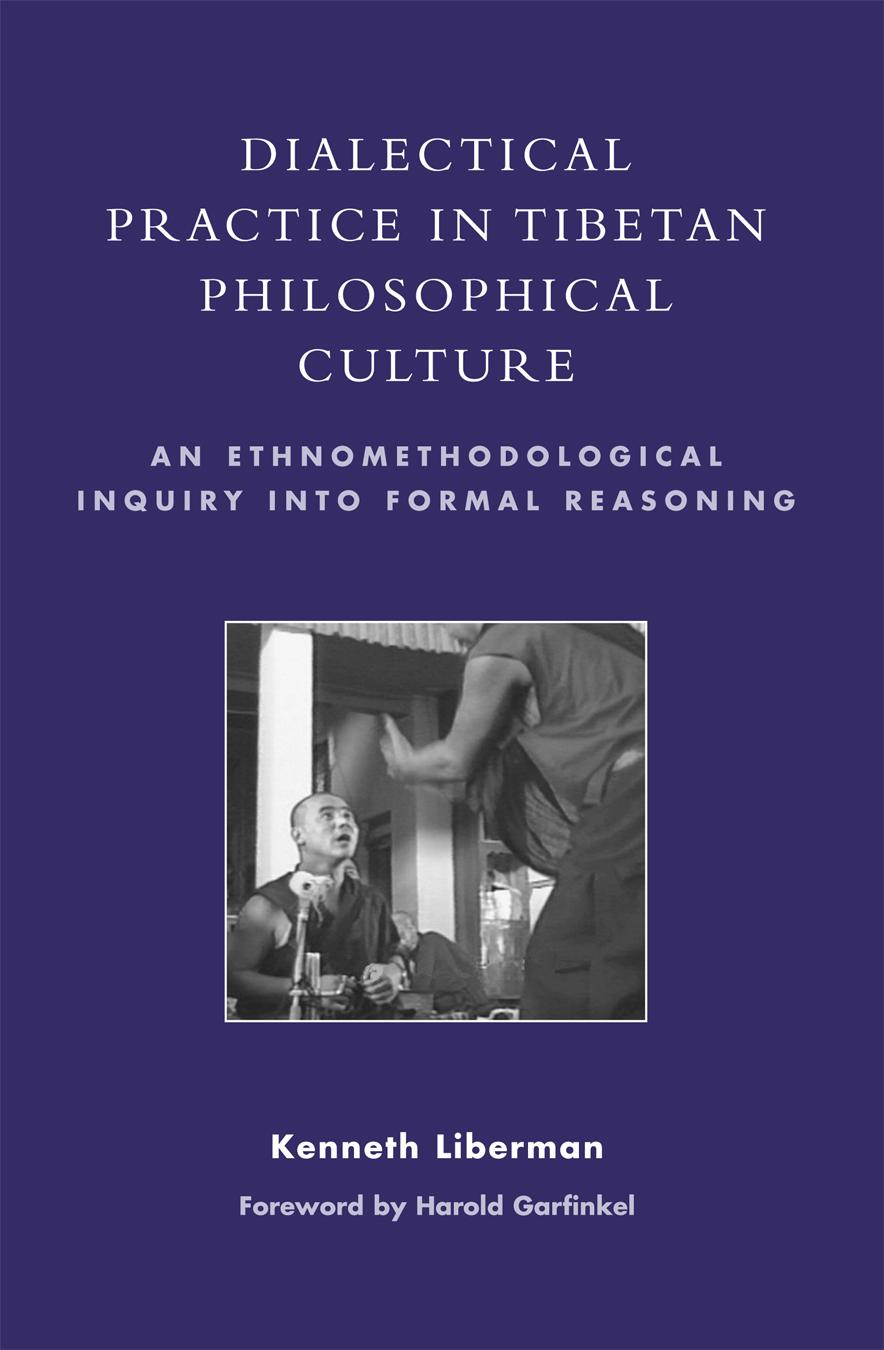
Tibetan Buddhist scholar-monks have long engaged in face-to-face public philosophical debates. This original study challenges Orientalist text-based scholarship, which has overlooked these lived practices of Tibetan dialectics. Kenneth Liberman brings these dynamic disputations to life for the modern reader through a richly detailed, turn-by-turn analysis of the monks' formal philosophical reasoning. He argues that Tibetan Buddhists deliberately organize their debates into formal structures that both empower and constrain thinking, skillfully using logic as an interactional tool to organize their reflections. During his three years in residence at Tibetan monastic universities, Liberman observed and videotaped the monks' debates. He then transcribed, translated, and analyzed them using multimedia software and ethnomethodological techniques, which enabled him to scrutinize the local methods that Tibetan debaters use to keep their philosophical inquiries alive. His study shows the monks rely on such indigenous dialectical methods as extending an opponent's position to its absurd consequences, 'pulling the rug out' from under an opponent, and other lively strategies. This careful investigation of the formal philosophical work of Tibetan scholars is a pathbreaking analysis of an important classical tradition.
Betaal eenvoudig met kaart, Klarna, Apple Pay of Google Pay. Niet tevreden? Je hebt altijd 14 dagen bedenktijd. Lees meer in onze voorwaarden. Heb je vragen, mail ons dan via hello@memmo.org.
Memmo maakt studeren makkelijker – waar je ook bent ter wereld. Wij brengen je cursusboeken en slimme studietools samen op één plek: samenvattingen, quizzen, podcasts en flashcards. En Ted, je studievriend die antwoord geeft op alles wat je je afvraagt. Meer dan 50.000 studenten studeren hier al – gebouwd om je sneller te laten leren en minder stress te geven.