
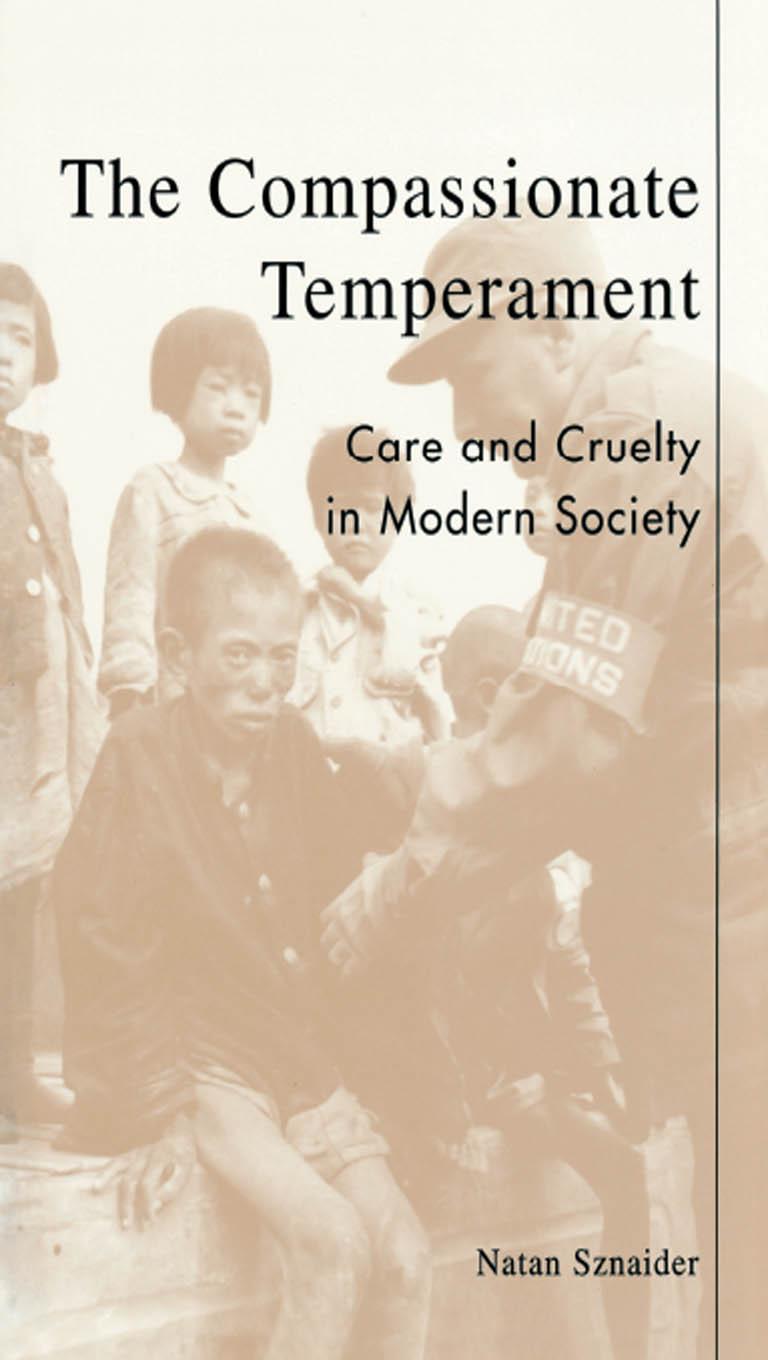
The argument of this book is that it is in the nature of modernity to foster compassion. Most critics tend to think of modernity as corrosive of moral sentiments. They see clearly the way in which modernity breaks down older social bonds, but they are much less attentive to the ways in which it also builds new ones. This book offers an historically informed corrective to this common view. Sznaider demonstrates that compassion, understood as the organized campaign to lessen the suffering of strangers, is a distinctly modern form of morality. It played an important role in the rise of modern society, and it continues to play an important role today. And when waves of compassion break out into demands for political action, these demands need to be understood rather than criticized as excuses or irrelevancies. Incorporating and critiquing the work of Arendt, Foucault, and other social theorists, this book is both erudite and historically rich-sure to be both controversial and influential among those who debate modernity, morality, and social justice.
Betaal eenvoudig met kaart, Klarna, Apple Pay of Google Pay. Niet tevreden? Je hebt altijd 14 dagen bedenktijd. Lees meer in onze voorwaarden. Heb je vragen, mail ons dan via hello@memmo.org.
Memmo maakt studeren makkelijker – waar je ook bent ter wereld. Wij brengen je cursusboeken en slimme studietools samen op één plek: samenvattingen, quizzen, podcasts en flashcards. En Ted, je studievriend die antwoord geeft op alles wat je je afvraagt. Meer dan 50.000 studenten studeren hier al – gebouwd om je sneller te laten leren en minder stress te geven.