
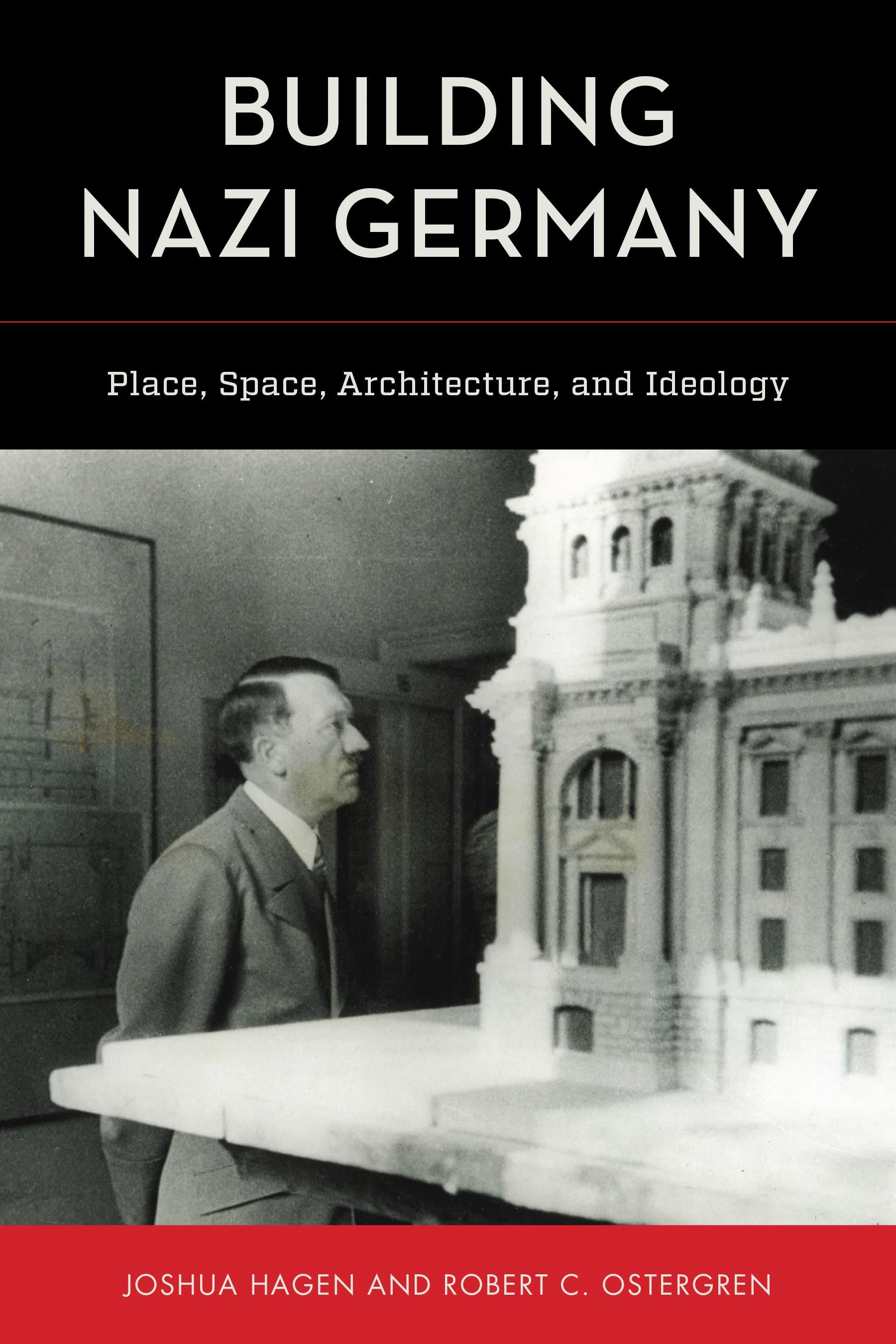
This richly illustrated book details the wide-ranging construction and urban planning projects launched across Germany after the Nazi Party seized power. Hagen and Ostergren show that it was far more than just an architectural and stylistic enterprise. Instead, it was a series of interrelated programs intended to thoroughly reorganize Germany’s economic, cultural, and political landscapes. The authors trace the specific roles of its component parts—the monumental redevelopment and cleansing of cities; the construction of new civic landscapes for educational, athletic, and leisure pursuits; the improvement of transportation, industrial, and military infrastructures; and the creation of networked landscapes of fear, slave labor, and genocide. Through distinctive examples, the book draws out the ways in which combinations of place, space, and architecture were utilized as a cumulative means of undergirding the regime and its ambitions. The authors consider how these reshaped spaces were actually experienced and perceived by ordinary Germans, and in some cases the world at large, as the regime intentionally built a new Nazi Germany.
Betaal eenvoudig met kaart, Klarna, Apple Pay of Google Pay. Niet tevreden? Je hebt altijd 14 dagen bedenktijd. Lees meer in onze voorwaarden. Heb je vragen, mail ons dan via hello@memmo.org.
Memmo maakt studeren makkelijker – waar je ook bent ter wereld. Wij brengen je cursusboeken en slimme studietools samen op één plek: samenvattingen, quizzen, podcasts en flashcards. En Ted, je studievriend die antwoord geeft op alles wat je je afvraagt. Meer dan 50.000 studenten studeren hier al – gebouwd om je sneller te laten leren en minder stress te geven.