
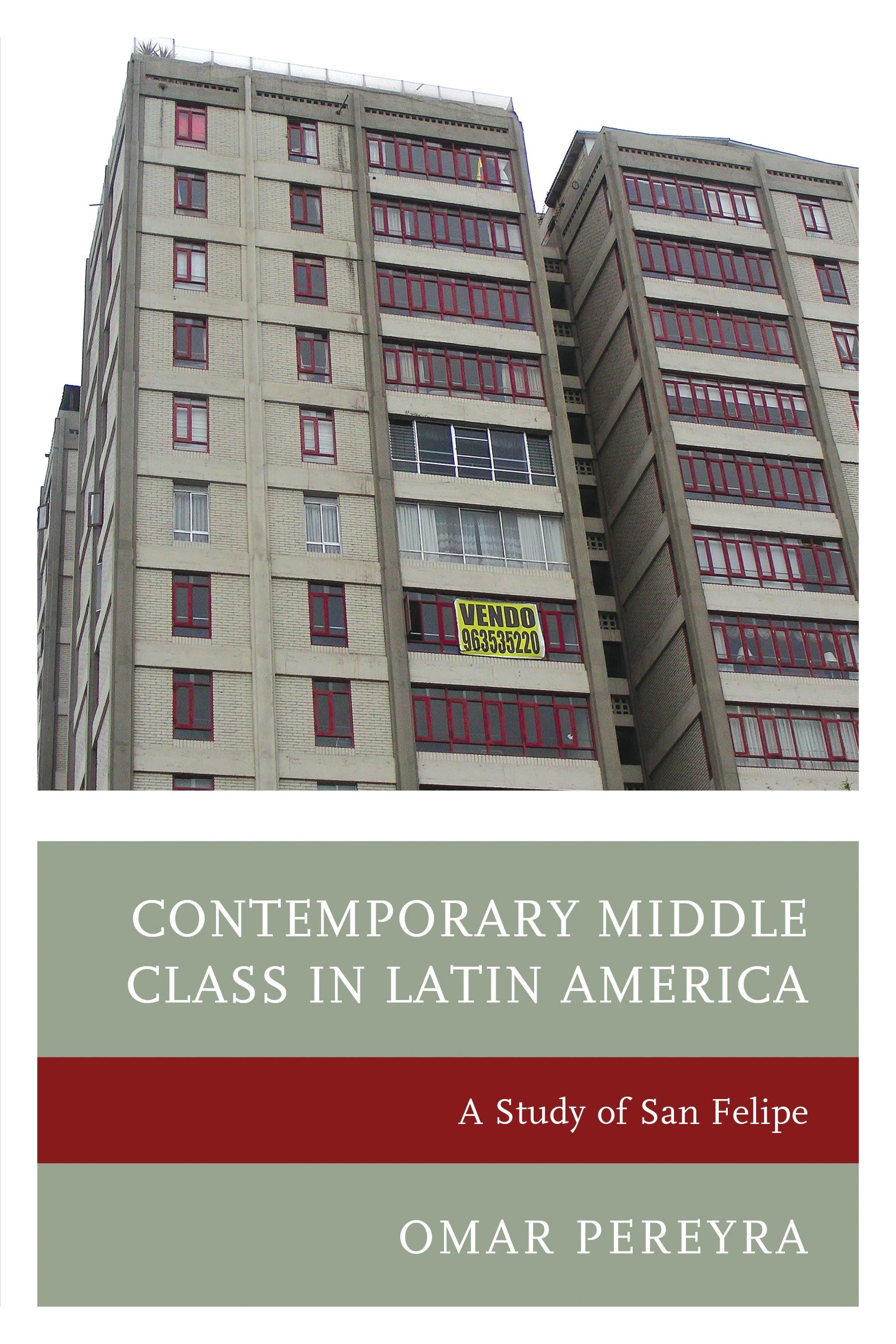
In the last decades, the Latin American middle class is growing in size while becoming more heterogeneous. Sustained economic growth explains its increasing size, but behind its heterogeneity there is not only the diversification of lifestyles, but also the crystallization of a large process of upward social mobility of second and third generation migrants to capital cities and their incorporation into middle-class positions. In the last decades, these individuals are now part of the different spheres of socialization formerly occupied by the traditional middle class: private schools, college and universities, middle-class jobs and occupations, and traditional middle-class neighborhoods.
To explore the genesis of this phenomenon and its consequences, the author studies Residential San Felipe, a quintessential traditional middle-class neighborhood in Lima, Peru, which is currently receiving an important influx of upwardly mobile families. The case of San Felipe shows that inside the contemporary middle class a strong boundary between the “traditional middle class” and the “new middle class” permeates the everyday life of the neighborhood. However, though this difference between the “traditional” and “new middle class” is recognized by all residents of San Felipe, its relevance as well as the elements at the basis of this distinction varies.
To explore the genesis of this phenomenon and its consequences, the author studies Residential San Felipe, a quintessential traditional middle-class neighborhood in Lima, Peru, which is currently receiving an important influx of upwardly mobile families. The case of San Felipe shows that inside the contemporary middle class a strong boundary between the “traditional middle class” and the “new middle class” permeates the everyday life of the neighborhood. However, though this difference between the “traditional” and “new middle class” is recognized by all residents of San Felipe, its relevance as well as the elements at the basis of this distinction varies.
Betaal eenvoudig met kaart, Klarna, Apple Pay of Google Pay. Niet tevreden? Je hebt altijd 14 dagen bedenktijd. Lees meer in onze voorwaarden. Heb je vragen, mail ons dan via hello@memmo.org.
Memmo maakt studeren makkelijker – waar je ook bent ter wereld. Wij brengen je cursusboeken en slimme studietools samen op één plek: samenvattingen, quizzen, podcasts en flashcards. En Ted, je studievriend die antwoord geeft op alles wat je je afvraagt. Meer dan 50.000 studenten studeren hier al – gebouwd om je sneller te laten leren en minder stress te geven.