
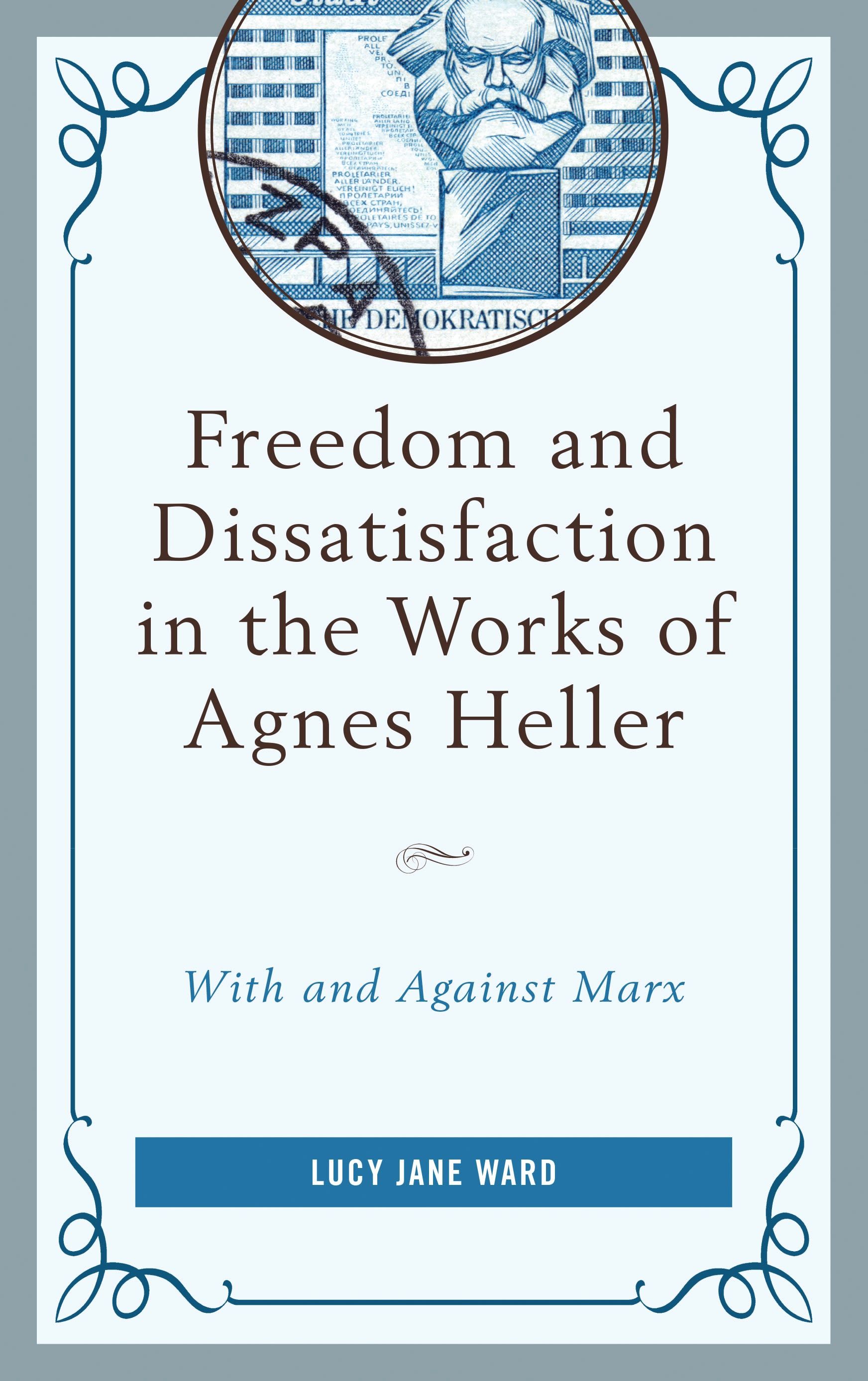
Ward’s book focuses on the work of the Hungarian philosopher Agnes Heller; prominent member of the Budapest School, a group of students who studied under the Marxist social theorist György Lukács. For both Marx and Heller (albeit in different ways) dissatisfaction emerges as the inevitable result of the expansion of need(s) within modernity and as a catalyst for the development of anthropological wealth (what Marx refers to as the 'human being rich in need'). Ward argues that dissatisfaction and the corresponding category of human wealth–as both motif and method–is central to grasping Heller’s seemingly disparate writings. While Marx postulates a radical overcoming of dissatisfaction, Heller argues dissatisfaction is integral not only to the on-going survival of modernity but also to the dynamics of both freedom and individual life. In this way Heller’s work remains committed to a position that both continually returns and departs, is both with and against, the philosophy of Marx.
This book will be of interest to scholars of political philosophy, social theory, critical theory, and sociology.
This book will be of interest to scholars of political philosophy, social theory, critical theory, and sociology.
Betaal eenvoudig met kaart, Klarna, Apple Pay of Google Pay. Niet tevreden? Je hebt altijd 14 dagen bedenktijd. Lees meer in onze voorwaarden. Heb je vragen, mail ons dan via hello@memmo.org.
Memmo maakt studeren makkelijker – waar je ook bent ter wereld. Wij brengen je cursusboeken en slimme studietools samen op één plek: samenvattingen, quizzen, podcasts en flashcards. En Ted, je studievriend die antwoord geeft op alles wat je je afvraagt. Meer dan 50.000 studenten studeren hier al – gebouwd om je sneller te laten leren en minder stress te geven.