
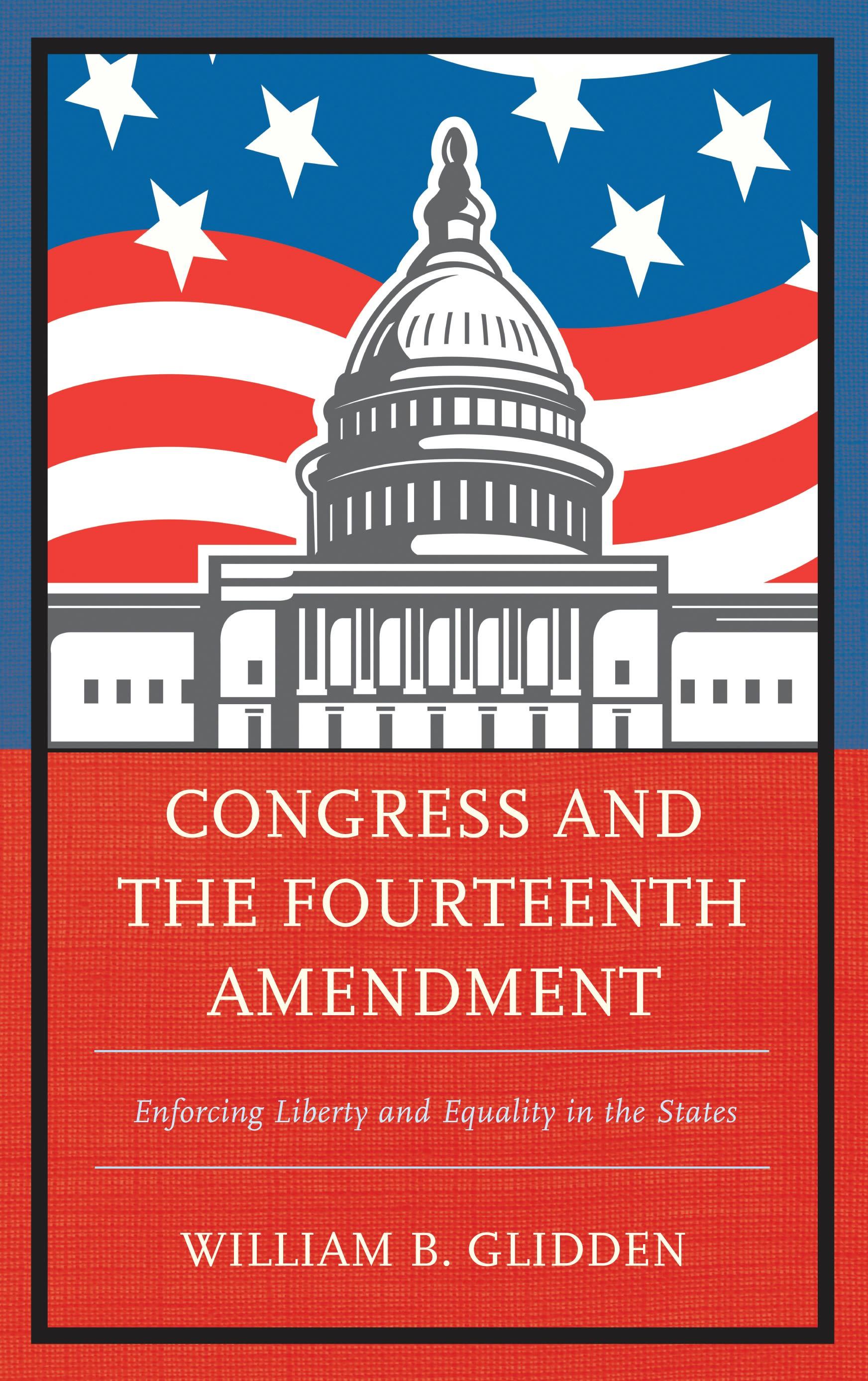
The discrepancy between the fourteenth amendment’s true meaning as originally understood, and the Supreme Court’s interpretation of its meaning over time, has been dramatic and unfortunate. The amendment was intended to be a constitutional rule for the promotion and protection of people’s rights, administered by the states as front-line regulators of life, liberty, and property, to be overseen by Congress and supported by federal legislation as necessary. In this book, William B. Glidden makes the case that instead, the amendment has operated as a judge-dominated, negative rights-against-government regime, supervised by the Supreme Court. Whenever Congress has enacted legislation to protect life, liberty, or property rights of people in the states, the laws were often overturned, narrowly construed, or forced to rely on the power of Congress to regulate interstate commerce, under the Supreme Court’s constraining interpretations. Glidden proposes that Congress must recover for itself or be restored to its proper role as the designated federal enforcement agency for the fourteenth amendment.
Pagina's: 206
Categorie: Statsvetenskap & Politik
e-ISBN: 9780739185742
Verzendgewicht: 1.2 kg
Verzending binnen: 1-2 dagen
Betaal eenvoudig met kaart, Klarna, Apple Pay of Google Pay. Niet tevreden? Je hebt altijd 14 dagen bedenktijd. Lees meer in onze voorwaarden. Heb je vragen, mail ons dan via hello@memmo.org.
Memmo maakt studeren makkelijker – waar je ook bent ter wereld. Wij brengen je cursusboeken en slimme studietools samen op één plek: samenvattingen, quizzen, podcasts en flashcards. En Ted, je studievriend die antwoord geeft op alles wat je je afvraagt. Meer dan 50.000 studenten studeren hier al – gebouwd om je sneller te laten leren en minder stress te geven.