
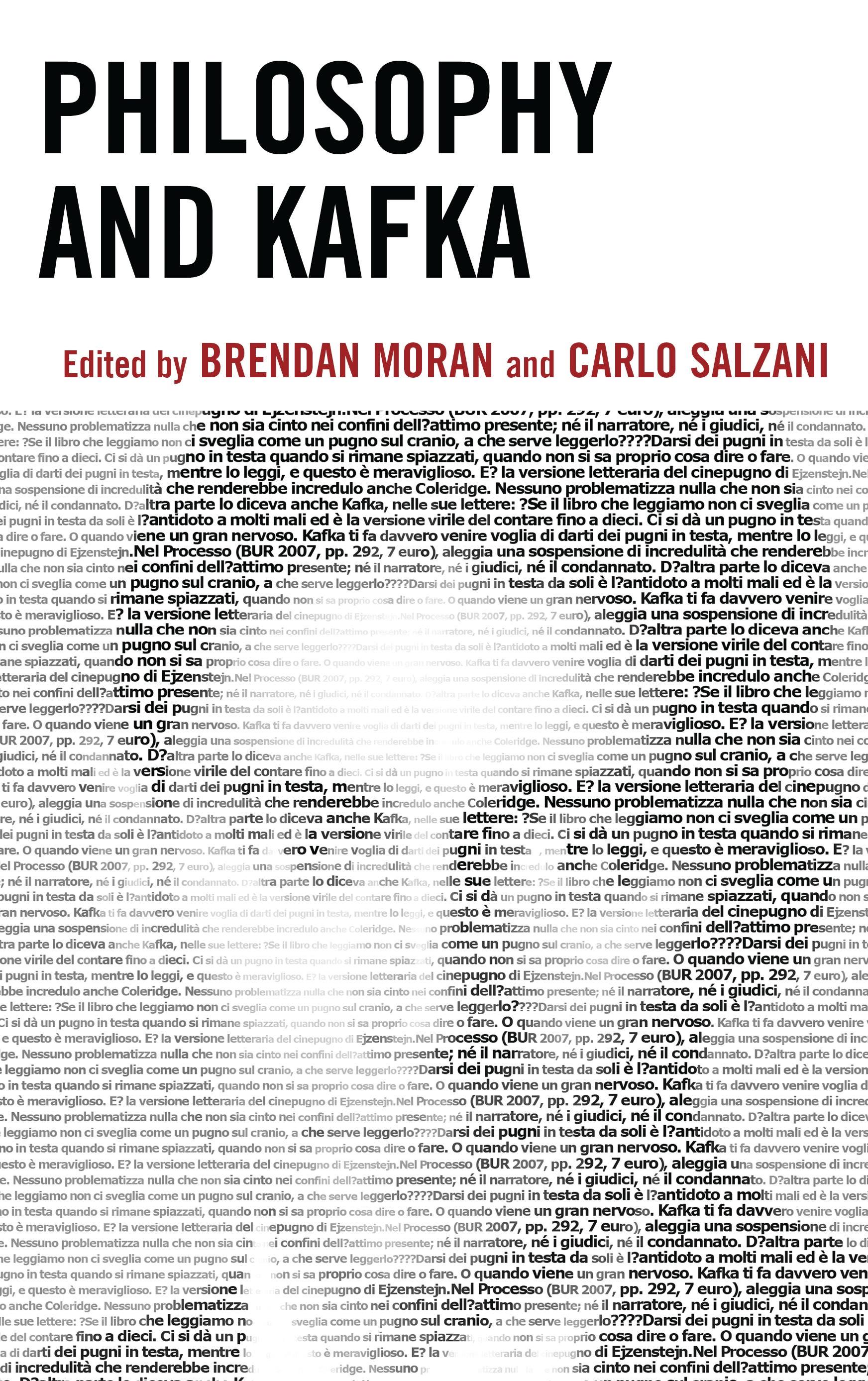
Philosophy and Kafka
Auteur: Dimitris Vardoulakis, Brian O'Connor, Paul Alberts, Peter Schwenger, Brendan Moran, Carlo Salzani, Ronald Bogue, Chris Danta, Paul Haacke, Rainer Nagele, Andrew R. Russ, Kevin W. Sweeney, Isak Winkel Holm
Uitgever: Bloomsbury Publishing
Editie: 1
Publicatiedatum: 2013
ISBN: 9780739180891
The relationship of philosophy with Kafka’s oeuvre is complex. It has been argued that Kafka’s novels and stories defy philosophic extrapolation; conversely, it has also been suggested that precisely the tendency of Kafka’s writings to elude discursive solution is itself a philosophical tendency, one that is somehow contributing to a wiser relationship of human beings with language. These matters are the focus of the proposed volume on Philosophy and Kafka.
The proposed collection brings together essays that interrogate the relationship of philosophy and Kafka, and offer new and original interpretations. The volume obviously cannot claim completeness, but it partially does justice to the multiplicity of philosophical issues and philosophical interpretations at stake.
This variety informs the composition of the volume itself. A number of essays focus on specific philosophical commentaries on Kafka’s work, from Adorno’s to Agamben’s, from Arendt’s to Benjamin’s, from Deleuze and Guattari’s to Derrida’s. A number of essays consider the possible relevance of certain philosophical outlooks for examining Kafka’s writings: here Kafka’s name goes alongside those of Socrates, Kant, Kierkegaard, Nietzsche, Wittgenstein, Buber, Heidegger, Blanchot, and Levinas. Finally, a number of essays consider Kafka’s writings in terms of a specific philosophical theme, such as communication and subjectivity, language and meaning, knowledge and truth, the human/animal divide, justice, and freedom. In all contributions to the volume, such themes, motifs, and interpretations arise. To varying degrees, all essays are concerned with the relationship of literature and philosophy, and thus with the philosophical significance of Kafka’s writings.
The proposed collection brings together essays that interrogate the relationship of philosophy and Kafka, and offer new and original interpretations. The volume obviously cannot claim completeness, but it partially does justice to the multiplicity of philosophical issues and philosophical interpretations at stake.
This variety informs the composition of the volume itself. A number of essays focus on specific philosophical commentaries on Kafka’s work, from Adorno’s to Agamben’s, from Arendt’s to Benjamin’s, from Deleuze and Guattari’s to Derrida’s. A number of essays consider the possible relevance of certain philosophical outlooks for examining Kafka’s writings: here Kafka’s name goes alongside those of Socrates, Kant, Kierkegaard, Nietzsche, Wittgenstein, Buber, Heidegger, Blanchot, and Levinas. Finally, a number of essays consider Kafka’s writings in terms of a specific philosophical theme, such as communication and subjectivity, language and meaning, knowledge and truth, the human/animal divide, justice, and freedom. In all contributions to the volume, such themes, motifs, and interpretations arise. To varying degrees, all essays are concerned with the relationship of literature and philosophy, and thus with the philosophical significance of Kafka’s writings.
Betaal eenvoudig met kaart, Klarna, Apple Pay of Google Pay. Niet tevreden? Je hebt altijd 14 dagen bedenktijd. Lees meer in onze voorwaarden. Heb je vragen, mail ons dan via hello@memmo.org.
Memmo maakt studeren makkelijker – waar je ook bent ter wereld. Wij brengen je cursusboeken en slimme studietools samen op één plek: samenvattingen, quizzen, podcasts en flashcards. En Ted, je studievriend die antwoord geeft op alles wat je je afvraagt. Meer dan 50.000 studenten studeren hier al – gebouwd om je sneller te laten leren en minder stress te geven.