
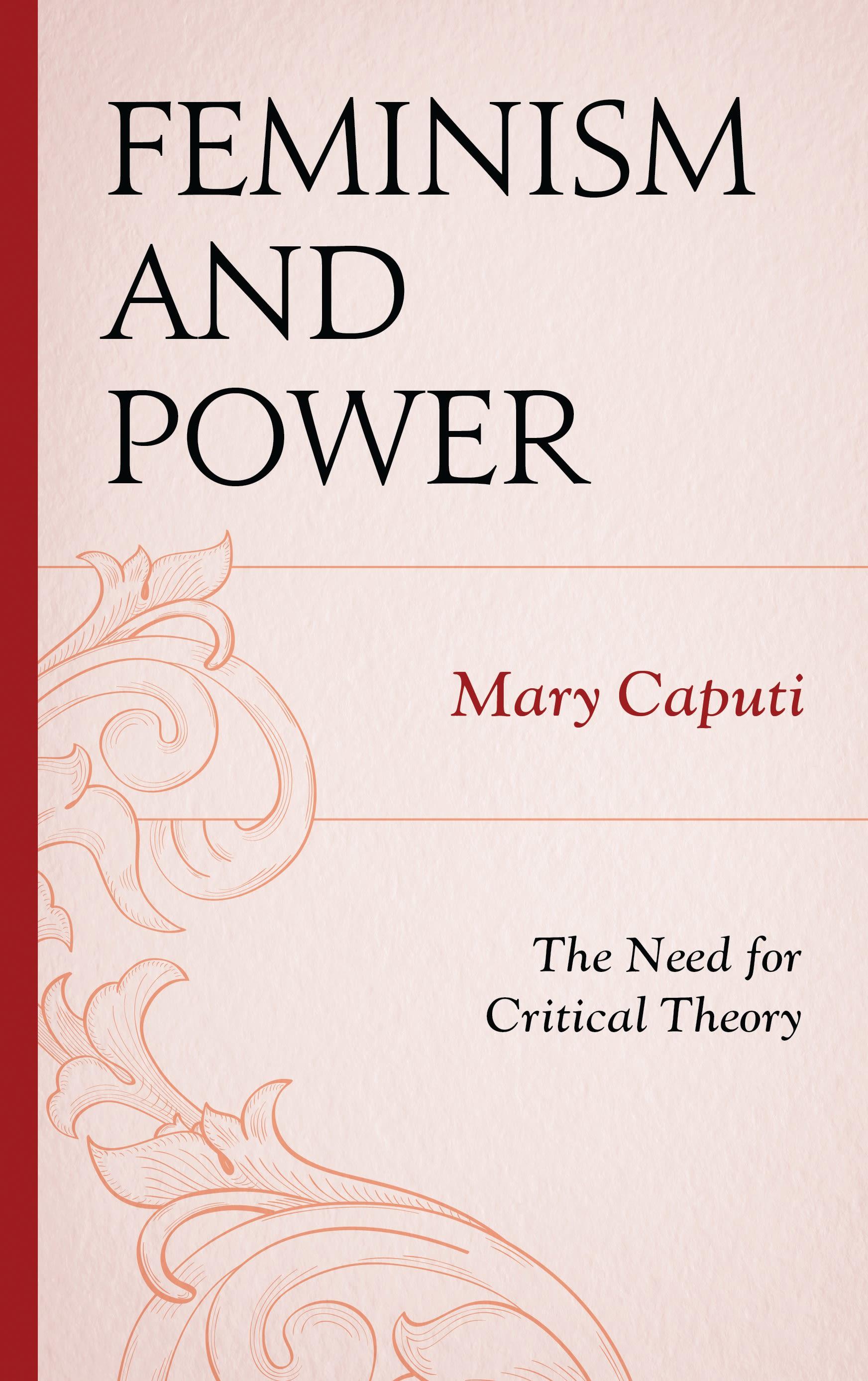
Feminism and Power: the Need for Critical Theory is a six-chapter manuscript which offers an important critique of “power feminism.” The latter, having produced such spinoffs as “grrrl power,” “choice,” “babe,” “lipstick,” and “stiletto” feminisms, encourages women to be strong, self-sufficient, feisty, and independent. While I have no argument with much of that tough-minded ideal, I ask whether this “brave new girl” doesn’t too readily acquiesce in a neo-liberal ideology whose underlying tenets derive from American rugged individualism. At its worst, this strain within Third Wave feminism contains no critique of capitalism, no distance on neoliberal theory, no effort to address the injustices contained in globalization’s asymmetries and the industrialized North’s exploitation of developing countries.
Feminism and Power: the Need for Critical Theory therefore argues that the critical theories of Theodor Adorno and Jacques Derrida have much to offer feminism, and a feminist understanding of female empowerment. Its pages rely on Adorno’s assertion that it is only by allowing the sufferer to speak that we can unveil social truth rather than be duped by the bravado of victory culture. Similarly, it demonstrates how Derrida’s insistence on the trace, as well as the asymmetries of friendship and hospitality, lead feminism away from the perils of contented triumphalism. The book promotes listening as a paradigmatic feminist gesture, rather than always speaking up and out.
Feminism and Power: the Need for Critical Theory therefore argues that the critical theories of Theodor Adorno and Jacques Derrida have much to offer feminism, and a feminist understanding of female empowerment. Its pages rely on Adorno’s assertion that it is only by allowing the sufferer to speak that we can unveil social truth rather than be duped by the bravado of victory culture. Similarly, it demonstrates how Derrida’s insistence on the trace, as well as the asymmetries of friendship and hospitality, lead feminism away from the perils of contented triumphalism. The book promotes listening as a paradigmatic feminist gesture, rather than always speaking up and out.
Betaal eenvoudig met kaart, Klarna, Apple Pay of Google Pay. Niet tevreden? Je hebt altijd 14 dagen bedenktijd. Lees meer in onze voorwaarden. Heb je vragen, mail ons dan via hello@memmo.org.
Memmo maakt studeren makkelijker – waar je ook bent ter wereld. Wij brengen je cursusboeken en slimme studietools samen op één plek: samenvattingen, quizzen, podcasts en flashcards. En Ted, je studievriend die antwoord geeft op alles wat je je afvraagt. Meer dan 50.000 studenten studeren hier al – gebouwd om je sneller te laten leren en minder stress te geven.