
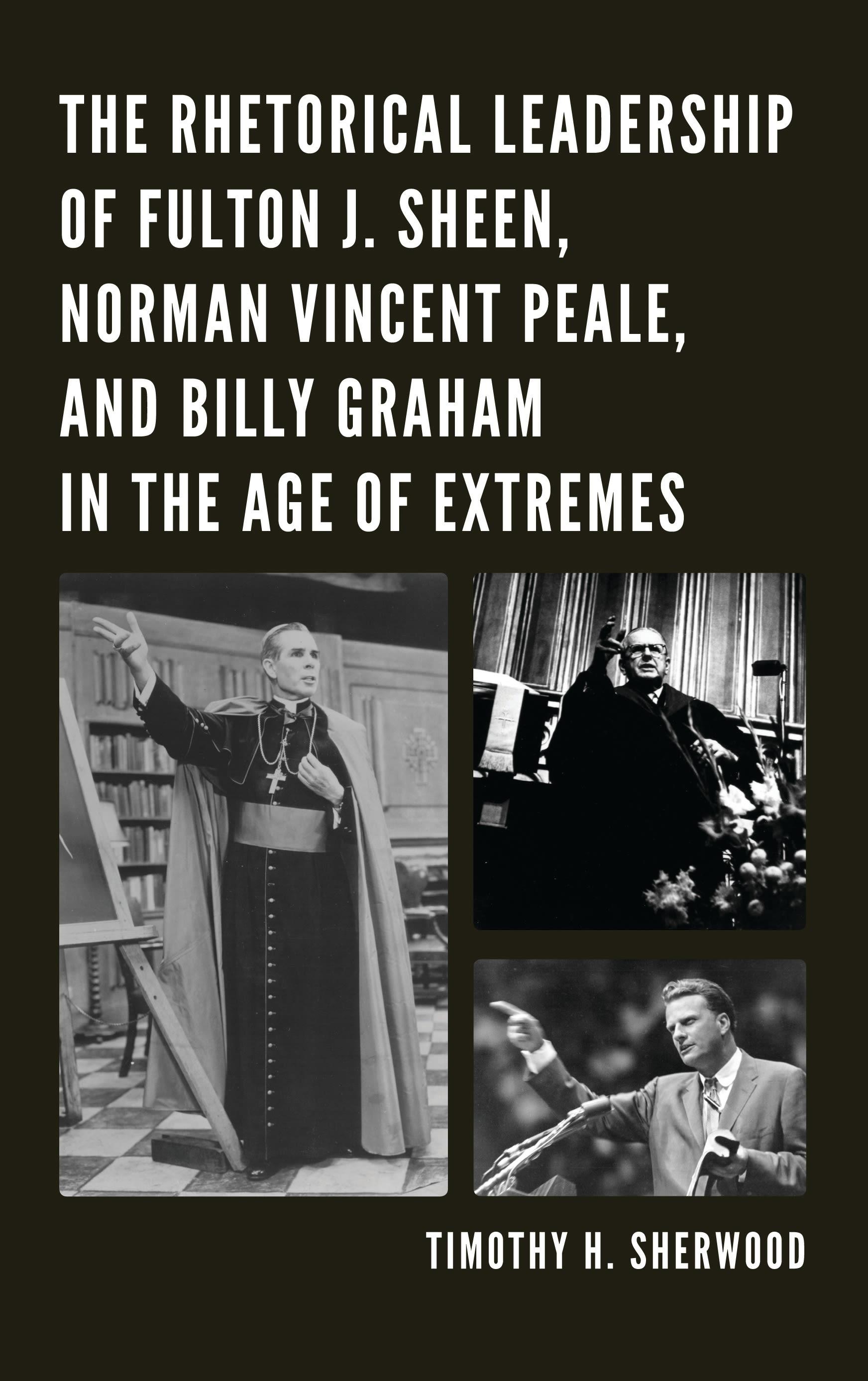
Fulton J. Sheen, Norman Vincent Peale, and Billy Graham were America’s most popular religious leaders during the mid-twentieth century period known as the golden years of the Age of Extremes. It was part of an era that encompassed polemic contrasts of good and evil on the world stage in political philosophies and international relations. The 1950s and early 1960s, in particular, were years of high anxiety, competing ideologies, and hero/villain mania in America. Sheen was the voice of reason who spoke against those conflicting ideologies which were hostile to religious faith and democracy; Peale preached the gospel of reassurance, self-assurance, and success despite ominous global threats; and Graham was the heroic model of faith whose message of conversion provided Americans an identity and direction opposite to atheistic communism. This study looks at how and why their rhetorical leadership, both separately and together, contributed to the climate of an extreme era and influenced a national religious revival.
Betaal eenvoudig met kaart, Klarna, Apple Pay of Google Pay. Niet tevreden? Je hebt altijd 14 dagen bedenktijd. Lees meer in onze voorwaarden. Heb je vragen, mail ons dan via hello@memmo.org.
Memmo maakt studeren makkelijker – waar je ook bent ter wereld. Wij brengen je cursusboeken en slimme studietools samen op één plek: samenvattingen, quizzen, podcasts en flashcards. En Ted, je studievriend die antwoord geeft op alles wat je je afvraagt. Meer dan 50.000 studenten studeren hier al – gebouwd om je sneller te laten leren en minder stress te geven.