
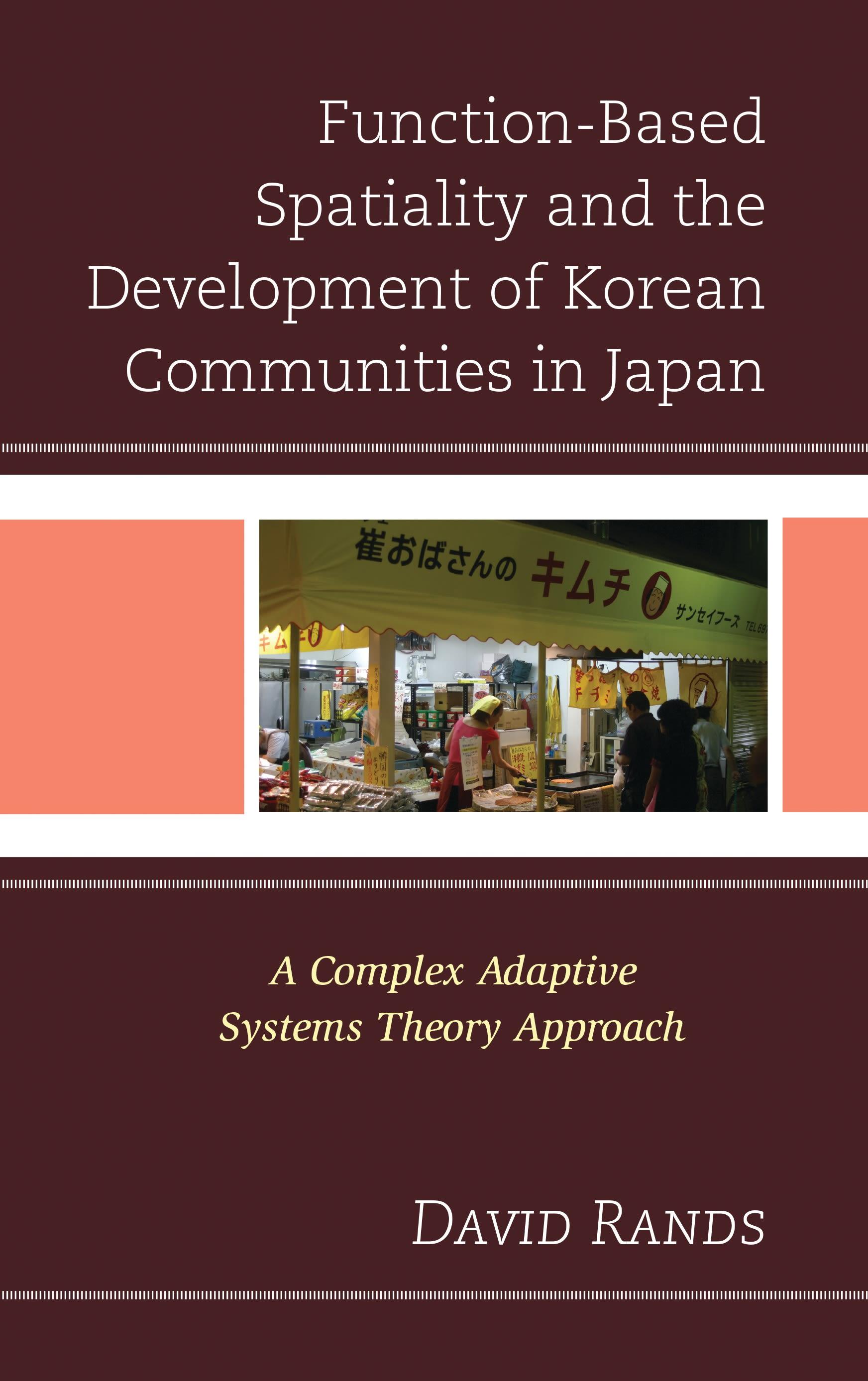
Function-Based Spatiality and the Development of Korean Communities in Japan utilizes the theoretical model of complex adaptive systems and introduces the concept of function-based spatiality to investigate the roles of the urban environments of Tokyo and Osaka in the development of Korean communities in Japan. Analysis of distinct Korean communities allows for the examination of urban factors of each city which contributed to the patterns of Korean immigration and community formation. By utilizing a comparative narrative of the two cities, distinctions between the organic growth of Osaka and the planned city of Tokyo are illuminated. Additionally, the discussion utilizes the concept of function-based spatiality to show how each city interacted with its surrounding regional, national, and global spheres. The functions of Tokyo, as a gateway to Western modernization and center of the Japanese state, shaped the interactions with Korean immigrants. Likewise, Osaka’s functions as a center of mercantilism and second city played a large role in how Koreans were incorporated into the urban ethnoscapes. Taken together, these two examples provide insight to the dynamics of urban systems on the development of immigrant communities.
Pagina's: 206
Categorie: Sociologi
e-ISBN: 9780739173695
Verzendgewicht: 1.2 kg
Verzending binnen: 1-2 dagen
Betaal eenvoudig met kaart, Klarna, Apple Pay of Google Pay. Niet tevreden? Je hebt altijd 14 dagen bedenktijd. Lees meer in onze voorwaarden. Heb je vragen, mail ons dan via hello@memmo.org.
Memmo maakt studeren makkelijker – waar je ook bent ter wereld. Wij brengen je cursusboeken en slimme studietools samen op één plek: samenvattingen, quizzen, podcasts en flashcards. En Ted, je studievriend die antwoord geeft op alles wat je je afvraagt. Meer dan 50.000 studenten studeren hier al – gebouwd om je sneller te laten leren en minder stress te geven.