
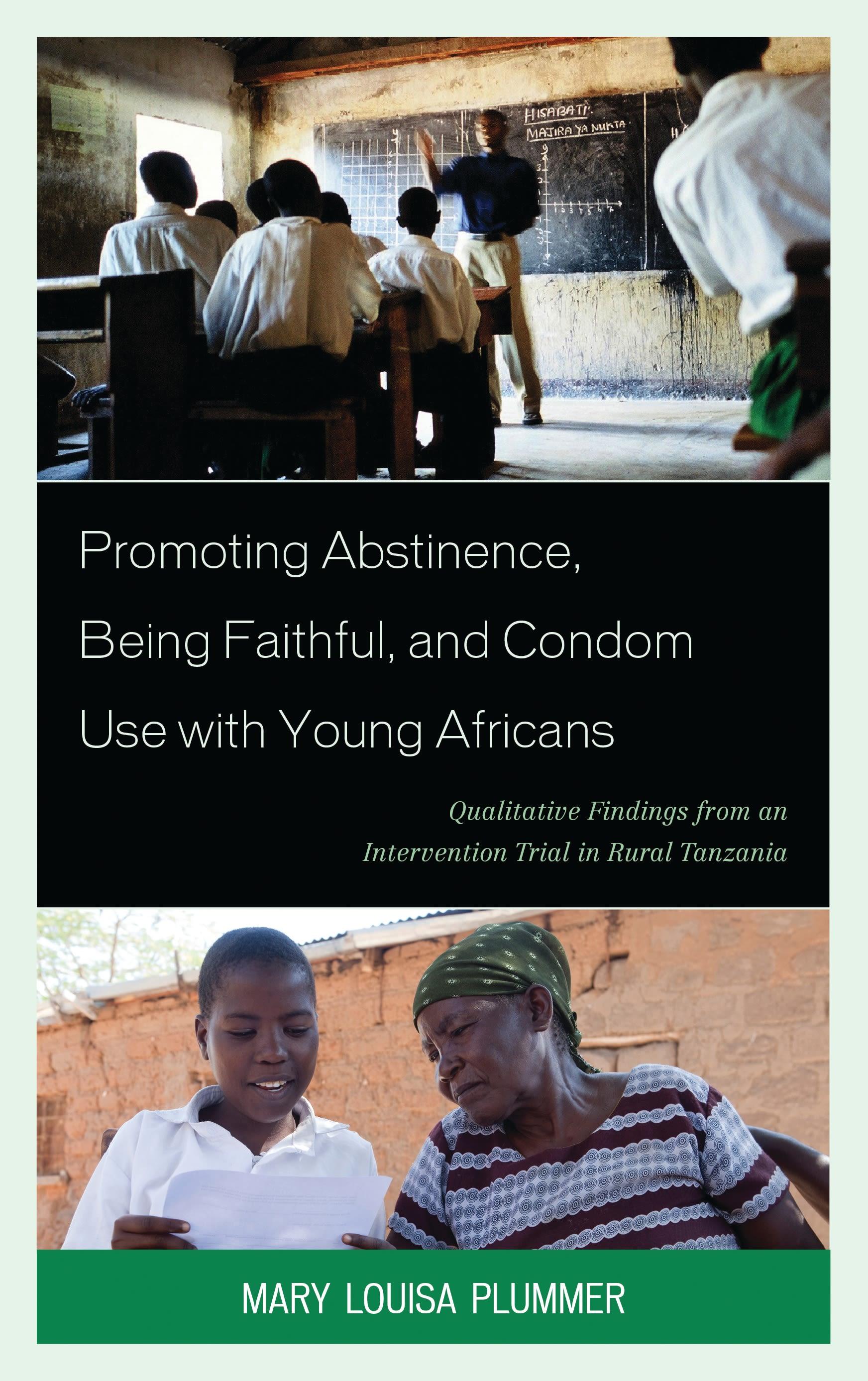
Promotion of the low risk “ABC” behaviors—Abstinence, Being faithful, and Condom use—has had only limited success in Africa. This book draws on a large qualitative study affiliated with an adolescent intervention trial to examine how ABC promotion can be improved. It evaluates the MEMA kwa Vijana sexual health program, which was implemented in 62 primary schools and 18 health facilities in rural Tanzania, scrutinizing its teacher-led curriculum, peer education, youth-friendly health services, youth condom distribution, and community mobilization components. The book examines how implementing such a low-cost, large-scale program involved many compromises, including those between national policies and international “best practice” recommendations, between the most desirable intervention design and one that was affordable and sustainable at a large scale, between optimal teaching methods and real-world teaching capacity, between ideal curriculum content and what was acceptable to the local community, and between adults’ values and youths’ realities. The program’s impact is evaluated by triangulating findings from three person-years of participant observation, in-depth interviews, survey interviews, and biomedical tests.
The book also provides in-depth case studies to examine the motivations and strategies of extraordinary young people who practiced ABC behaviors. It outlines broad principles for ABC promotion, including: acknowledging existing youth sexual relationships; promoting each low risk behavior in complexity and depth; working with preexisting, culturally compelling motivations; and intervening at individual, interpersonal, community, and structural levels. Many recommendations for the promotion of specific ABC behaviors are discussed, such as reducing pressures and incentives for girls to have sex; targeting male risk-perception and self-preservation; promoting alternative forms of masculinity than sexual conquest; strengthening premarital and marital relationships; tailoring fidelity programs for hidden couples, couples planning to marry, and monogamous and polygynous married partners; and addressing pleasure, trust, pregnancy prevention, and fertility protection in condom promotion. The book concludes with additional recommendations specific to school programs, and a review of promising complementary interventions for out-of-school youth, women, men, couples, and parents.
The book also provides in-depth case studies to examine the motivations and strategies of extraordinary young people who practiced ABC behaviors. It outlines broad principles for ABC promotion, including: acknowledging existing youth sexual relationships; promoting each low risk behavior in complexity and depth; working with preexisting, culturally compelling motivations; and intervening at individual, interpersonal, community, and structural levels. Many recommendations for the promotion of specific ABC behaviors are discussed, such as reducing pressures and incentives for girls to have sex; targeting male risk-perception and self-preservation; promoting alternative forms of masculinity than sexual conquest; strengthening premarital and marital relationships; tailoring fidelity programs for hidden couples, couples planning to marry, and monogamous and polygynous married partners; and addressing pleasure, trust, pregnancy prevention, and fertility protection in condom promotion. The book concludes with additional recommendations specific to school programs, and a review of promising complementary interventions for out-of-school youth, women, men, couples, and parents.
Pagina's: 500
Categorie: Samhällsvetenskap
e-ISBN: 9780739168455
Verzendgewicht: 1.2 kg
Verzending binnen: 1-2 dagen
Betaal eenvoudig met kaart, Klarna, Apple Pay of Google Pay. Niet tevreden? Je hebt altijd 14 dagen bedenktijd. Lees meer in onze voorwaarden. Heb je vragen, mail ons dan via hello@memmo.org.
Memmo maakt studeren makkelijker – waar je ook bent ter wereld. Wij brengen je cursusboeken en slimme studietools samen op één plek: samenvattingen, quizzen, podcasts en flashcards. En Ted, je studievriend die antwoord geeft op alles wat je je afvraagt. Meer dan 50.000 studenten studeren hier al – gebouwd om je sneller te laten leren en minder stress te geven.