
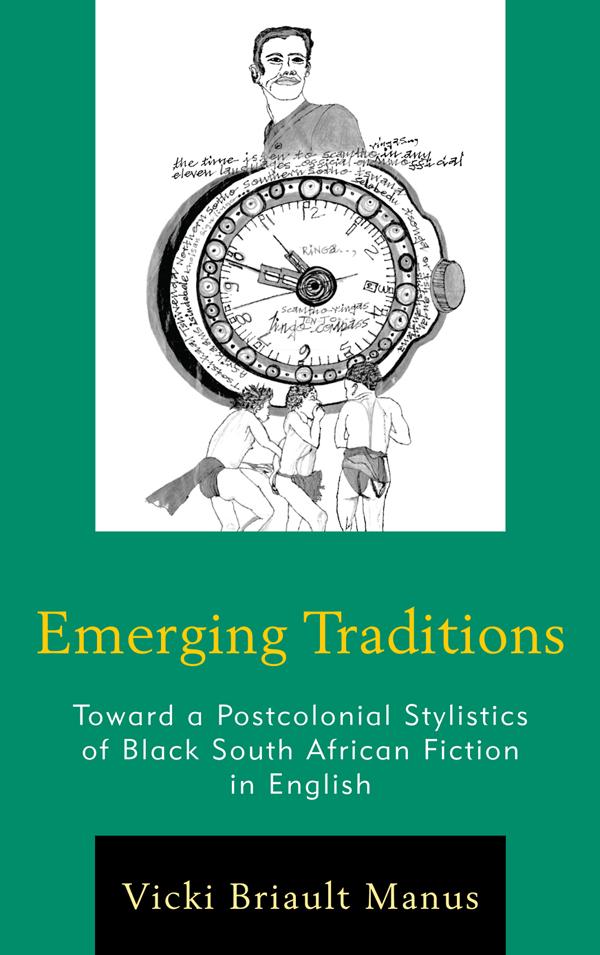
The monograph explores the linguistic impact of the colonial and postcolonial situations in South Africa on language policy, on literary production and especially on the stylistics of fiction by indigenous South Africans writing in English. A secondary concern is to investigate the present place of English in the multilingual spectrum of South African languages and to see how this worldly English relates to Global English, in the South African context.
The introduction presents a socio-linguistic overview of South Africa from pre-historic times until the present, including language planning policies during and after the colonial era and a cursory review of how the difficulties encountered in implementing the Language Plan, provided for by the new South African constitution, impinge on the development of black South African English.
Six chapters track the course of English in South Africa since the arrival of the British in 1795, considered from the point of view of the indigenous African population. The study focuses on ways in which indigenous authors "indigenize" their writing, innovating and subverting stylistic conventions, including those of African orature, in order to bend language and genre towards their own culture and objectives.
Each chapter corresponds to a briefly outlined historical period that is largely reflected in linguistic and literary developments. A small number of significant works for each period are discussed, one of which is selected for a case-study at the end of each chapter, where it is subjected to detailed stylistic analysis and appraised for the degree of indigenization or other linguistic or socio-historic influences on style.
The methodology adopted is a linguistic approach to stylistics, focusing on indigenization of English, inspired by the work of Chantal Zabus in her book, The African Palimpsest: Indigenization of Language in the West African Europhone Novel (2007, (1991)).
The conclusion reappraises the original hypothesis - that the specific characteristi
The introduction presents a socio-linguistic overview of South Africa from pre-historic times until the present, including language planning policies during and after the colonial era and a cursory review of how the difficulties encountered in implementing the Language Plan, provided for by the new South African constitution, impinge on the development of black South African English.
Six chapters track the course of English in South Africa since the arrival of the British in 1795, considered from the point of view of the indigenous African population. The study focuses on ways in which indigenous authors "indigenize" their writing, innovating and subverting stylistic conventions, including those of African orature, in order to bend language and genre towards their own culture and objectives.
Each chapter corresponds to a briefly outlined historical period that is largely reflected in linguistic and literary developments. A small number of significant works for each period are discussed, one of which is selected for a case-study at the end of each chapter, where it is subjected to detailed stylistic analysis and appraised for the degree of indigenization or other linguistic or socio-historic influences on style.
The methodology adopted is a linguistic approach to stylistics, focusing on indigenization of English, inspired by the work of Chantal Zabus in her book, The African Palimpsest: Indigenization of Language in the West African Europhone Novel (2007, (1991)).
The conclusion reappraises the original hypothesis - that the specific characteristi
Betaal eenvoudig met kaart, Klarna, Apple Pay of Google Pay. Niet tevreden? Je hebt altijd 14 dagen bedenktijd. Lees meer in onze voorwaarden. Heb je vragen, mail ons dan via hello@memmo.org.
Memmo maakt studeren makkelijker – waar je ook bent ter wereld. Wij brengen je cursusboeken en slimme studietools samen op één plek: samenvattingen, quizzen, podcasts en flashcards. En Ted, je studievriend die antwoord geeft op alles wat je je afvraagt. Meer dan 50.000 studenten studeren hier al – gebouwd om je sneller te laten leren en minder stress te geven.