
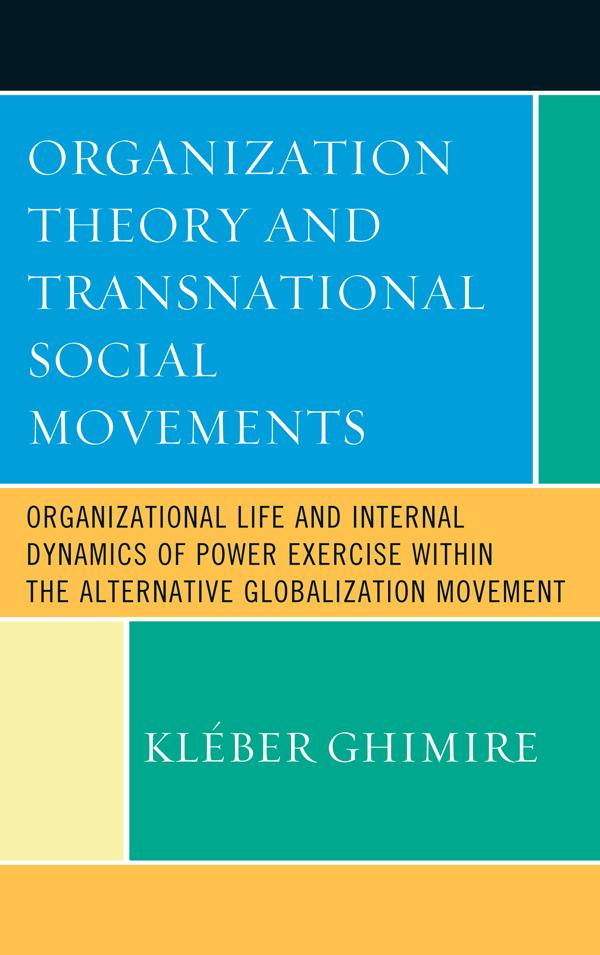
Placing it within the theoretical perspectives and debates in Organizational Theory (OT), this book explores the organizational design and internal functioning of a rather emblematic and widely acclaimed transnational social organization: the alternative globalization movement (previously anti-globalization movement). The issue of power in particular remains the central feature of the book. Based on a detailed study of two of the movement's essential constituents (transnational campaigns and the World Social Forum), the book examines the complexity in which certain forms of internal relations or mechanisms of power emerge. In other words, how is the organizational hierarchy conceived and how are important responsibilities executed? What are the principal modes of authority and control? What are the priorities and motives of the leading individuals and groups within the movement? Furthermore, what makes certain echelons, groups, or individuals wield more influence and authority than others, and also justify their legitimacy through diverse means? These questions are especially valid owing to the movement's proper interpretation of power which considers the concentration of power as totally unacceptable.
The movement draws lessons from the history of social changes to suggest that political parties and labour movements tended to give rise to the seizure of power by a few, a heavy bureaucracy, and the lack of transparency. Logically, then, a new organizational vision should emerge, avoiding hierarchies and encouraging a more diffused process of power sharing. However, an informal manner of functioning has instead created many ambiguities, with new sets of interests and power relations gradually becoming manifest within the movement. All carefully considered, the book draws three principal conclusions: first, an informal organization structure does not mean that there is an absence of power; second, the exercise of power takes place while denying it; and third, there is seemingly a lack of internal resistanc
The movement draws lessons from the history of social changes to suggest that political parties and labour movements tended to give rise to the seizure of power by a few, a heavy bureaucracy, and the lack of transparency. Logically, then, a new organizational vision should emerge, avoiding hierarchies and encouraging a more diffused process of power sharing. However, an informal manner of functioning has instead created many ambiguities, with new sets of interests and power relations gradually becoming manifest within the movement. All carefully considered, the book draws three principal conclusions: first, an informal organization structure does not mean that there is an absence of power; second, the exercise of power takes place while denying it; and third, there is seemingly a lack of internal resistanc
Pagina's: 178
Categorie: Sociologi
e-ISBN: 9780739165591
Verzendgewicht: 1.2 kg
Verzending binnen: 1-2 dagen
Betaal eenvoudig met kaart, Klarna, Apple Pay of Google Pay. Niet tevreden? Je hebt altijd 14 dagen bedenktijd. Lees meer in onze voorwaarden. Heb je vragen, mail ons dan via hello@memmo.org.
Memmo maakt studeren makkelijker – waar je ook bent ter wereld. Wij brengen je cursusboeken en slimme studietools samen op één plek: samenvattingen, quizzen, podcasts en flashcards. En Ted, je studievriend die antwoord geeft op alles wat je je afvraagt. Meer dan 50.000 studenten studeren hier al – gebouwd om je sneller te laten leren en minder stress te geven.