
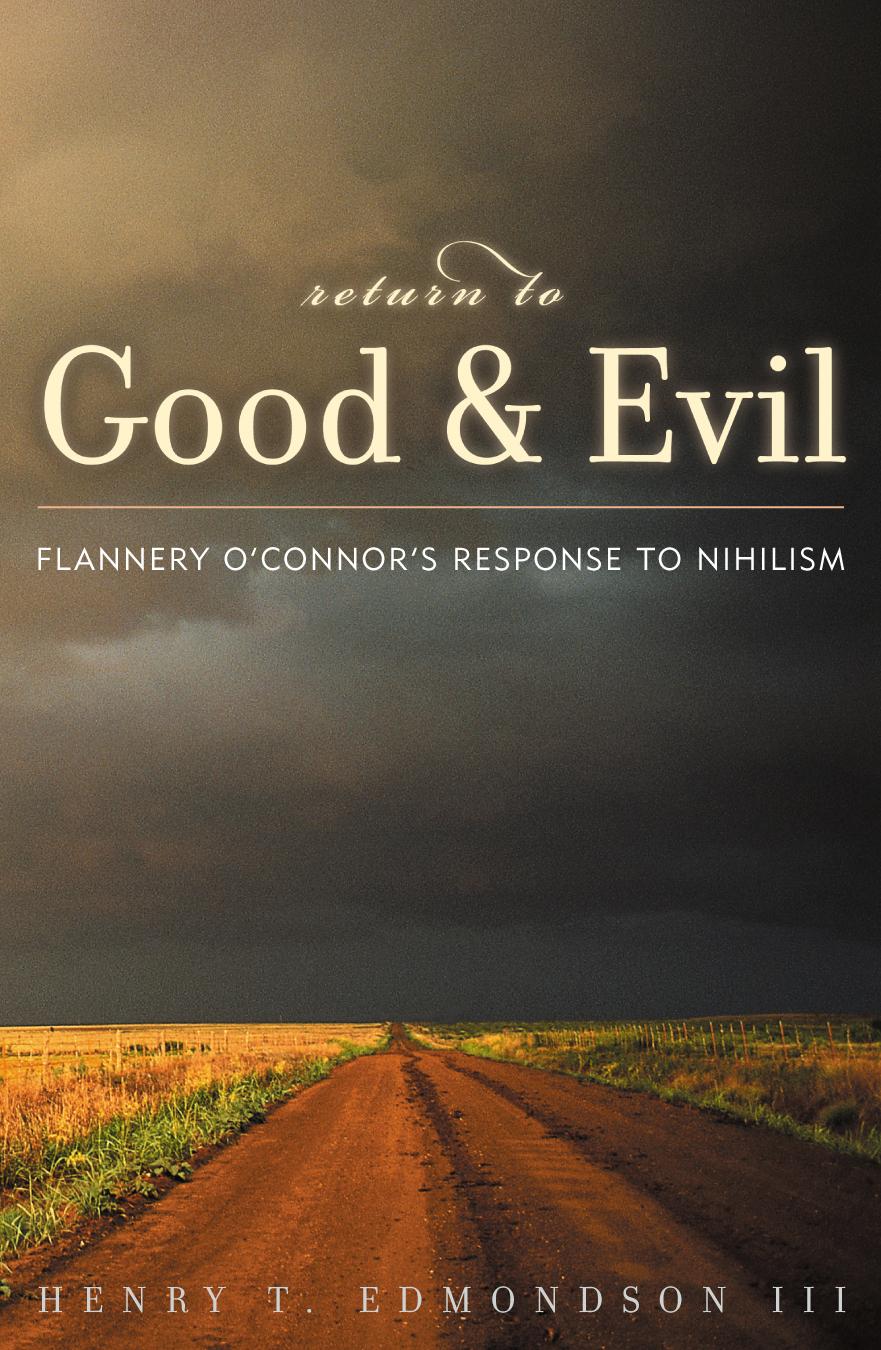
While Flannery O'Connor is hailed as one of the most important writers of the twentieth-century American south, few appreciate O'Connor as a philosopher as well. In Return to Good and Evil, Henry T. Edmondson introduces us to a remarkable thinker who uses fiction to confront and provoke us with the most troubling moral questions of modern existence.
"Right now the whole world seems to be going through a dark night of the soul," O'Connor once said, in response to the nihilistic tendencies she saw in the world around her. Nihilism-Nietzche's idea that "God is dead"-preoccupied O'Connor, and she used her fiction to draw a tableau of human civilization on the brink of a catastrophic moral, philosophical, and religious crisis. Again and again, O'Connor suggests that the only way back from this precipice is to recognize the human need for grace, redemption, and God. She argues brilliantly and persuasively through her novels and short stories that the Nietzschean challenge to the notions of good and evil is an ill-conceived effort that will result only in disaster.
With rare access to O'Connor's correspondence, prose drafts, and other personal writings, Edmondson investigates O'Connor's deepest motivations through more than just her fiction and illuminates the philosophical and theological influences on her life and work. Edmondson argues that O'Connor's artistic brilliance and philosophical genius reveal the only possible response to the nihilistic despair of the modern world: a return to good and evil through humility and grace.
"Right now the whole world seems to be going through a dark night of the soul," O'Connor once said, in response to the nihilistic tendencies she saw in the world around her. Nihilism-Nietzche's idea that "God is dead"-preoccupied O'Connor, and she used her fiction to draw a tableau of human civilization on the brink of a catastrophic moral, philosophical, and religious crisis. Again and again, O'Connor suggests that the only way back from this precipice is to recognize the human need for grace, redemption, and God. She argues brilliantly and persuasively through her novels and short stories that the Nietzschean challenge to the notions of good and evil is an ill-conceived effort that will result only in disaster.
With rare access to O'Connor's correspondence, prose drafts, and other personal writings, Edmondson investigates O'Connor's deepest motivations through more than just her fiction and illuminates the philosophical and theological influences on her life and work. Edmondson argues that O'Connor's artistic brilliance and philosophical genius reveal the only possible response to the nihilistic despair of the modern world: a return to good and evil through humility and grace.
Pagina's: 224
Categorie: Filosofi
e-ISBN: 9780739160336
Verzendgewicht: 1.2 kg
Verzending binnen: 1-2 dagen
Betaal eenvoudig met kaart, Klarna, Apple Pay of Google Pay. Niet tevreden? Je hebt altijd 14 dagen bedenktijd. Lees meer in onze voorwaarden. Heb je vragen, mail ons dan via hello@memmo.org.
Memmo maakt studeren makkelijker – waar je ook bent ter wereld. Wij brengen je cursusboeken en slimme studietools samen op één plek: samenvattingen, quizzen, podcasts en flashcards. En Ted, je studievriend die antwoord geeft op alles wat je je afvraagt. Meer dan 50.000 studenten studeren hier al – gebouwd om je sneller te laten leren en minder stress te geven.