
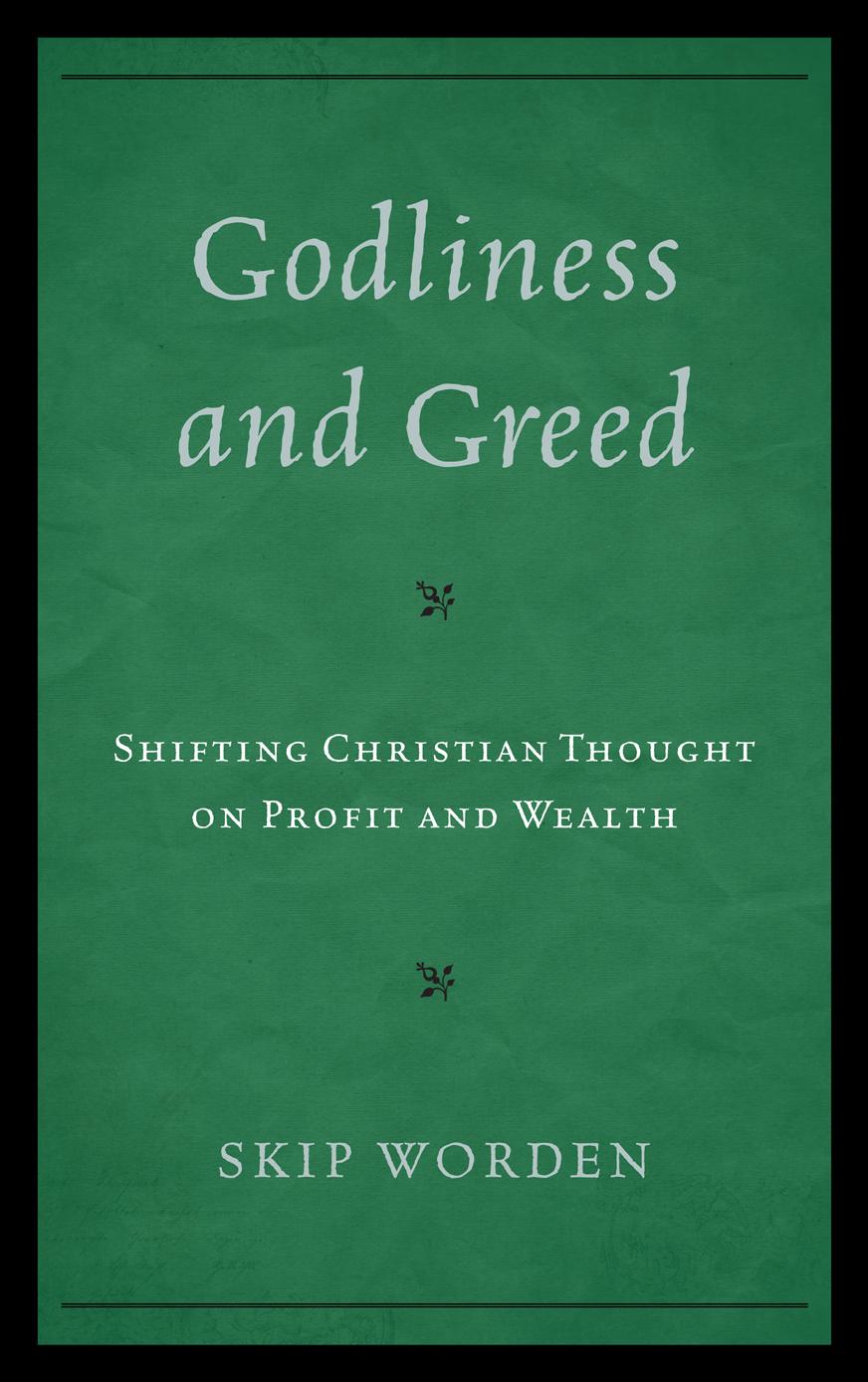
Traditional scholarship often points to the Calvinists and Max Weber's writing on the Protestant ethic as the catalysts to changing Christian attitudes concerning profit-seeking and wealth. Author Skip Worden argues that the seeds of this change occurred centuries earlier. From the beginning of the Commercial Revolution to the fifteenth-century Renaissance, he shows that the predominant Christian thought on economics went through a fundamental shift, becoming favorable toward profit-seeking and wealth-holding. Worden discusses this dramatic change and explains how the general antagonism toward the pursuit of wealth before the Commercial Revolution transformed into Protestant theologians' fighting against the prevailing view of a pro-wealth paradigm during the fifteenth century.
Worden contends that the shift away from the Patristic view of wealth occurred well before the addition of the Calvinist spirit of capitalism and the Puritan work ethic into Christian economic vernacular. Drawing on Plato, Cicero, and Augustine, early Protestant theologians unsuccessfully sought to check the rising dominance of the pro-wealth Christian paradigm, which they believed had been pushed too far. These theologians of the sixteenth and seventeenth century felt it was too close to advocating love of gain itself, something too close to the sin of greed. How well the Reformation succeeded can be assessed by Worden's insightful concluding study of John D. Rockefeller, the ascetic steward of God's Gold in the form of monopoly.
Worden contends that the shift away from the Patristic view of wealth occurred well before the addition of the Calvinist spirit of capitalism and the Puritan work ethic into Christian economic vernacular. Drawing on Plato, Cicero, and Augustine, early Protestant theologians unsuccessfully sought to check the rising dominance of the pro-wealth Christian paradigm, which they believed had been pushed too far. These theologians of the sixteenth and seventeenth century felt it was too close to advocating love of gain itself, something too close to the sin of greed. How well the Reformation succeeded can be assessed by Worden's insightful concluding study of John D. Rockefeller, the ascetic steward of God's Gold in the form of monopoly.
Pagina's: 328
Categorie: Religion & Teologi
e-ISBN: 9780739139851
Verzendgewicht: 1.2 kg
Verzending binnen: 1-2 dagen
Betaal eenvoudig met kaart, Klarna, Apple Pay of Google Pay. Niet tevreden? Je hebt altijd 14 dagen bedenktijd. Lees meer in onze voorwaarden. Heb je vragen, mail ons dan via hello@memmo.org.
Memmo maakt studeren makkelijker – waar je ook bent ter wereld. Wij brengen je cursusboeken en slimme studietools samen op één plek: samenvattingen, quizzen, podcasts en flashcards. En Ted, je studievriend die antwoord geeft op alles wat je je afvraagt. Meer dan 50.000 studenten studeren hier al – gebouwd om je sneller te laten leren en minder stress te geven.