
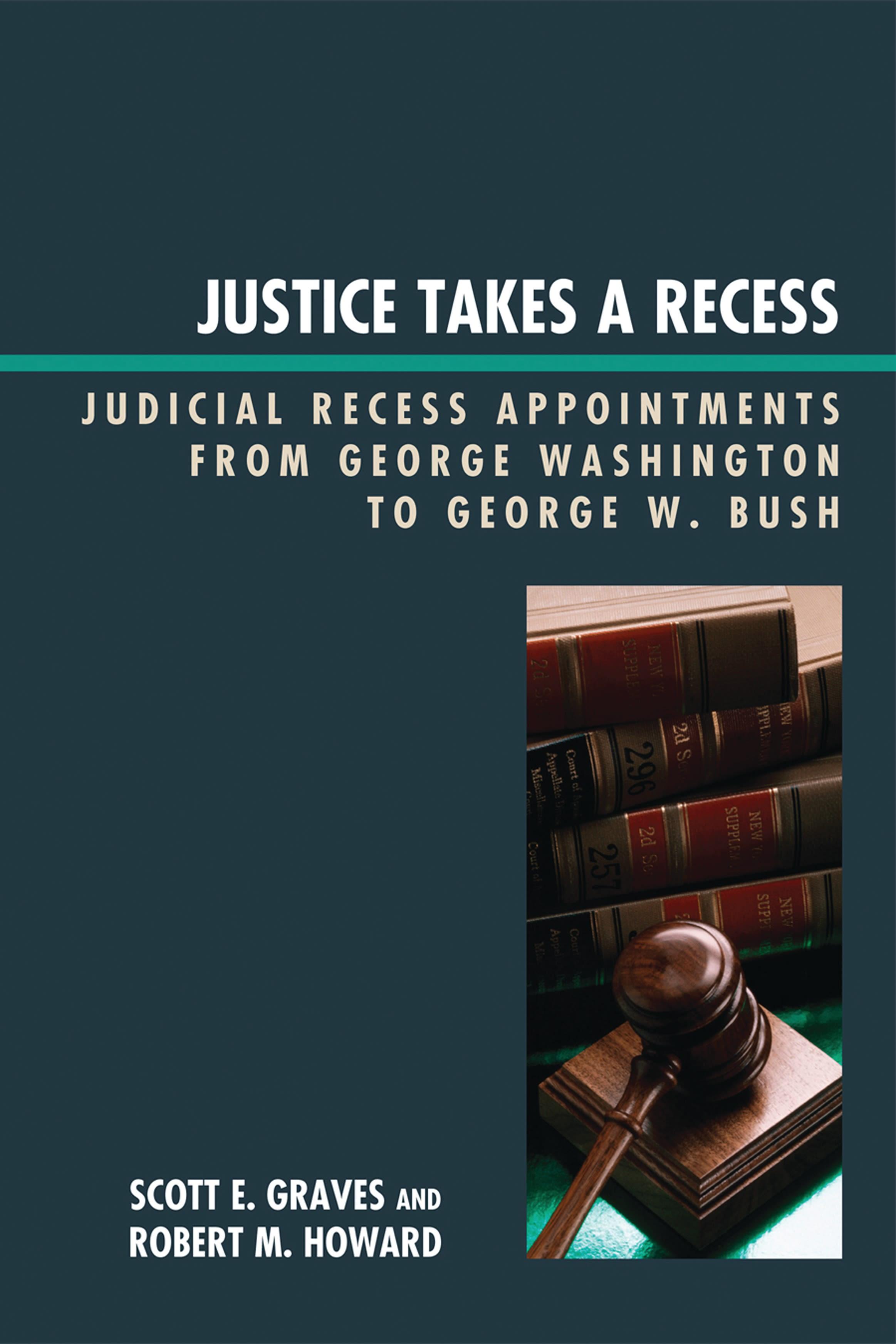
The Constitution allows the president to “fill up all Vacancies that may happen during the Recess of the Senate, by granting Commissions which shall expire at the End of their next Session.” In Justice Takes a Recess, Scott E. Graves and Robert M. Howard address how presidents have used recess appointments over time and whether the independence of judicial recess appointees is compromised. They argue that these appointments can upset the separation of powers envisioned by the Framers, shifting power away from one branch of government and toward another.
Examining every judicial recess appointment from 1789 to 2005, the authors discover that presidents are conditionally strategic when they unilaterally appoint federal judges during Senate recesses. Such appointments were made cautiously for most of the twentieth century, leading to a virtual moratorium for several decades, until three recent recess appointments to the courts in the face of Senate obstruction revived the controversy. These appointments suggest the beginning of a more assertive use of recess appointments in the increasingly politicized activity of staffing the federal courts. The authors argue that the recess appointment clause, as it pertains to the judiciary, is no longer necessary or desirable. The strategic use of such appointments by strong presidents to shift judicial ideology, combined with the lack of independence exhibited by judicial recess appointments, results in recess power that threatens constitutional features of the judicial branch.
Examining every judicial recess appointment from 1789 to 2005, the authors discover that presidents are conditionally strategic when they unilaterally appoint federal judges during Senate recesses. Such appointments were made cautiously for most of the twentieth century, leading to a virtual moratorium for several decades, until three recent recess appointments to the courts in the face of Senate obstruction revived the controversy. These appointments suggest the beginning of a more assertive use of recess appointments in the increasingly politicized activity of staffing the federal courts. The authors argue that the recess appointment clause, as it pertains to the judiciary, is no longer necessary or desirable. The strategic use of such appointments by strong presidents to shift judicial ideology, combined with the lack of independence exhibited by judicial recess appointments, results in recess power that threatens constitutional features of the judicial branch.
Pagina's: 128
Categorie: Juridik
e-ISBN: 9780739138199
Verzendgewicht: 1.2 kg
Verzending binnen: 1-2 dagen
Betaal eenvoudig met kaart, Klarna, Apple Pay of Google Pay. Niet tevreden? Je hebt altijd 14 dagen bedenktijd. Lees meer in onze voorwaarden. Heb je vragen, mail ons dan via hello@memmo.org.
Memmo maakt studeren makkelijker – waar je ook bent ter wereld. Wij brengen je cursusboeken en slimme studietools samen op één plek: samenvattingen, quizzen, podcasts en flashcards. En Ted, je studievriend die antwoord geeft op alles wat je je afvraagt. Meer dan 50.000 studenten studeren hier al – gebouwd om je sneller te laten leren en minder stress te geven.