
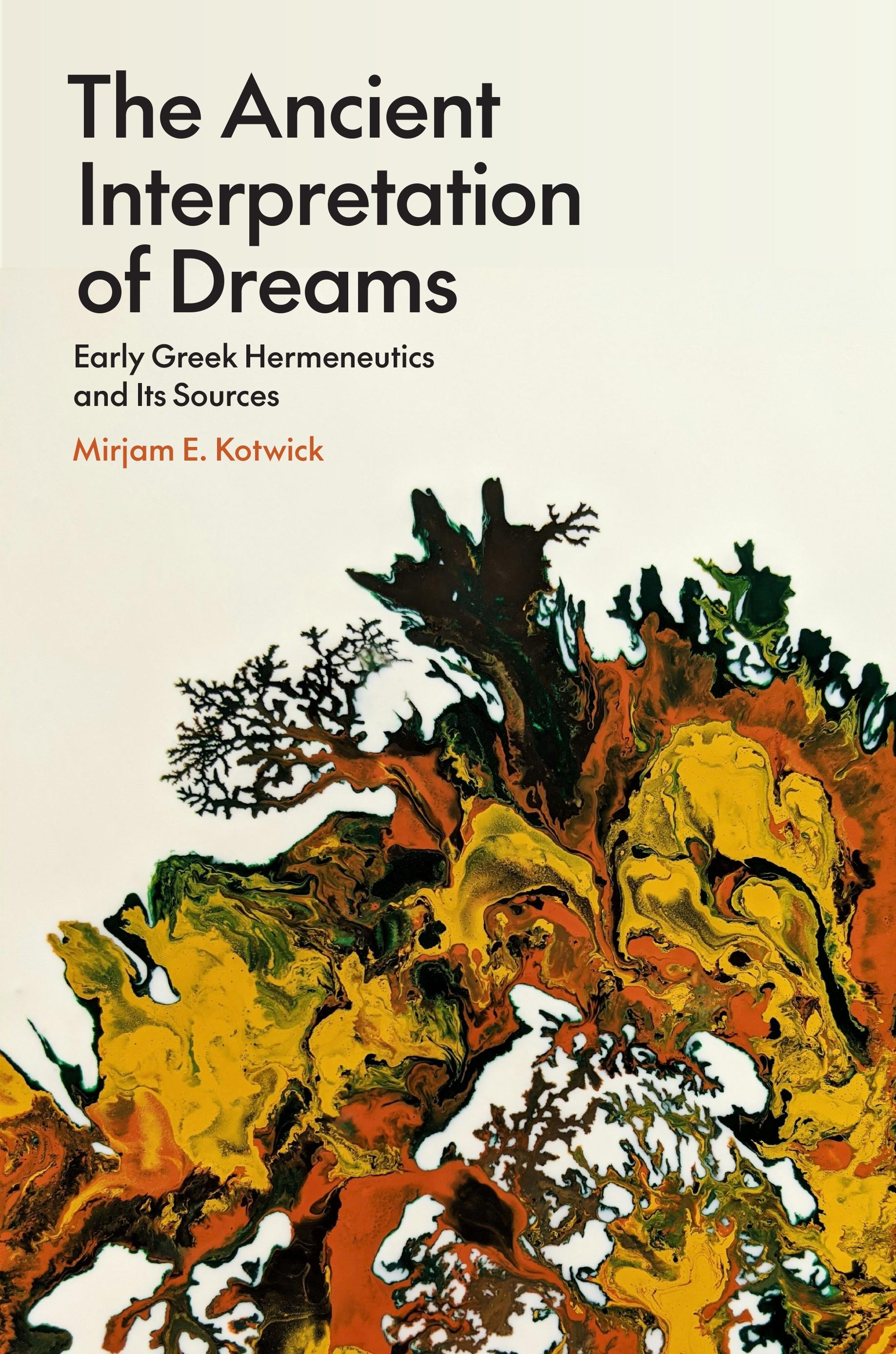
The first book-length study of dream interpretation in classical Greece
Long before Freud, dreams and how to make sense of them fascinated ancient thinkers. In The Ancient Interpretation of Dreams, Mirjam Kotwick traces a continuous intellectual practice of dream interpretation across a range of ancient Greek texts, including those from Homer, Aeschylus, Herodotus, Antiphon, the Hippocratic doctors, Plato, and Aristotle. In these works, dreams signify meaning in indirect, distorted, figurative, and metaphorical ways. The authors employ what Kotwick terms the “hermeneutics of similarity” to uncover the message of a dream by identifying (obvious or nonobvious) similarities between its literal expression and its hidden meaning. This method of interpretation remained consistent, whether authors understood dreams as messages from the gods or as results of physiological processes within the dreamer’s body.
Kotwick shows that ancient Greeks used their study of dreams to reflect on larger questions of interpretation, figurative language, and metaphor—before the concept of metaphor existed. Philosophers and scientists connected their interest in dreams to their own theories in ethics, cosmology, medicine, biology, linguistics, and literary criticism. It is in the interpretation of dreams, Kotwick argues, that we can see early Greek hermeneutic thought develop. In uncovering the ancient discourse on dream interpretation, this study also outlines an early history of interpretation.
Betaal eenvoudig met kaart, Klarna, Apple Pay of Google Pay. Niet tevreden? Je hebt altijd 14 dagen bedenktijd. Lees meer in onze voorwaarden. Heb je vragen, mail ons dan via hello@memmo.org.
Memmo maakt studeren makkelijker – waar je ook bent ter wereld. Wij brengen je cursusboeken en slimme studietools samen op één plek: samenvattingen, quizzen, podcasts en flashcards. En Ted, je studievriend die antwoord geeft op alles wat je je afvraagt. Meer dan 50.000 studenten studeren hier al – gebouwd om je sneller te laten leren en minder stress te geven.