
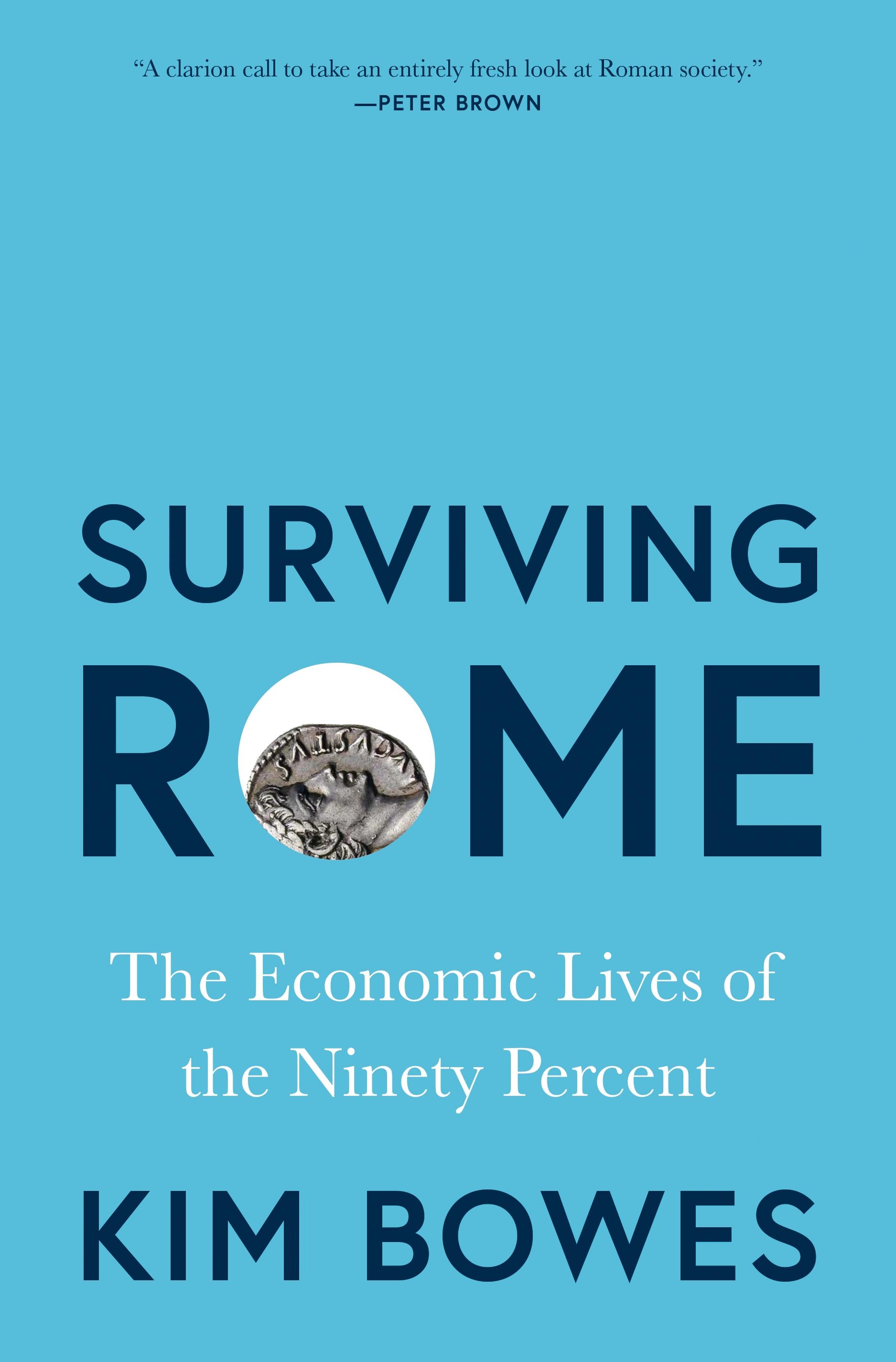
A radical revision—and worker’s-eye view—of everything we thought we knew about the ancient Roman economy
The story of ancient Rome is predominantly one of great men with great fortunes. Surviving Rome unearths another history, one of ordinary Romans, who worked with their hands and survived through a combination of grit and grinding labor.
Focusing on the working majority, Kim Bowes tells the stories of people like the tenant farmer Epimachus, Faustilla the moneylender, and the pimp Philokles. She reveals how the economic changes of the period created a set of bitter challenges and opportunistic hustles for everyone from farmers and craftspeople to day laborers and slaves. She finds working people producing a consumer revolution, making and buying all manner of goods from fine pottery to children’s toys. Many of the poorest working people probably pieced together a living from multiple sources of income, including wages. And she suggests that Romans’ most daunting challenge was the struggle to save. Like many modern people, saving enough to buy land or start a business was a slow, precarious slog. Bowes shows how these economies of survival were shared by a wide swath of the populace, blurring the lines between genders, ages, and legal status.
Drawing on new archaeological and textual evidence, Surviving Rome presents a radical new perspective on the economy of ancient Rome while speaking to the challenges of today’s laborers and gig workers surviving in an unforgiving global world.
Betaal eenvoudig met kaart, Klarna, Apple Pay of Google Pay. Niet tevreden? Je hebt altijd 14 dagen bedenktijd. Lees meer in onze voorwaarden. Heb je vragen, mail ons dan via hello@memmo.org.
Memmo maakt studeren makkelijker – waar je ook bent ter wereld. Wij brengen je cursusboeken en slimme studietools samen op één plek: samenvattingen, quizzen, podcasts en flashcards. En Ted, je studievriend die antwoord geeft op alles wat je je afvraagt. Meer dan 50.000 studenten studeren hier al – gebouwd om je sneller te laten leren en minder stress te geven.