
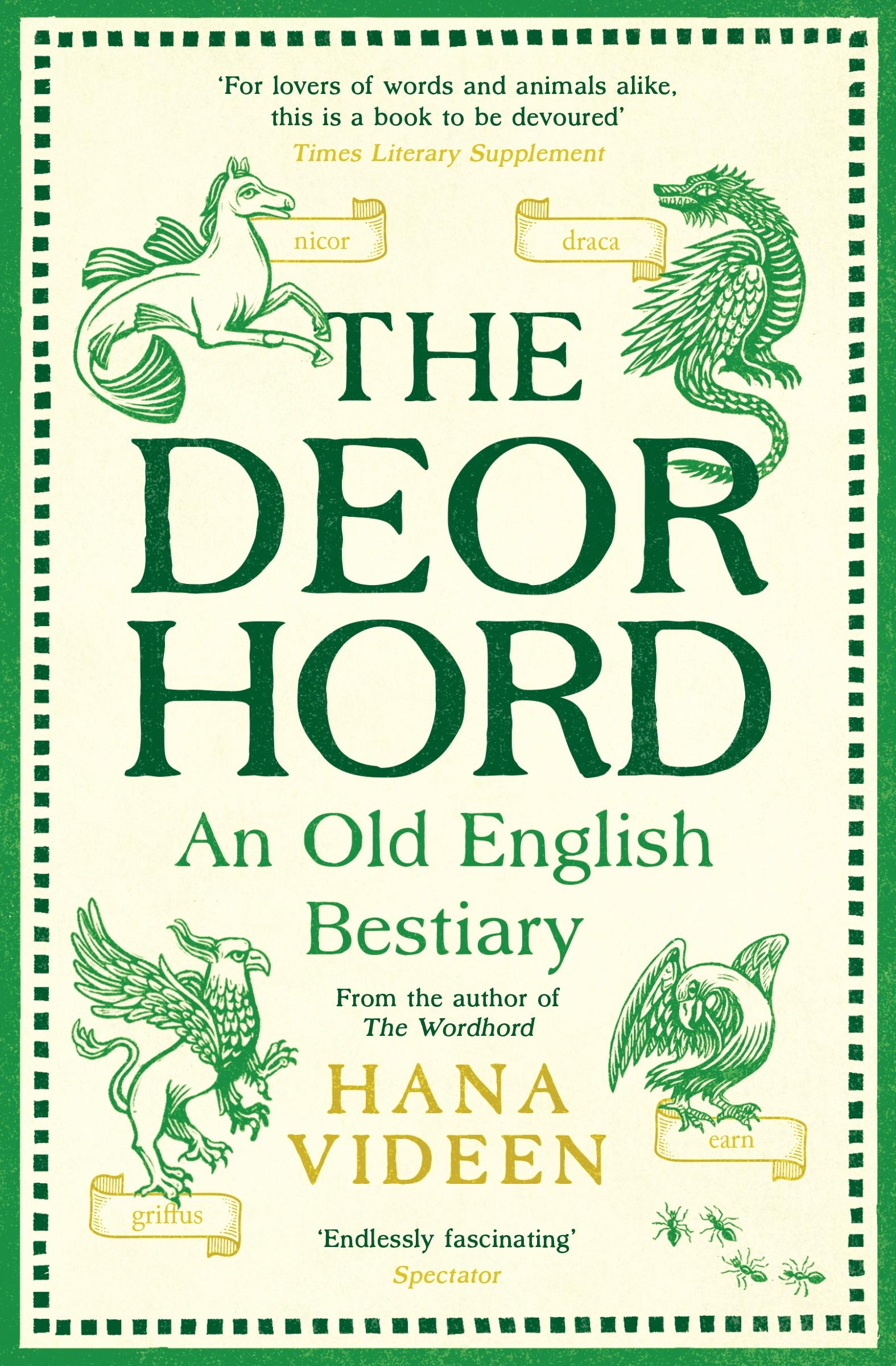
An entertaining tour of Old English words for animals, from the author of The Wordhord: Daily Life in Old English
Many of the animals we encounter in everyday life, from pets and farm animals to the wild creatures of field and forest, have remained the same since medieval times. But the words used to name and describe them have often changed beyond recognition, starting with the Old English word for “animal” itself, deor (pronounced DAY-or). In The Deorhord, Hana Videen presents a glittering Old English bestiary of animals real and imaginary, big and small, ordinary and extraordinary—the good, the bad, and the downright baffling.
From gange-wæfran or walker-weavers (spiders) and hasu-padan or grey-cloaked ones (eagles) to heafdu swelce mona or moon-heads (historians still don’t know!), The Deorhord introduces a world both familiar and strange: where ants could be monsters and panthers could be your friends, where dog-headed men were as real as elephants, and where whales were as sneaky as wolves. The curious stories behind these words provide vivid insights into the language, literature, and lives of those who spoke Old English—the language of Beowulf—more than a thousand years ago.
A delightful journey through the weird and wonderful world of Old English, The Deorhord is a magical menagerie of new creatures and new words for the modern englisc reader to discover.
Betaal eenvoudig met kaart, Klarna, Apple Pay of Google Pay. Niet tevreden? Je hebt altijd 14 dagen bedenktijd. Lees meer in onze voorwaarden. Heb je vragen, mail ons dan via hello@memmo.org.
Memmo maakt studeren makkelijker – waar je ook bent ter wereld. Wij brengen je cursusboeken en slimme studietools samen op één plek: samenvattingen, quizzen, podcasts en flashcards. En Ted, je studievriend die antwoord geeft op alles wat je je afvraagt. Meer dan 50.000 studenten studeren hier al – gebouwd om je sneller te laten leren en minder stress te geven.