
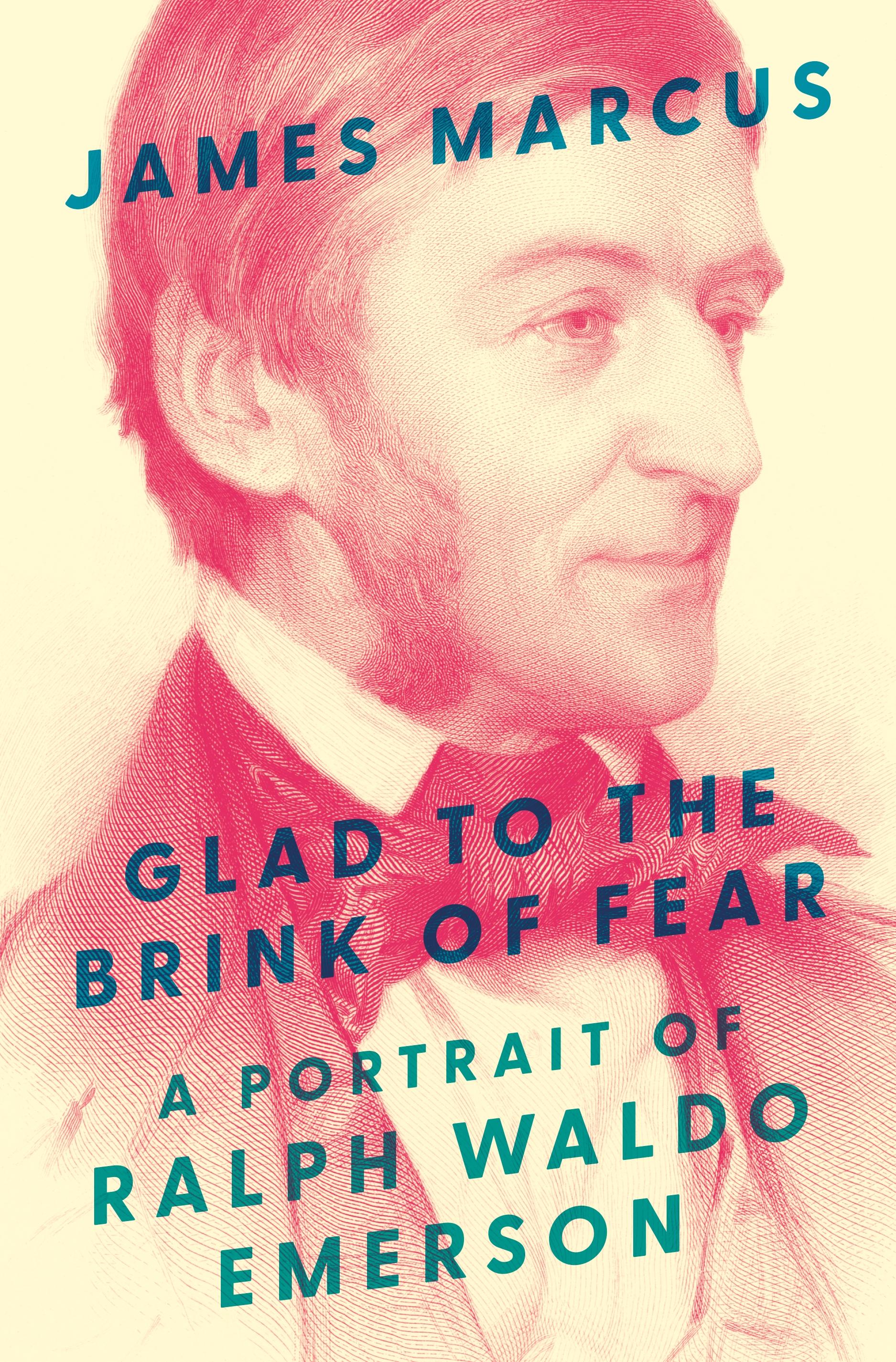
An engaging reassessment of the celebrated essayist and his relevance to contemporary readers
More than two centuries after his birth, Ralph Waldo Emerson remains one of the presiding spirits in American culture. Yet his reputation as the starry-eyed prophet of self-reliance has obscured a much more complicated figure who spent a lifetime wrestling with injustice, philosophy, art, desire, and suffering. James Marcus introduces readers to this Emerson, a writer of self-interrogating genius whose visionary flights are always grounded in Yankee shrewdness.
This Emerson is a rebel. He is also a lover, a friend, a husband, and a father. Having declared his great topic to be “the infinitude of the private man,” he is nonetheless an intensely social being who develops Transcendentalism in the company of Henry David Thoreau, Margaret Fuller, Bronson Alcott, and Theodore Parker. And although he resists political activism early on—hoping instead for a revolution in consciousness—the burning issue of slavery ultimately transforms him from cloistered metaphysician to fiery abolitionist.
Drawing on telling episodes from Emerson’s life alongside landmark essays like “Self-Reliance,” “Experience,” and “Circles,” Glad to the Brink of Fear reveals how Emerson shares our preoccupations with fate and freedom, race and inequality, love and grief. It shows, too, how his desire to see the world afresh, rather than accepting the consensus view, is a lesson that never grows old.
Betaal eenvoudig met kaart, Klarna, Apple Pay of Google Pay. Niet tevreden? Je hebt altijd 14 dagen bedenktijd. Lees meer in onze voorwaarden. Heb je vragen, mail ons dan via hello@memmo.org.
Memmo maakt studeren makkelijker – waar je ook bent ter wereld. Wij brengen je cursusboeken en slimme studietools samen op één plek: samenvattingen, quizzen, podcasts en flashcards. En Ted, je studievriend die antwoord geeft op alles wat je je afvraagt. Meer dan 50.000 studenten studeren hier al – gebouwd om je sneller te laten leren en minder stress te geven.