
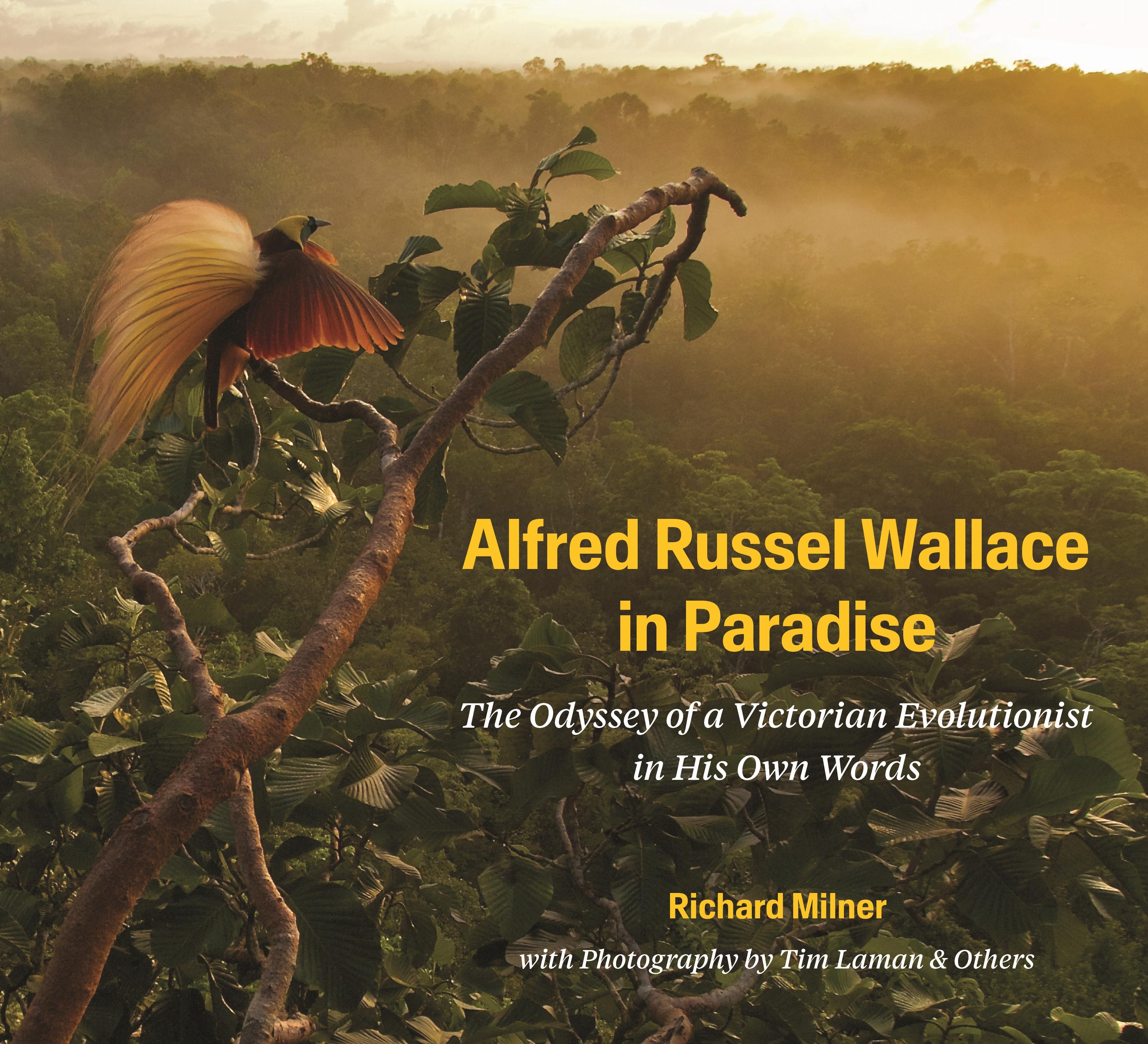
A breathtaking visual narrative of the legendary naturalist’s adventures and pioneering contributions to the life sciences
In old age, Alfred Russel Wallace (1823–1913) became arguably the most famous scientist of his day. He and his senior colleague, Charles Darwin, had independently discovered the theory of evolution by natural selection, which they jointly published in 1858. Yet this genius’s legacy was overshadowed by Darwin’s for more than a century. Alfred Russel Wallace in Paradise paints an unprecedented portrait of the indefatigable explorer and hero of science whose self-effacing modesty contributed to his long obscurity.
Wallace pioneered our understanding of the mechanisms of evolution, humanity’s place in nature, the worldwide distribution of plants and animals, and tribal cultures. Anthropologist Richard Milner scoured Wallace’s journals and papers to recount the naturalist’s voyages to the Amazon and Malay Archipelago and his return to England—entirely in Wallace’s own words—while tracing the origins of his ideas on evolution, biogeography, animal coloration, and sexual selection. Newly illustrated maps, personal letters, and recent photographs of wildlife and tropical ecosystems bring his travels and theories vividly to life.
With sumptuous images by award-winning National Geographic photographer Tim Laman and other artists, Alfred Russel Wallace in Paradise is a visually spectacular account of Wallace’s journeys and his enduring insights into biodiversity and evolution.
Betaal eenvoudig met kaart, Klarna, Apple Pay of Google Pay. Niet tevreden? Je hebt altijd 14 dagen bedenktijd. Lees meer in onze voorwaarden. Heb je vragen, mail ons dan via hello@memmo.org.
Memmo maakt studeren makkelijker – waar je ook bent ter wereld. Wij brengen je cursusboeken en slimme studietools samen op één plek: samenvattingen, quizzen, podcasts en flashcards. En Ted, je studievriend die antwoord geeft op alles wat je je afvraagt. Meer dan 50.000 studenten studeren hier al – gebouwd om je sneller te laten leren en minder stress te geven.