
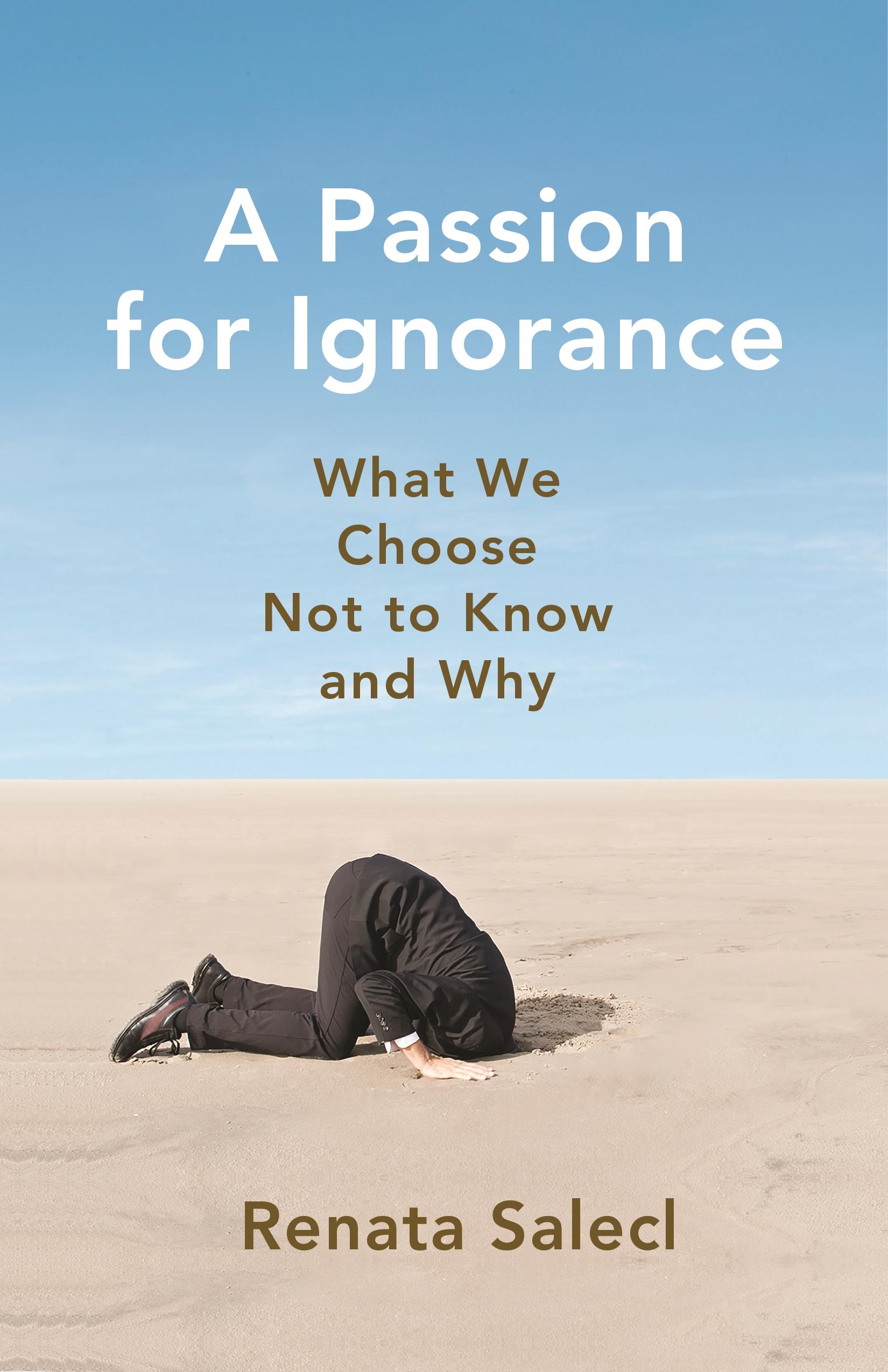
An original and provocative exploration of our capacity to ignore what is inconvenient or traumatic
Ignorance, whether passive or active, conscious or unconscious, has always been a part of the human condition, Renata Salecl argues. What has changed in our post-truth, postindustrial world is that we often feel overwhelmed by the constant flood of information and misinformation. It sometimes seems impossible to differentiate between truth and falsehood and, as a result, there has been a backlash against the idea of expertise, and a rise in the number of people actively choosing not to know. The dangers of this are obvious, but Salecl challenges our assumptions, arguing that there may also be a positive side to ignorance, and that by addressing the role of ignorance in society, we may also be able to reclaim the role of knowledge.
Drawing on philosophy, social and psychoanalytic theory, popular culture, and her own experience, Salecl explores how the passion for ignorance plays out in many different aspects of life today, from love, illness, trauma, and the fear of failure to genetics, forensic science, big data, and the incel movement—and she concludes that ignorance is a complex phenomenon that can, on occasion, benefit individuals and society as a whole.
The result is a fascinating investigation of how the knowledge economy became an ignorance economy, what it means for us, and what it tells us about the world today.
Betaal eenvoudig met kaart, Klarna, Apple Pay of Google Pay. Niet tevreden? Je hebt altijd 14 dagen bedenktijd. Lees meer in onze voorwaarden. Heb je vragen, mail ons dan via hello@memmo.org.
Memmo maakt studeren makkelijker – waar je ook bent ter wereld. Wij brengen je cursusboeken en slimme studietools samen op één plek: samenvattingen, quizzen, podcasts en flashcards. En Ted, je studievriend die antwoord geeft op alles wat je je afvraagt. Meer dan 50.000 studenten studeren hier al – gebouwd om je sneller te laten leren en minder stress te geven.