
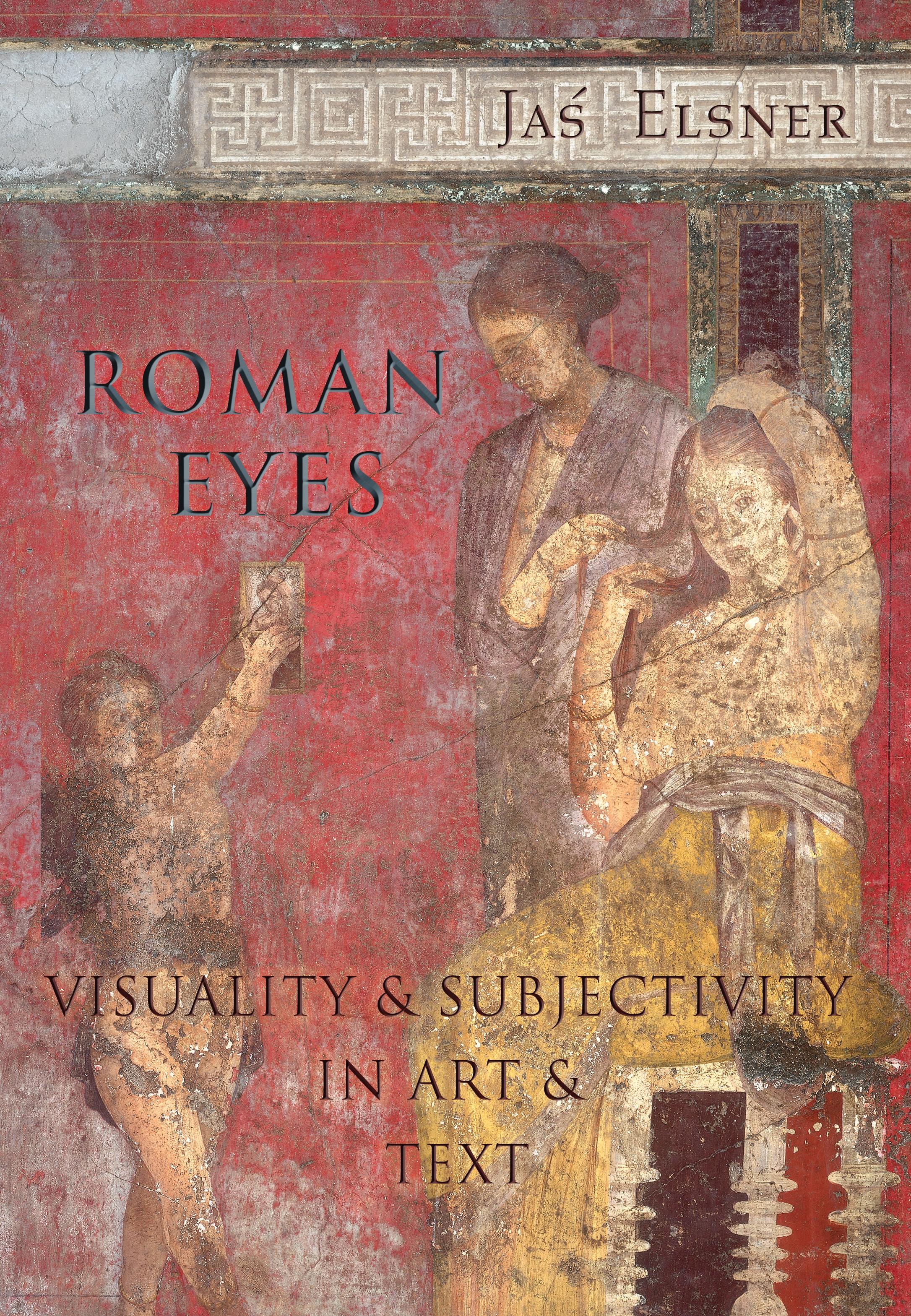
In Roman Eyes, Jas Elsner seeks to understand the multiple ways that art in ancient Rome formulated the very conditions for its own viewing, and as a result was complicit in the construction of subjectivity in the Roman Empire.
Elsner draws upon a wide variety of visual material, from sculpture and wall paintings to coins and terra-cotta statuettes. He examines the different contexts in which images were used, from the religious to the voyeuristic, from the domestic to the subversive. He reads images alongside and against the rich literary tradition of the Greco-Roman world, including travel writing, prose fiction, satire, poetry, mythology, and pilgrimage accounts. The astonishing picture that emerges reveals the mindsets Romans had when they viewed art--their preoccupations and theories, their cultural biases and loosely held beliefs.
Roman Eyes is not a history of official public art--the monumental sculptures, arches, and buildings we typically associate with ancient Rome, and that tend to dominate the field. Rather, Elsner looks at smaller objects used or displayed in private settings and closed religious rituals, including tapestries, ivories, altars, jewelry, and even silverware. In many cases, he focuses on works of art that no longer exist, providing a rare window into the aesthetic and religious lives of the ancient Romans.
Betaal eenvoudig met kaart, Klarna, Apple Pay of Google Pay. Niet tevreden? Je hebt altijd 14 dagen bedenktijd. Lees meer in onze voorwaarden. Heb je vragen, mail ons dan via hello@memmo.org.
Memmo maakt studeren makkelijker – waar je ook bent ter wereld. Wij brengen je cursusboeken en slimme studietools samen op één plek: samenvattingen, quizzen, podcasts en flashcards. En Ted, je studievriend die antwoord geeft op alles wat je je afvraagt. Meer dan 50.000 studenten studeren hier al – gebouwd om je sneller te laten leren en minder stress te geven.