
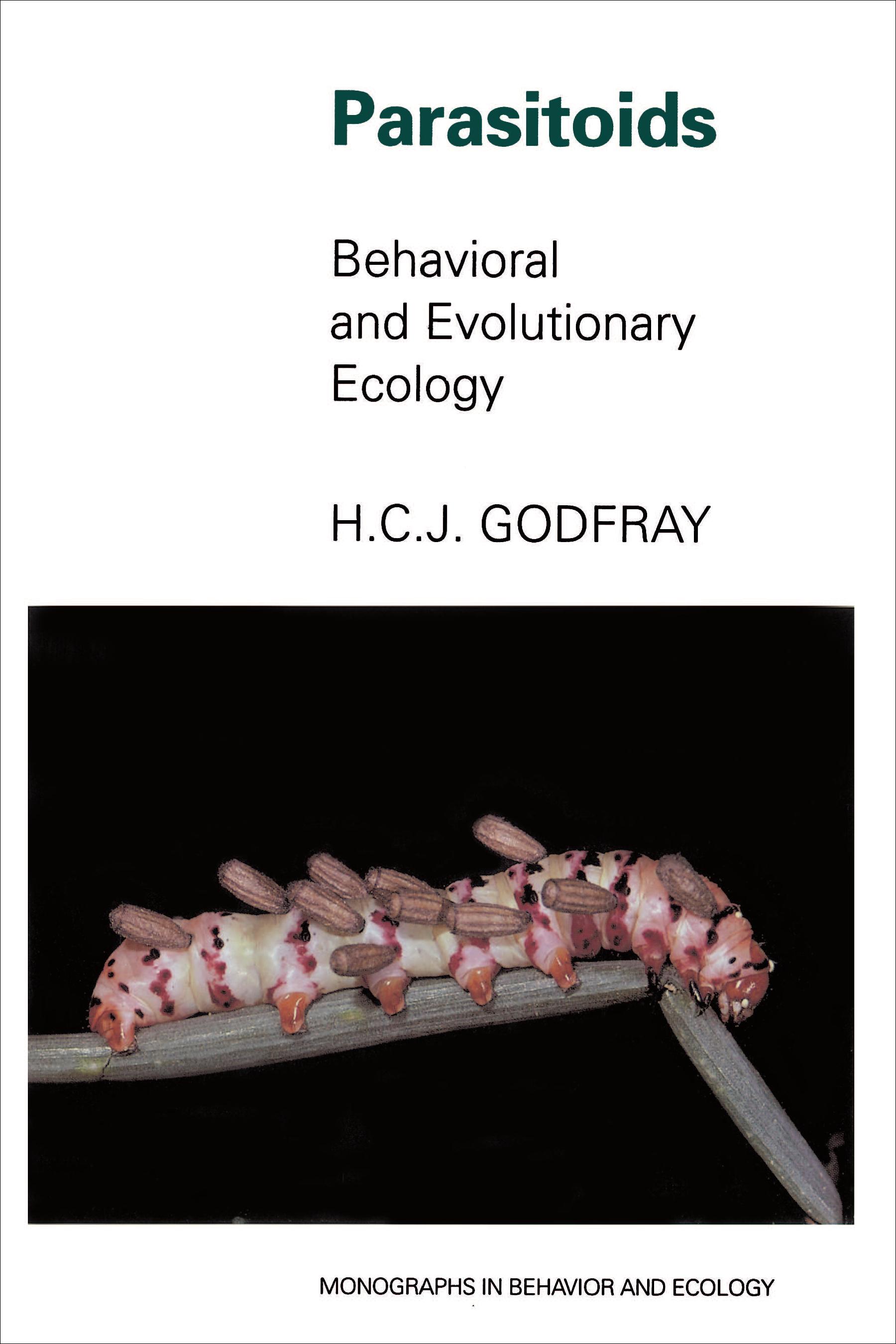
Parasitoids lay their eggs on or in the bodies of other species of insect, and the parasitoid larvae develop by feeding on the host, causing its eventual death. Known for a long time to applied biologists for their importance in regulating the population densities of economic pests, parasitoids have recently proven to be valuable tools in testing many aspects of evolutionary theory. This book synthesizes the work of both schools of parasitoid biology and asks how a consideration of evolutionary biology can help us understand the behavior, ecology, and diversity of the approximately one to two million species of parasitoid found on earth.
After a general introduction to parasitoid natural history and taxonomy, the first part of the book treats the different components of the reproductive strategy of parasitoids: searching for a host, host selection, clutch size, and the sex ratio. Subsequent chapters discuss pathogens and non-Mendelian genetic elements that affect sexual reproduction; evolutionary aspects of the physiological interactions between parasitoid and host; mating strategies; life history theory and community ecology. A special effort is made to discuss the theoretical background to the subject, but without the use of mathematics.
Betaal eenvoudig met kaart, Klarna, Apple Pay of Google Pay. Niet tevreden? Je hebt altijd 14 dagen bedenktijd. Lees meer in onze voorwaarden. Heb je vragen, mail ons dan via hello@memmo.org.
Memmo maakt studeren makkelijker – waar je ook bent ter wereld. Wij brengen je cursusboeken en slimme studietools samen op één plek: samenvattingen, quizzen, podcasts en flashcards. En Ted, je studievriend die antwoord geeft op alles wat je je afvraagt. Meer dan 50.000 studenten studeren hier al – gebouwd om je sneller te laten leren en minder stress te geven.