
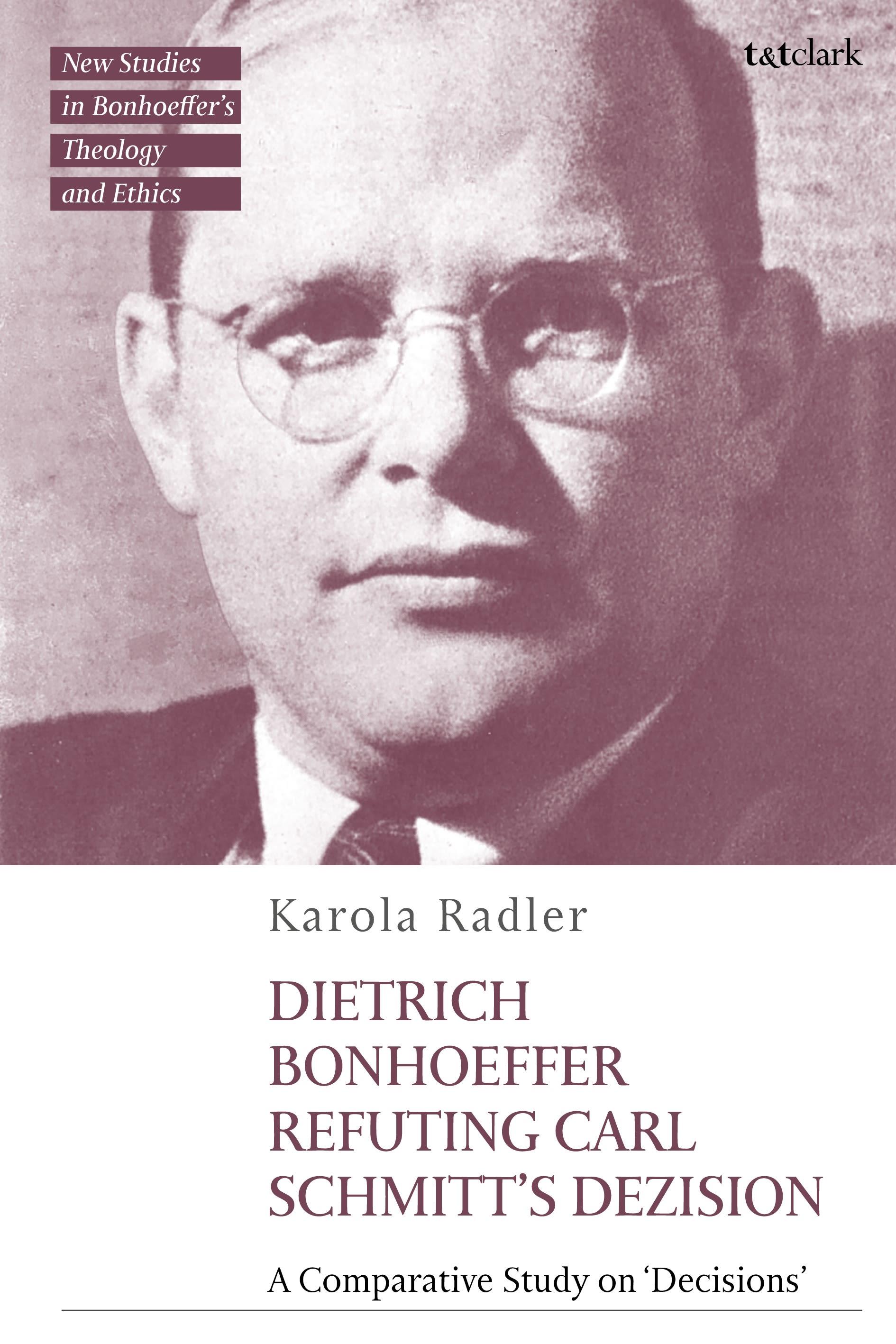
Radler examines Bonhoeffer's and Schmitt's intellectual paradigms of thought of theology and jurisprudence. Whilst both thinkers encounter constitutional institutional models, they arrive at opposing conclusions and actions. This book tackles how they approach the indicators for a decision of choices between alternatives, the urgency of resolving the problems at hand, the intended goal, and the following active manifestation in Christ.
Radler reveals how Schmitt's form of Dezision, resting on a linear model of history, abstracts metaphysical content from objective normative evaluation and, in support of a human personality representing the idea of Christ, elevates the significance of the self over content and subject in structural analogy to theological dogma. On the other hand, Bonhoeffer's theology repudiates Schmitt's political-jurisprudential position, contesting that history ultimately focuses on leading to human wholeness through reconciliation.
Radler reveals how Schmitt's form of Dezision, resting on a linear model of history, abstracts metaphysical content from objective normative evaluation and, in support of a human personality representing the idea of Christ, elevates the significance of the self over content and subject in structural analogy to theological dogma. On the other hand, Bonhoeffer's theology repudiates Schmitt's political-jurisprudential position, contesting that history ultimately focuses on leading to human wholeness through reconciliation.
Betaal eenvoudig met kaart, Klarna, Apple Pay of Google Pay. Niet tevreden? Je hebt altijd 14 dagen bedenktijd. Lees meer in onze voorwaarden. Heb je vragen, mail ons dan via hello@memmo.org.
Memmo maakt studeren makkelijker – waar je ook bent ter wereld. Wij brengen je cursusboeken en slimme studietools samen op één plek: samenvattingen, quizzen, podcasts en flashcards. En Ted, je studievriend die antwoord geeft op alles wat je je afvraagt. Meer dan 50.000 studenten studeren hier al – gebouwd om je sneller te laten leren en minder stress te geven.