
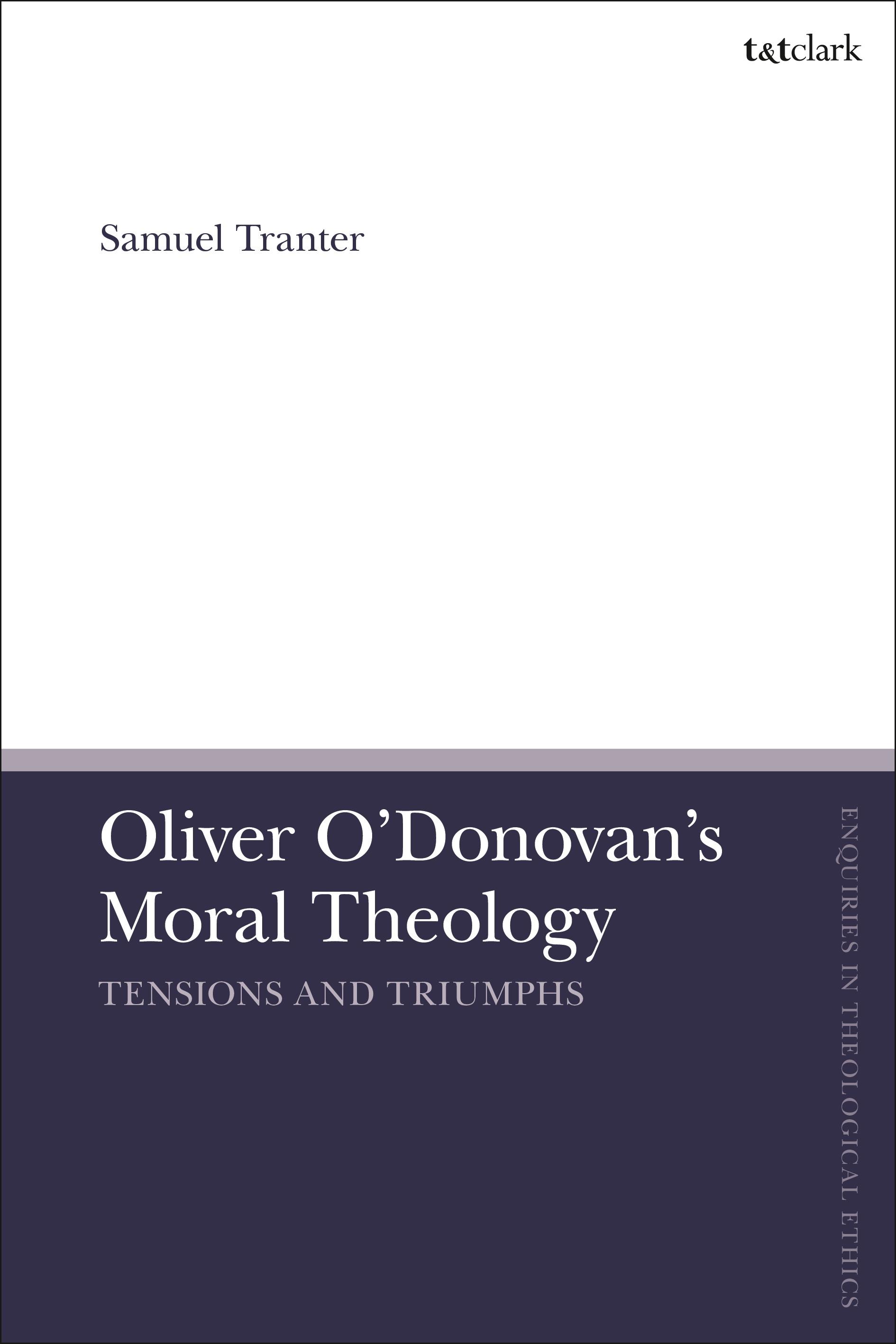
This book offers the first sustained, full-length treatment of the wide-ranging work of major Anglican theologian Oliver O'Donovan. Analyzing such key texts as Resurrection and Moral Order, The Desire of the Nations and Ethics as Theology, Samuel Tranter shows that the relationship between eschatology and ethics is an area of significant tension in O'Donovan's evolving vision of moral theology.
Tranter traces this tension as it relates to O'Donovan's writing and contemporary discussion around natural law, divine command and human flourishing, as well as to particular topics such as poverty, marriage and singleness and biotechnology. He also connects it with the broader doctrinal features of O'Donovan's project, such as his accounts of creation, sin and redemption, and his understanding of the relationships between the cross and the resurrection, on one hand, and Christology and pneumatology, on the other. Throughout, Tranter indicates the implications of these themes for our understanding of the Christian life.
This volume establishes and evaluates O'Donovan's influence on contemporary Christian ethicists and political theologians (such as Luke Bretherton, Gilbert Meilaender, Jean Porter and Brent Waters), and engages with critical readings of O'Donovan (such as those by Stanley Hauerwas and Gerald McKenny). In conversation with these and other voices from a range of perspectives, Tranter shows how O'Donovan's proposals may be appropriated and amended as a resource for theology and ethics going forward.
Tranter traces this tension as it relates to O'Donovan's writing and contemporary discussion around natural law, divine command and human flourishing, as well as to particular topics such as poverty, marriage and singleness and biotechnology. He also connects it with the broader doctrinal features of O'Donovan's project, such as his accounts of creation, sin and redemption, and his understanding of the relationships between the cross and the resurrection, on one hand, and Christology and pneumatology, on the other. Throughout, Tranter indicates the implications of these themes for our understanding of the Christian life.
This volume establishes and evaluates O'Donovan's influence on contemporary Christian ethicists and political theologians (such as Luke Bretherton, Gilbert Meilaender, Jean Porter and Brent Waters), and engages with critical readings of O'Donovan (such as those by Stanley Hauerwas and Gerald McKenny). In conversation with these and other voices from a range of perspectives, Tranter shows how O'Donovan's proposals may be appropriated and amended as a resource for theology and ethics going forward.
Betaal eenvoudig met kaart, Klarna, Apple Pay of Google Pay. Niet tevreden? Je hebt altijd 14 dagen bedenktijd. Lees meer in onze voorwaarden. Heb je vragen, mail ons dan via hello@memmo.org.
Memmo maakt studeren makkelijker – waar je ook bent ter wereld. Wij brengen je cursusboeken en slimme studietools samen op één plek: samenvattingen, quizzen, podcasts en flashcards. En Ted, je studievriend die antwoord geeft op alles wat je je afvraagt. Meer dan 50.000 studenten studeren hier al – gebouwd om je sneller te laten leren en minder stress te geven.