
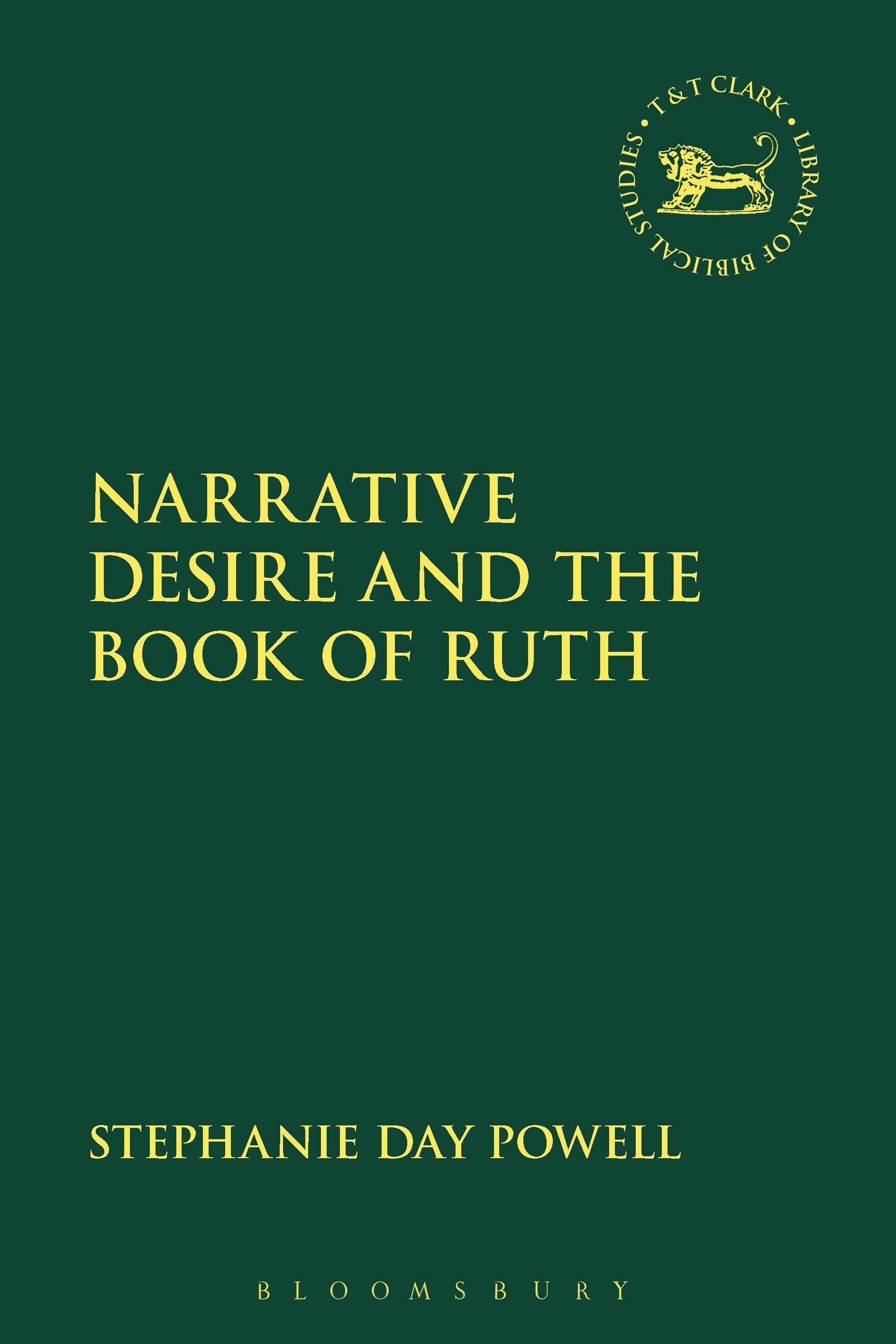
Stephanie Day Powell illuminates the myriad forms of persuasion, inducement, discontent, and heartbreak experienced by readers of Ruth. Writing from a lesbian perspective, Powell draws upon biblical scholarship, contemporary film and literature, narrative studies, feminist and queer theories, trauma studies and psychoanalytic theory to trace the workings of desire that produced the book of Ruth and shaped its history of reception. Wrestling with the arguments for and against reading Ruth as a love story between women, Powell gleans new insights into the ancient world in which Ruth was written.
Ruth is known as a tale of two courageous women, the Moabite Ruth and her Israelite mother-in-law Naomi. As widows with scarce means of financial or social support, Ruth and Naomi are forced to creatively subvert the economic and legal systems of their day in order to survive. Through exceptional acts of loyalty, they, along with their kinsman Boaz, re-establish the bonds of family and community, while preserving the line of Israel's great king David. Yet for many, the story of Ruth is deeply dissatisfying. Scholars increasingly recognize how Ruth's textual “gaps” and ambiguities render conventional interpretations of the book's meaning and purpose uncertain. Feminist and queer interpreters question the appropriation of a woman's story to uphold patriarchal institutions and heteronormative values. Such avenues of inquiry lend themselves to questions of narrative desire, that is, the study of how stories frame our desires and how our own complex longings affect the way we read.
Ruth is known as a tale of two courageous women, the Moabite Ruth and her Israelite mother-in-law Naomi. As widows with scarce means of financial or social support, Ruth and Naomi are forced to creatively subvert the economic and legal systems of their day in order to survive. Through exceptional acts of loyalty, they, along with their kinsman Boaz, re-establish the bonds of family and community, while preserving the line of Israel's great king David. Yet for many, the story of Ruth is deeply dissatisfying. Scholars increasingly recognize how Ruth's textual “gaps” and ambiguities render conventional interpretations of the book's meaning and purpose uncertain. Feminist and queer interpreters question the appropriation of a woman's story to uphold patriarchal institutions and heteronormative values. Such avenues of inquiry lend themselves to questions of narrative desire, that is, the study of how stories frame our desires and how our own complex longings affect the way we read.
Pagina's: 224
Categorie: Religion & Teologi
e-ISBN: 9780567682239
Verzendgewicht: 1.2 kg
Verzending binnen: 1-2 dagen
Betaal eenvoudig met kaart, Klarna, Apple Pay of Google Pay. Niet tevreden? Je hebt altijd 14 dagen bedenktijd. Lees meer in onze voorwaarden. Heb je vragen, mail ons dan via hello@memmo.org.
Memmo maakt studeren makkelijker – waar je ook bent ter wereld. Wij brengen je cursusboeken en slimme studietools samen op één plek: samenvattingen, quizzen, podcasts en flashcards. En Ted, je studievriend die antwoord geeft op alles wat je je afvraagt. Meer dan 50.000 studenten studeren hier al – gebouwd om je sneller te laten leren en minder stress te geven.