
CHOICE Outstanding Academic Title, 2022
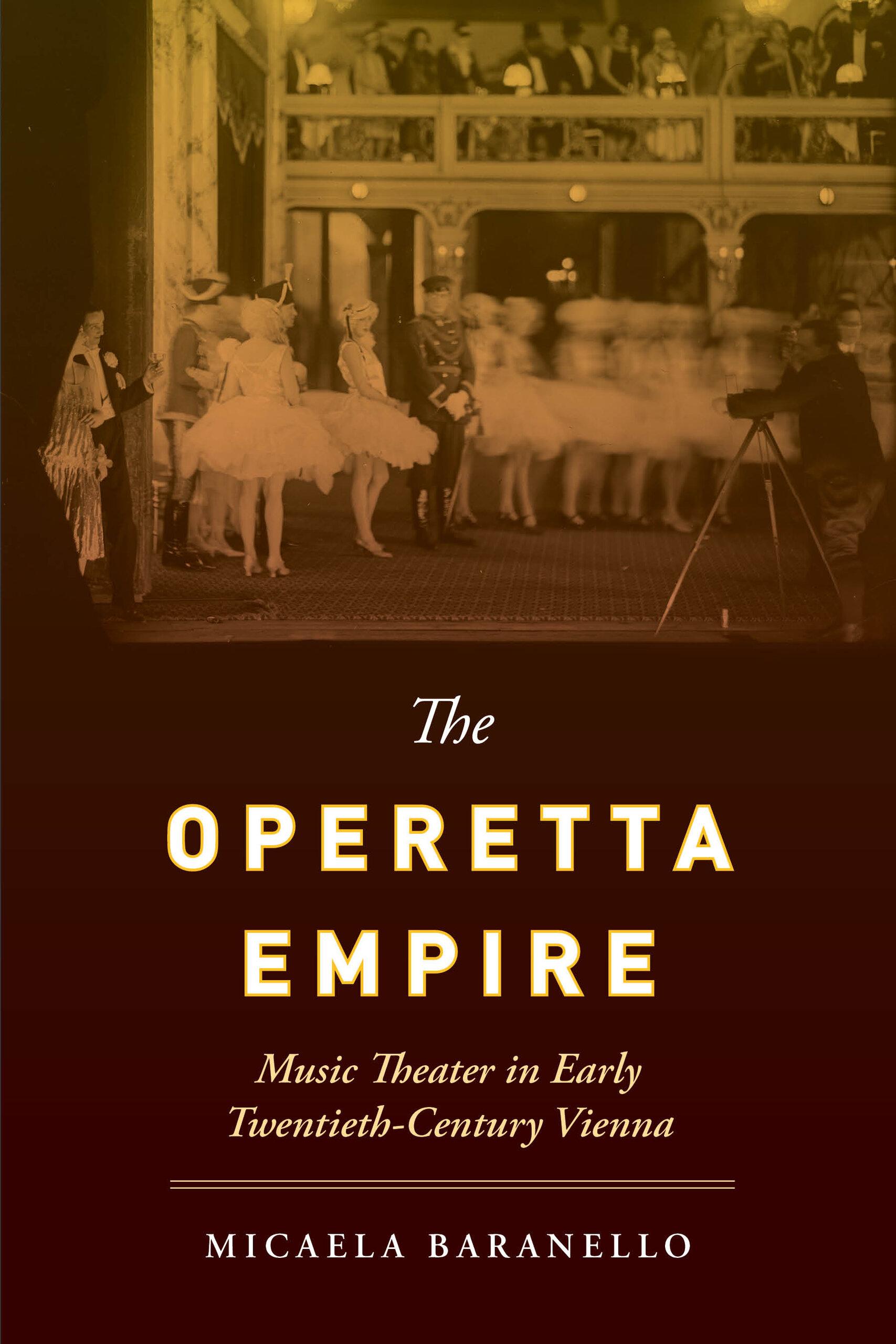
"When the world comes to an end," Viennese writer Karl Kraus lamented in 1908, "all the big city orchestras will still be playing The Merry Widow." Viennese operettas like Franz Lehár's The Merry Widow were preeminent cultural texts during the Austro-Hungarian Empire's final years. Alternately hopeful and nihilistic, operetta staged contemporary debates about gender, nationality, and labor. The Operetta Empire delves into this vibrant theatrical culture, whose creators simultaneously sought the respectability of high art and the popularity of low entertainment. Case studies examine works by Lehár, Emmerich Kálmán, Oscar Straus, and Leo Fall in light of current musicological conversations about hybridity and middlebrow culture. Demonstrating a thorough mastery of the complex early twentieth-century Viennese cultural scene, and a sympathetic and redemptive critique of a neglected popular genre, Micaela Baranello establishes operetta as an important element of Viennese cultural life—one whose transgressions helped define the musical hierarchies of its day.
"When the world comes to an end," Viennese writer Karl Kraus lamented in 1908, "all the big city orchestras will still be playing The Merry Widow." Viennese operettas like Franz Lehár's The Merry Widow were preeminent cultural texts during the Austro-Hungarian Empire's final years. Alternately hopeful and nihilistic, operetta staged contemporary debates about gender, nationality, and labor. The Operetta Empire delves into this vibrant theatrical culture, whose creators simultaneously sought the respectability of high art and the popularity of low entertainment. Case studies examine works by Lehár, Emmerich Kálmán, Oscar Straus, and Leo Fall in light of current musicological conversations about hybridity and middlebrow culture. Demonstrating a thorough mastery of the complex early twentieth-century Viennese cultural scene, and a sympathetic and redemptive critique of a neglected popular genre, Micaela Baranello establishes operetta as an important element of Viennese cultural life—one whose transgressions helped define the musical hierarchies of its day.
Betaal eenvoudig met kaart, Klarna, Apple Pay of Google Pay. Niet tevreden? Je hebt altijd 14 dagen bedenktijd. Lees meer in onze voorwaarden. Heb je vragen, mail ons dan via hello@memmo.org.
Memmo maakt studeren makkelijker – waar je ook bent ter wereld. Wij brengen je cursusboeken en slimme studietools samen op één plek: samenvattingen, quizzen, podcasts en flashcards. En Ted, je studievriend die antwoord geeft op alles wat je je afvraagt. Meer dan 50.000 studenten studeren hier al – gebouwd om je sneller te laten leren en minder stress te geven.
Misschien vind je dit ook leuk
Koop het boek0