
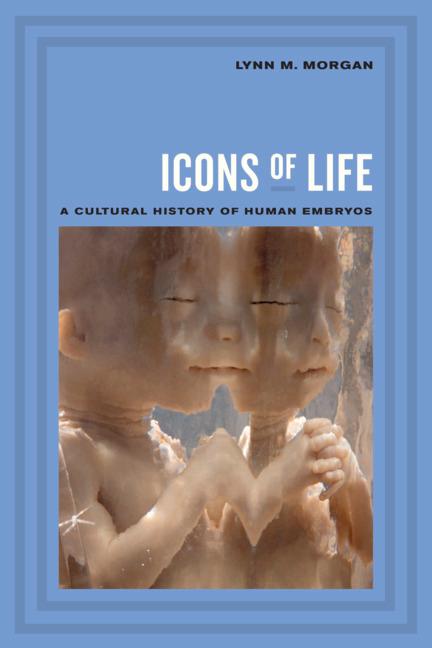
Icons of Life tells the engrossing and provocative story of an early twentieth-century undertaking, the Carnegie Institution of Washington's project to collect thousands of embryos for scientific study. Lynn M. Morgan blends social analysis, sleuthing, and humor to trace the history of specimen collecting. In the process, she illuminates how a hundred-year-old scientific endeavor continues to be felt in today's fraught arena of maternal and fetal politics. Until the embryo collecting project-which she follows from the Johns Hopkins anatomy department, through Baltimore foundling homes, and all the way to China-most people had no idea what human embryos looked like. But by the 1950s, modern citizens saw in embryos an image of "ourselves unborn," and embryology had developed a biologically based story about how we came to be. Morgan explains how dead specimens paradoxically became icons of life, how embryos were generated as social artifacts separate from pregnant women, and how a fetus thwarted Gertrude Stein's medical career. By resurrecting a nearly forgotten scientific project, Morgan sheds light on the roots of a modern origin story and raises the still controversial issue of how we decide what embryos mean.
Betaal eenvoudig met kaart, Klarna, Apple Pay of Google Pay. Niet tevreden? Je hebt altijd 14 dagen bedenktijd. Lees meer in onze voorwaarden. Heb je vragen, mail ons dan via hello@memmo.org.
Memmo maakt studeren makkelijker – waar je ook bent ter wereld. Wij brengen je cursusboeken en slimme studietools samen op één plek: samenvattingen, quizzen, podcasts en flashcards. En Ted, je studievriend die antwoord geeft op alles wat je je afvraagt. Meer dan 50.000 studenten studeren hier al – gebouwd om je sneller te laten leren en minder stress te geven.
Misschien vind je dit ook leuk
Koop het boek0