
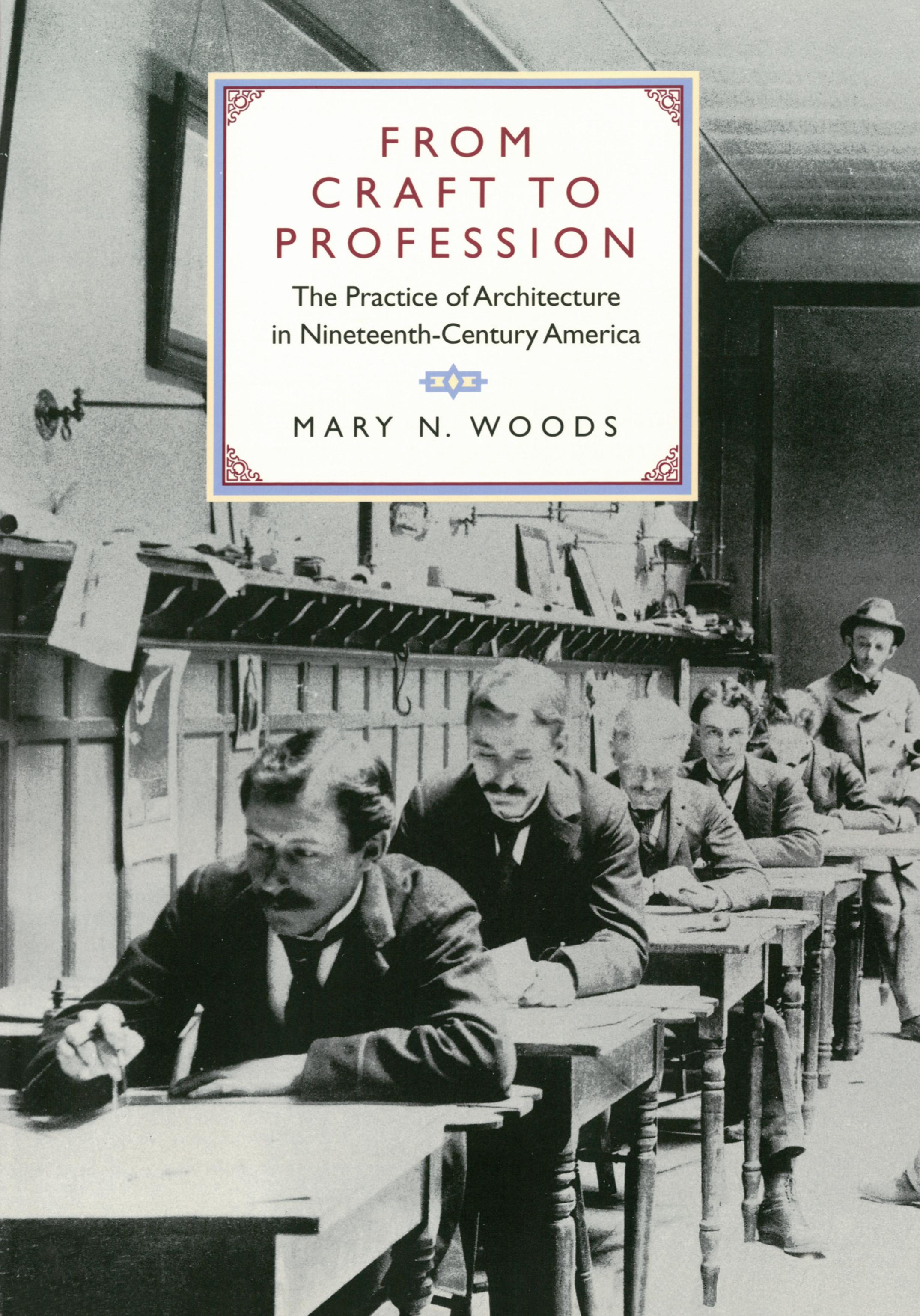
This is the first in-depth study of how the architectural profession emerged in early American history. Mary Woods dispels the prevailing notion that the profession developed under the leadership of men formally schooled in architecture as an art during the late nineteenth century. Instead, she cites several instances in the early 1800s of craftsmen-builders who shifted their identity to that of professional architects. While struggling to survive as designers and supervisors of construction projects, these men organized professional societies and worked for architectural education, appropriate compensation, and accreditation.
In such leading architectural practitioners as B. Henry Latrobe, Alexander J. Davis, H. H. Richardson, Louis Sullivan, and Stanford White, Woods sees collaborators, partners, merchandisers, educators, and lobbyists rather than inspired creators. She documents their contributions as well as those, far less familiar, of women architects and people of color in the profession's early days.
Woods's extensive research yields a remarkable range of archival materials: correspondence among carpenters; 200-year-old lawsuits; architect-client spats; the organization of craft guilds, apprenticeships, university programs, and correspondence schools; and the structure of architectural practices, labor unions, and the building industry. In presenting a more accurate composite of the architectural profession's history, Woods lays a foundation for reclaiming the profession's past and recasting its future. Her study will appeal not only to architects, but also to historians, sociologists, and readers with an interest in architecture's place in America today.
This is the first in-depth study of how the architectural profession emerged in early American history. Mary Woods dispels the prevailing notion that the profession developed under the leadership of men formally schooled in architecture as an art during t
In such leading architectural practitioners as B. Henry Latrobe, Alexander J. Davis, H. H. Richardson, Louis Sullivan, and Stanford White, Woods sees collaborators, partners, merchandisers, educators, and lobbyists rather than inspired creators. She documents their contributions as well as those, far less familiar, of women architects and people of color in the profession's early days.
Woods's extensive research yields a remarkable range of archival materials: correspondence among carpenters; 200-year-old lawsuits; architect-client spats; the organization of craft guilds, apprenticeships, university programs, and correspondence schools; and the structure of architectural practices, labor unions, and the building industry. In presenting a more accurate composite of the architectural profession's history, Woods lays a foundation for reclaiming the profession's past and recasting its future. Her study will appeal not only to architects, but also to historians, sociologists, and readers with an interest in architecture's place in America today.
This is the first in-depth study of how the architectural profession emerged in early American history. Mary Woods dispels the prevailing notion that the profession developed under the leadership of men formally schooled in architecture as an art during t
Betaal eenvoudig met kaart, Klarna, Apple Pay of Google Pay. Niet tevreden? Je hebt altijd 14 dagen bedenktijd. Lees meer in onze voorwaarden. Heb je vragen, mail ons dan via hello@memmo.org.
Memmo maakt studeren makkelijker – waar je ook bent ter wereld. Wij brengen je cursusboeken en slimme studietools samen op één plek: samenvattingen, quizzen, podcasts en flashcards. En Ted, je studievriend die antwoord geeft op alles wat je je afvraagt. Meer dan 50.000 studenten studeren hier al – gebouwd om je sneller te laten leren en minder stress te geven.
Misschien vind je dit ook leuk
Koop het boek0