
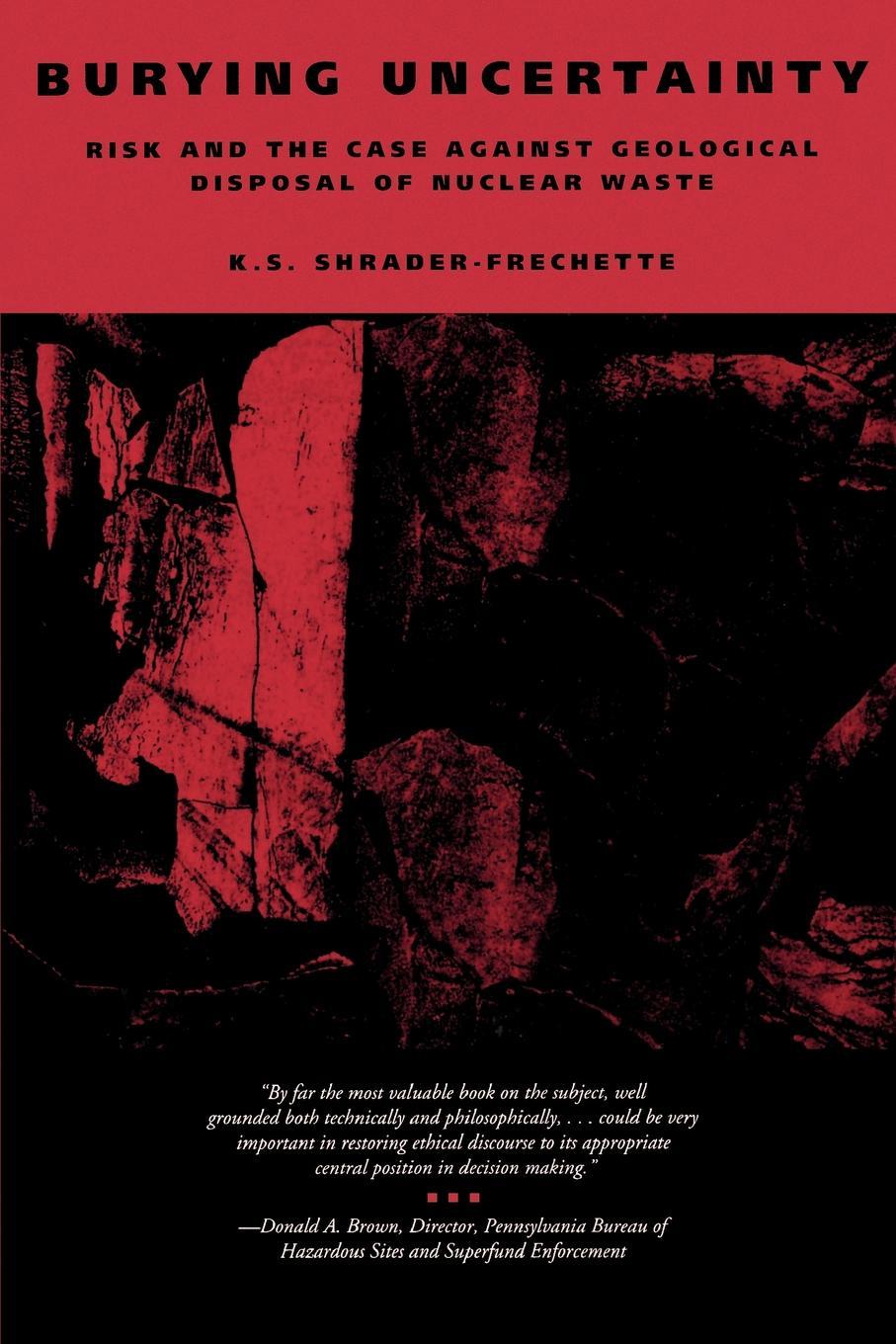
Shrader-Frechette looks at current U.S. government policy regarding the nation's high-level radioactive waste both scientifically and ethically.
What should be done with our nation's high-level radioactive waste, which will remain hazardous for thousands of years? This is one of the most pressing problems faced by the nuclear power industry, and current U.S. government policy is to bury "radwastes" in specially designed deep repositories.
K. S. Shrader-Frechette argues that this policy is profoundly misguided on both scientific and ethical grounds. Scientifically—because we cannot trust the precision of 10,000-year predictions that promise containment of the waste. Ethically—because geological disposal ignores the rights of present and future generations to equal treatment, due process, and free informed consent.
Shrader-Frechette focuses her argument on the world's first proposed high-level radioactive waste facility at Yucca Mountain, Nevada. Analyzing a mass of technical literature, she demonstrates the weaknesses in the professional risk-assessors' arguments that claim the site is sufficiently safe for such a plan. We should postpone the question of geological disposal for at least a century and use monitored, retrievable, above-ground storage of the waste until then. Her message regarding radwaste is clear: what you can't see can hurt you.
What should be done with our nation's high-level radioactive waste, which will remain hazardous for thousands of years? This is one of the most pressing problems faced by the nuclear power industry, and current U.S. government policy is to bury "radwastes" in specially designed deep repositories.
K. S. Shrader-Frechette argues that this policy is profoundly misguided on both scientific and ethical grounds. Scientifically—because we cannot trust the precision of 10,000-year predictions that promise containment of the waste. Ethically—because geological disposal ignores the rights of present and future generations to equal treatment, due process, and free informed consent.
Shrader-Frechette focuses her argument on the world's first proposed high-level radioactive waste facility at Yucca Mountain, Nevada. Analyzing a mass of technical literature, she demonstrates the weaknesses in the professional risk-assessors' arguments that claim the site is sufficiently safe for such a plan. We should postpone the question of geological disposal for at least a century and use monitored, retrievable, above-ground storage of the waste until then. Her message regarding radwaste is clear: what you can't see can hurt you.
Betaal eenvoudig met kaart, Klarna, Apple Pay of Google Pay. Niet tevreden? Je hebt altijd 14 dagen bedenktijd. Lees meer in onze voorwaarden. Heb je vragen, mail ons dan via hello@memmo.org.
Memmo maakt studeren makkelijker – waar je ook bent ter wereld. Wij brengen je cursusboeken en slimme studietools samen op één plek: samenvattingen, quizzen, podcasts en flashcards. En Ted, je studievriend die antwoord geeft op alles wat je je afvraagt. Meer dan 50.000 studenten studeren hier al – gebouwd om je sneller te laten leren en minder stress te geven.
Misschien vind je dit ook leuk
Koop het boek0