
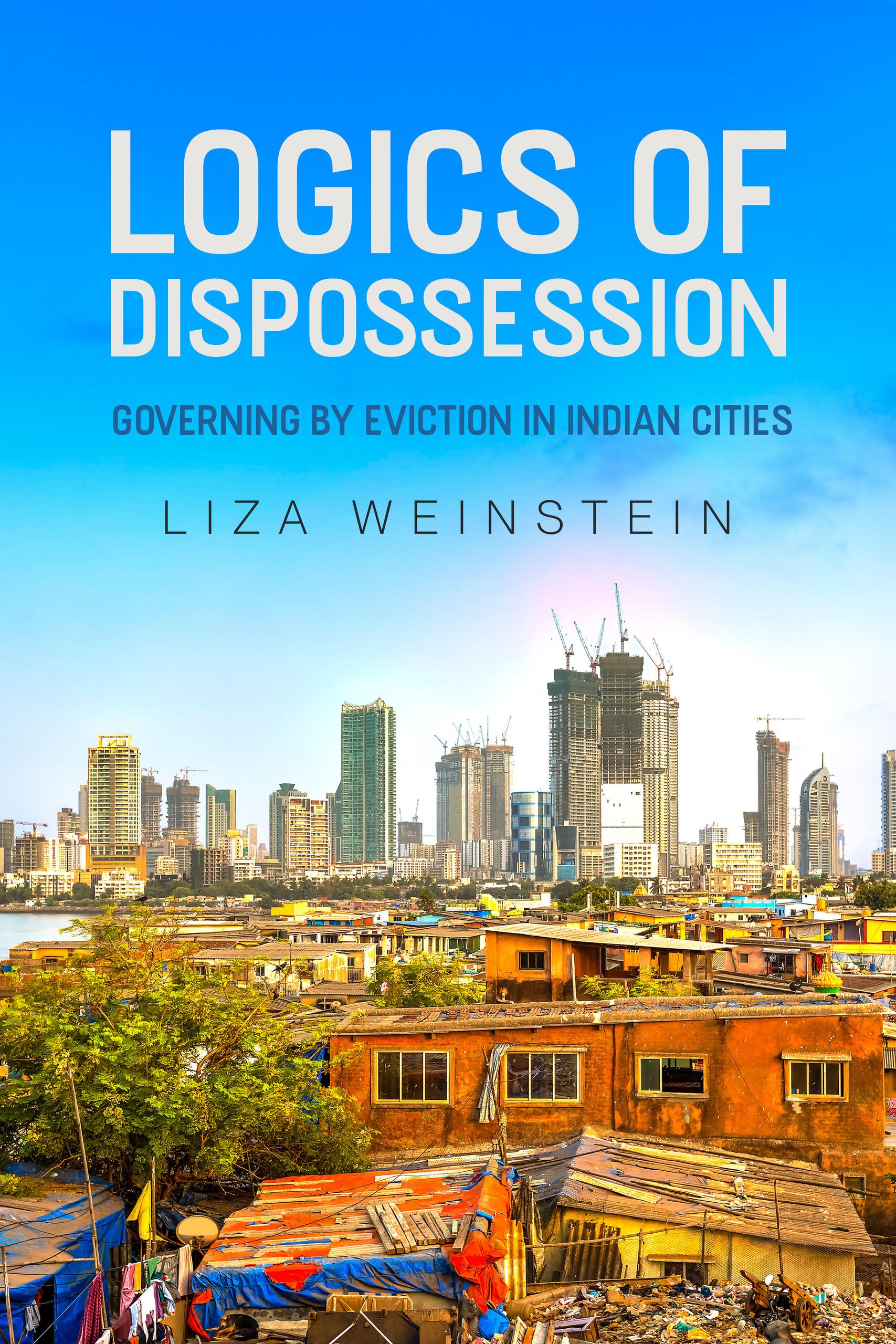
A new "bulldozer politics" has taken hold in many Indian cities, destroying neighborhoods and displacing city residents as it pursues a global city aesthetic. Presentist accounts might explain these evictions as emergent modes of capital accumulation, but Logics of Dispossession challenges that story and situates these acts in a longer historical durée.
Employing a comparative genealogical approach to historical analysis, Liza Weinstein traces the Indian government’s power to evict—from its beginnings in the colonial capitals of the British Raj, to developmental state-building projects and the rise of ethnonationalist politics, up to the present neoliberal conjuncture. Drawing on multicity fieldwork, archival research, and a database of more than a thousand eviction cases, Weinstein argues that evictions constitute a historically entrenched tool of city governance, motivated by a shifting set of intersecting, often contradictory logics that have accumulated over time and in locally specific ways across Indian cities aspiring to be world-class.
Betaal eenvoudig met kaart, Klarna, Apple Pay of Google Pay. Niet tevreden? Je hebt altijd 14 dagen bedenktijd. Lees meer in onze voorwaarden. Heb je vragen, mail ons dan via hello@memmo.org.
Memmo maakt studeren makkelijker – waar je ook bent ter wereld. Wij brengen je cursusboeken en slimme studietools samen op één plek: samenvattingen, quizzen, podcasts en flashcards. En Ted, je studievriend die antwoord geeft op alles wat je je afvraagt. Meer dan 50.000 studenten studeren hier al – gebouwd om je sneller te laten leren en minder stress te geven.