
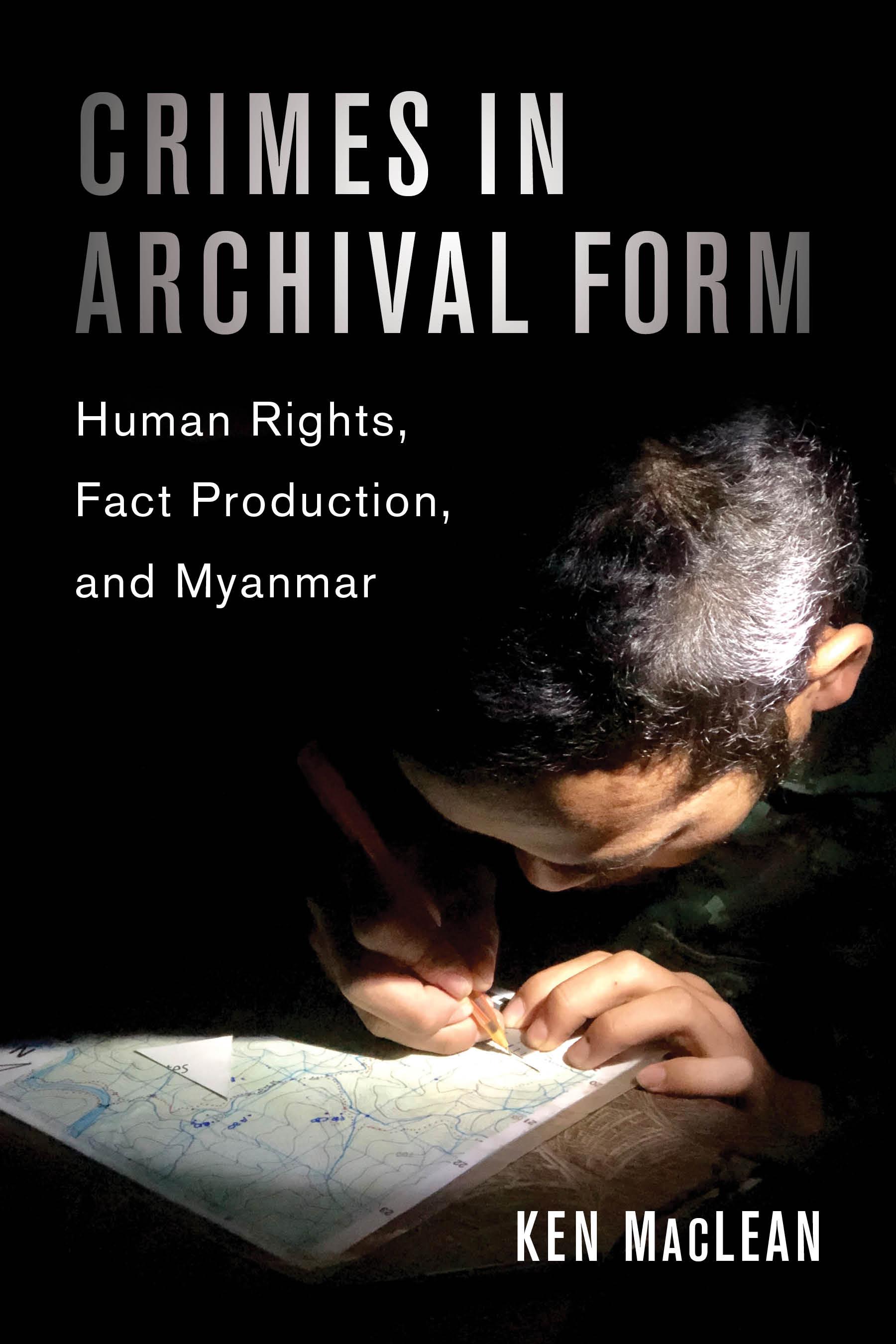
Crimes in Archival Form explores the many ways in which human rights "facts" are produced rather than found. Using Myanmar as his case study, Ken MacLean examines the fact-finding practices of a human rights group, two cross-border humanitarian agencies, an international law clinic, and a global NGO-led campaign. Foregrounding fact-finding, in critical yet constructive ways, prompts long overdue conversations about the possibilities and limits of human rights documentation as a mode of truth-seeking. Such conversations are particularly urgent in an era when the perpetrators of large-scale human rights violations exploit misinformation, weaponize disinformation, and employ outright falsehoods, including deepfakes, to undermine the credibility of those who document abuses and demand accountability in the court of public opinion and in courts of law. MacLean compels practitioners and scholars alike to be more transparent about how human rights "fact" production works, why it is important, and when its use should prompt concern.
Betaal eenvoudig met kaart, Klarna, Apple Pay of Google Pay. Niet tevreden? Je hebt altijd 14 dagen bedenktijd. Lees meer in onze voorwaarden. Heb je vragen, mail ons dan via hello@memmo.org.
Memmo maakt studeren makkelijker – waar je ook bent ter wereld. Wij brengen je cursusboeken en slimme studietools samen op één plek: samenvattingen, quizzen, podcasts en flashcards. En Ted, je studievriend die antwoord geeft op alles wat je je afvraagt. Meer dan 50.000 studenten studeren hier al – gebouwd om je sneller te laten leren en minder stress te geven.
Misschien vind je dit ook leuk
Koop het boek0