
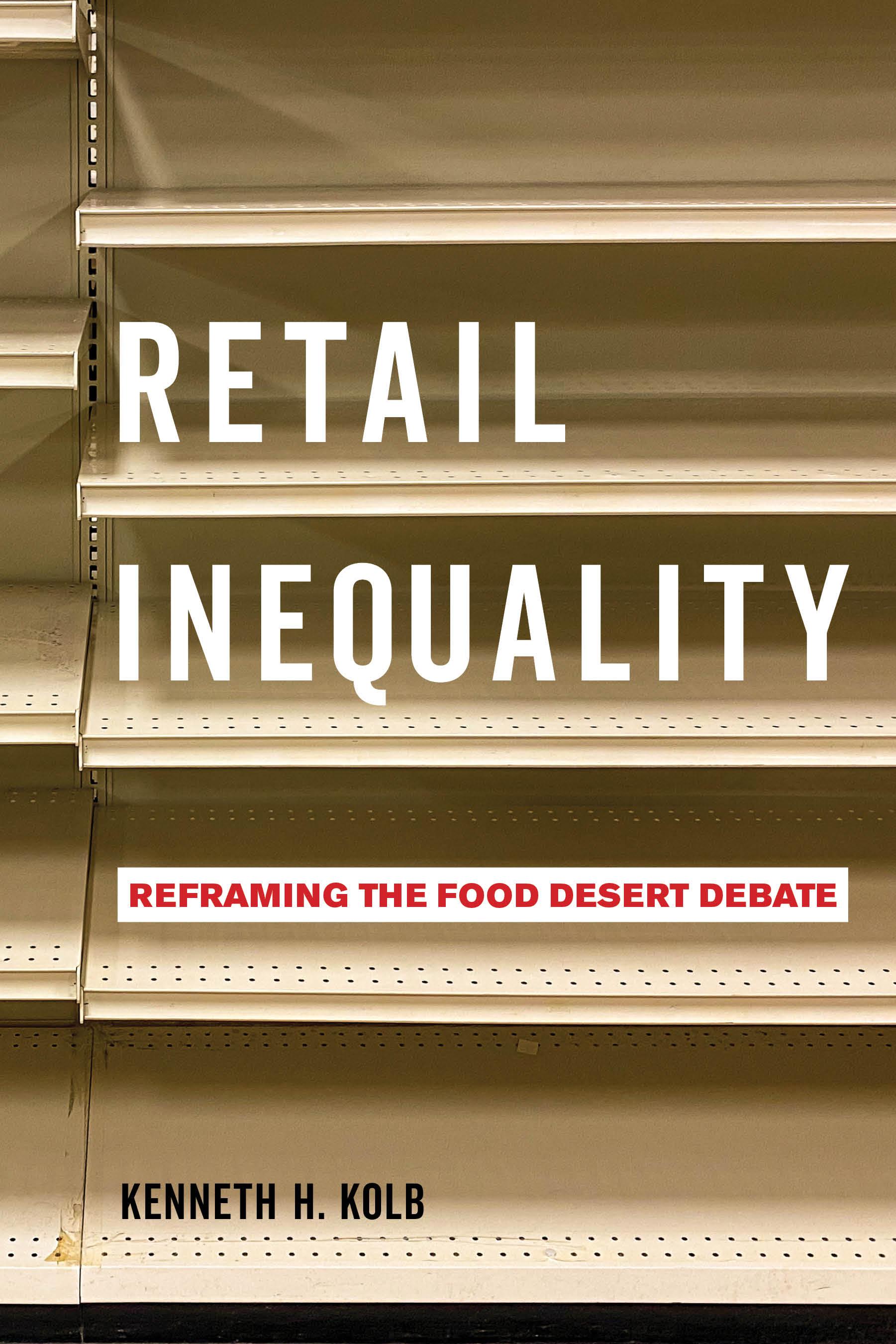
Retail Inequality examines the failure of recent efforts to improve Americans' diets by increasing access to healthy food. Based on exhaustive research, this book by Kenneth H. Kolb documents the struggles of two Black neighborhoods in Greenville, South Carolina. For decades, outsiders ignored residents' complaints about the unsavory retail options on their side of town—until the well-intentioned but flawed "food desert" concept took hold in popular discourse. Soon after, new allies arrived to help, believing that grocery stores and healthier options were the key to better health. These efforts, however, did not change neighborhood residents' food consumption practices. Retail Inequality explains why and also outlines the history of deindustrialization, urban public policy, and racism that are the cause of unequal access to food today. Kolb identifies retail inequality as the crucial concept to understanding today’s debates over gentrification and community development. As this book makes clear, the battle over food deserts was never about food—it was about equality.
Betaal eenvoudig met kaart, Klarna, Apple Pay of Google Pay. Niet tevreden? Je hebt altijd 14 dagen bedenktijd. Lees meer in onze voorwaarden. Heb je vragen, mail ons dan via hello@memmo.org.
Memmo maakt studeren makkelijker – waar je ook bent ter wereld. Wij brengen je cursusboeken en slimme studietools samen op één plek: samenvattingen, quizzen, podcasts en flashcards. En Ted, je studievriend die antwoord geeft op alles wat je je afvraagt. Meer dan 50.000 studenten studeren hier al – gebouwd om je sneller te laten leren en minder stress te geven.
Misschien vind je dit ook leuk
Koop het boek0