
A free open access book is available upon publication. Learn more at www.luminosoa.org.
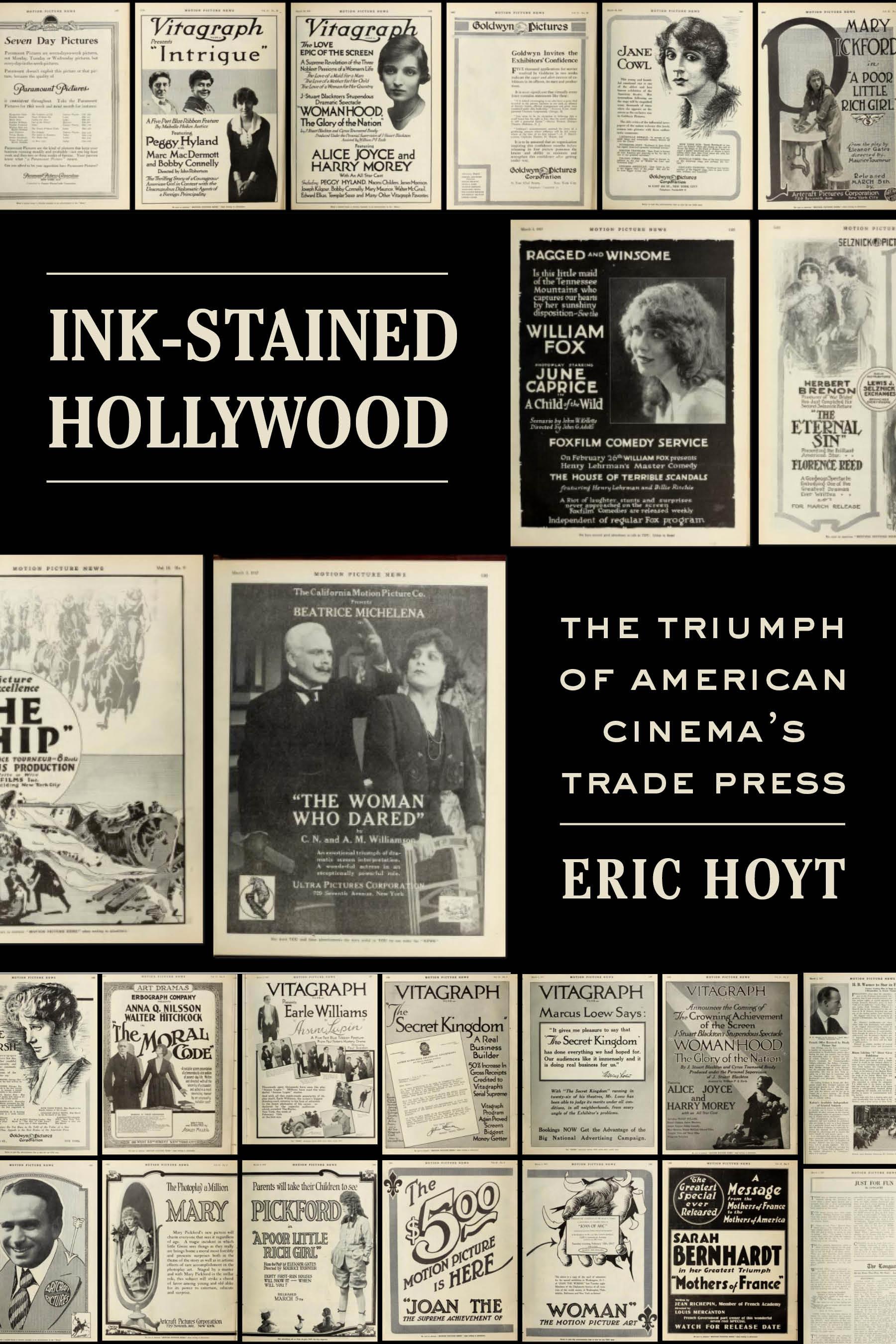
For the first half of the twentieth century, no American industry boasted a more motley and prolific trade press than the movie business—a cutthroat landscape that set the stage for battle by ink. In 1930, Martin Quigley, publisher of Exhibitors Herald, conspired with Hollywood studios to eliminate all competing trade papers, yet this attempt and each one thereafter collapsed. Exploring the communities of exhibitors and creative workers that constituted key subscribers, Ink-Stained Hollywood tells the story of how a heterogeneous trade press triumphed by appealing to the foundational aspects of industry culture—taste, vanity, partisanship, and exclusivity. In captivating detail, Eric Hoyt chronicles the histories of well-known trade papers (Variety, Motion Picture Herald) alongside important yet forgotten publications (Film Spectator, Film Mercury, and Camera!), and challenges the canon of film periodicals, offering new interpretative frameworks for understanding print journalism’s relationship with the motion picture industry and its continued impact on creative industries today.
For the first half of the twentieth century, no American industry boasted a more motley and prolific trade press than the movie business—a cutthroat landscape that set the stage for battle by ink. In 1930, Martin Quigley, publisher of Exhibitors Herald, conspired with Hollywood studios to eliminate all competing trade papers, yet this attempt and each one thereafter collapsed. Exploring the communities of exhibitors and creative workers that constituted key subscribers, Ink-Stained Hollywood tells the story of how a heterogeneous trade press triumphed by appealing to the foundational aspects of industry culture—taste, vanity, partisanship, and exclusivity. In captivating detail, Eric Hoyt chronicles the histories of well-known trade papers (Variety, Motion Picture Herald) alongside important yet forgotten publications (Film Spectator, Film Mercury, and Camera!), and challenges the canon of film periodicals, offering new interpretative frameworks for understanding print journalism’s relationship with the motion picture industry and its continued impact on creative industries today.
Betaal eenvoudig met kaart, Klarna, Apple Pay of Google Pay. Niet tevreden? Je hebt altijd 14 dagen bedenktijd. Lees meer in onze voorwaarden. Heb je vragen, mail ons dan via hello@memmo.org.
Memmo maakt studeren makkelijker – waar je ook bent ter wereld. Wij brengen je cursusboeken en slimme studietools samen op één plek: samenvattingen, quizzen, podcasts en flashcards. En Ted, je studievriend die antwoord geeft op alles wat je je afvraagt. Meer dan 50.000 studenten studeren hier al – gebouwd om je sneller te laten leren en minder stress te geven.
Misschien vind je dit ook leuk
Koop het boek0