
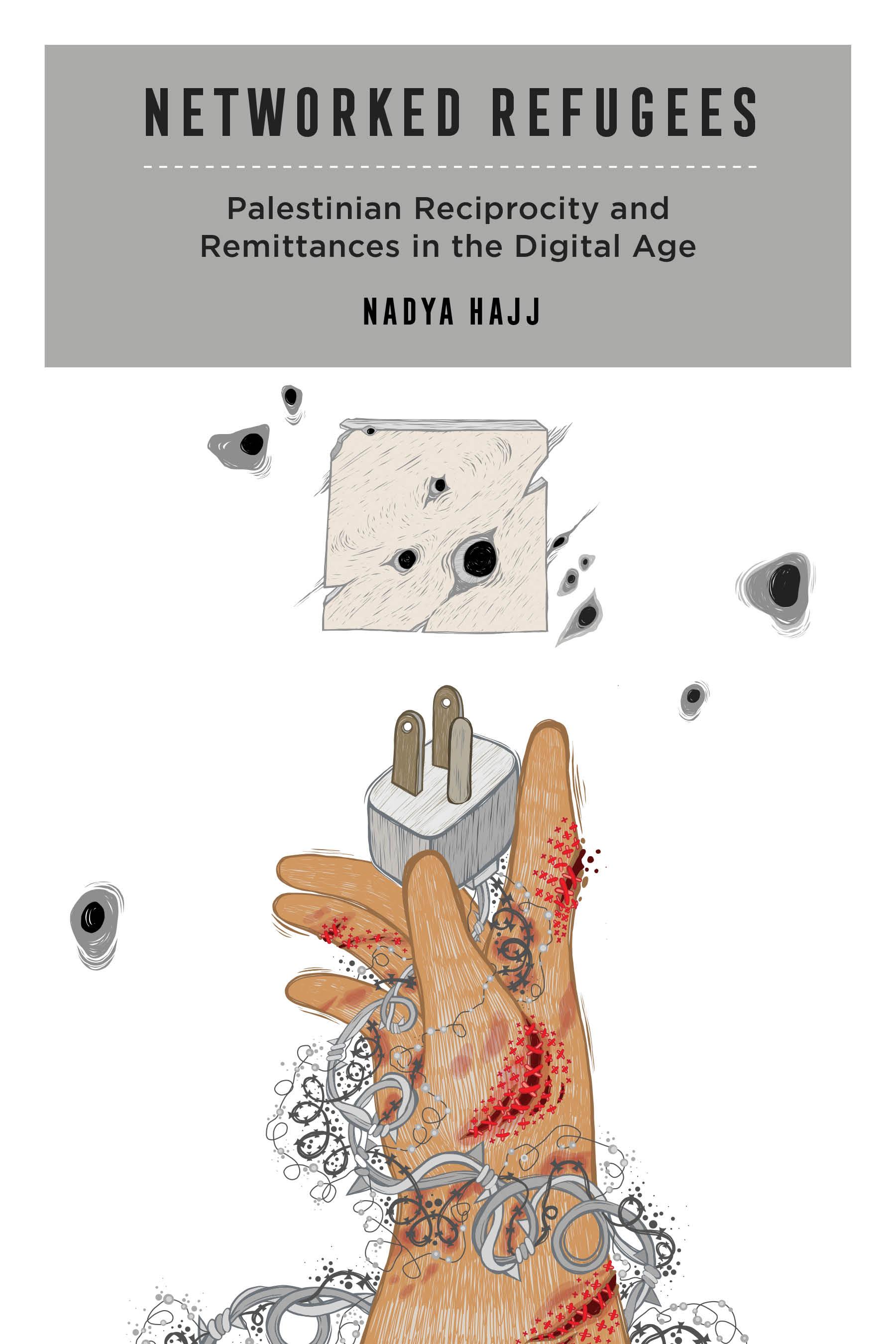
A free open access book is available upon publication. Learn more at www.luminosoa.org.
Almost 68.5 million refugees in the world today live in a protection gap, the chasm between protections stipulated in the Geneva Convention and the abrogation of those responsibilities by states and aid agencies. With dwindling humanitarian aid, how do refugee communities solve collective dilemmas, like raising funds for funeral services, or securing other critical goods and services?
In Networked Refugees, Nadya Hajj finds that Palestinian refugees utilize Information Communication Technology platforms to motivate reciprocity—a cooperative action marked by the mutual exchange of favors and services—and informally seek aid and connection with their transnational diaspora community. Using surveys conducted with Palestinians throughout the diaspora, interviews with those inside the Nahr al Bared Refugee camp in Lebanon, and data pulled from online community spaces, these findings push back against the cynical idea that online organizing is fruitless, emphasizing instead the productivity of these digital networks.
Almost 68.5 million refugees in the world today live in a protection gap, the chasm between protections stipulated in the Geneva Convention and the abrogation of those responsibilities by states and aid agencies. With dwindling humanitarian aid, how do refugee communities solve collective dilemmas, like raising funds for funeral services, or securing other critical goods and services?
In Networked Refugees, Nadya Hajj finds that Palestinian refugees utilize Information Communication Technology platforms to motivate reciprocity—a cooperative action marked by the mutual exchange of favors and services—and informally seek aid and connection with their transnational diaspora community. Using surveys conducted with Palestinians throughout the diaspora, interviews with those inside the Nahr al Bared Refugee camp in Lebanon, and data pulled from online community spaces, these findings push back against the cynical idea that online organizing is fruitless, emphasizing instead the productivity of these digital networks.
Betaal eenvoudig met kaart, Klarna, Apple Pay of Google Pay. Niet tevreden? Je hebt altijd 14 dagen bedenktijd. Lees meer in onze voorwaarden. Heb je vragen, mail ons dan via hello@memmo.org.
Memmo maakt studeren makkelijker – waar je ook bent ter wereld. Wij brengen je cursusboeken en slimme studietools samen op één plek: samenvattingen, quizzen, podcasts en flashcards. En Ted, je studievriend die antwoord geeft op alles wat je je afvraagt. Meer dan 50.000 studenten studeren hier al – gebouwd om je sneller te laten leren en minder stress te geven.
Misschien vind je dit ook leuk
Koop het boek0