
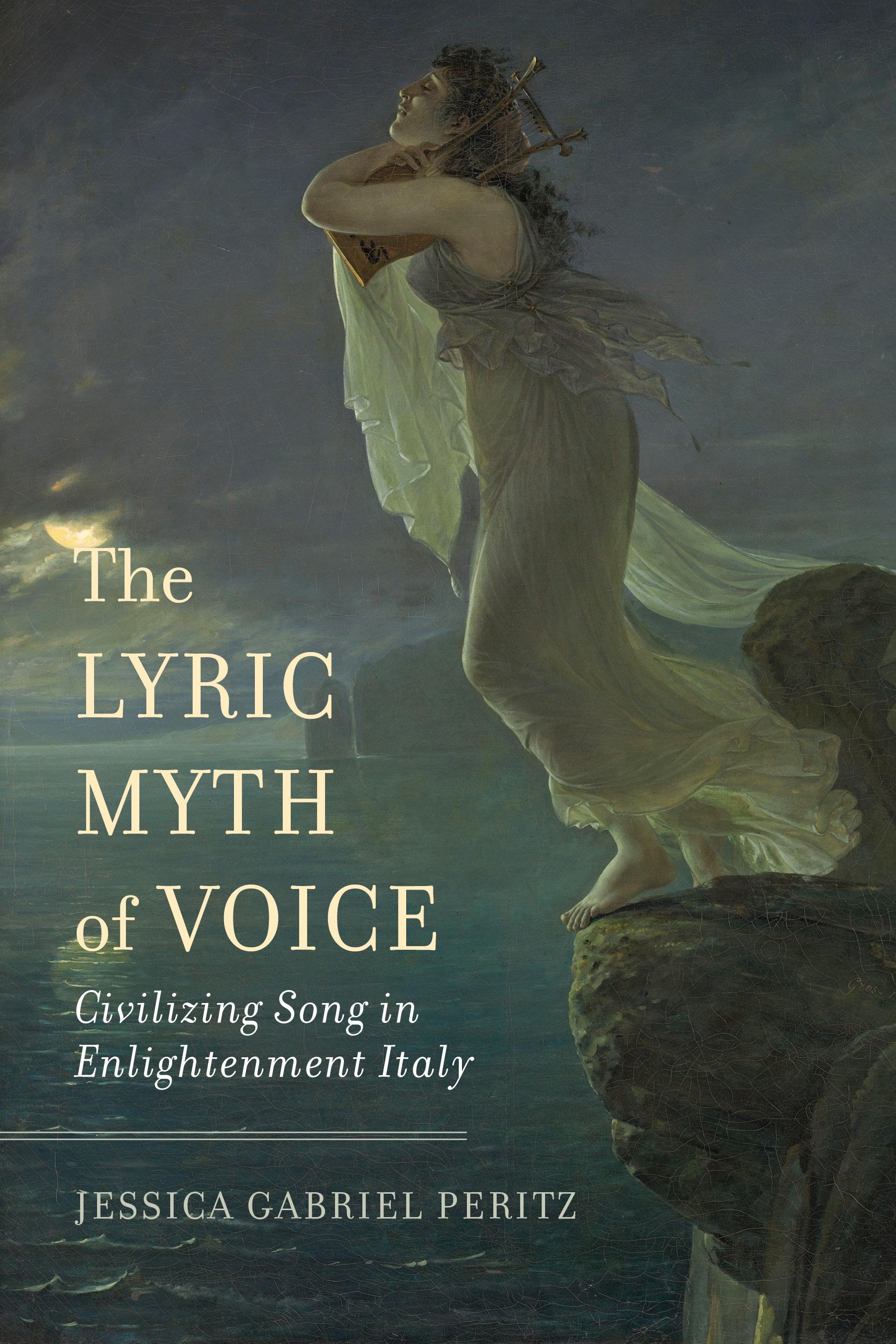
How did "voice" become a metaphor for selfhood in the Western imagination? The Lyric Myth of Voice situates the emergence of an ideological connection between voice and subjectivity in late eighteenth-century Italy, where long-standing political anxieties and new notions of cultural enlightenment collided in the mythical figure of the lyric poet-singer. Ultimately, music and literature together shaped the singing voice into a tool for civilizing modern Italian subjects. Drawing on a range of approaches and frameworks from historical musicology to gender studies, disability studies, anthropology, and literary theory, Jessica Gabriel Peritz shows how this ancient yet modern myth of voice attained interpretable form, flesh, and sound.
The publisher gratefully acknowledges the generous support of the AMS 75 PAYS Fund of the American Musicological Society, supported in part by the National Endowment for the Humanities and the Andrew W. Mellon Foundation.
The publisher gratefully acknowledges the generous support of the AMS 75 PAYS Fund of the American Musicological Society, supported in part by the National Endowment for the Humanities and the Andrew W. Mellon Foundation.
Betaal eenvoudig met kaart, Klarna, Apple Pay of Google Pay. Niet tevreden? Je hebt altijd 14 dagen bedenktijd. Lees meer in onze voorwaarden. Heb je vragen, mail ons dan via hello@memmo.org.
Memmo maakt studeren makkelijker – waar je ook bent ter wereld. Wij brengen je cursusboeken en slimme studietools samen op één plek: samenvattingen, quizzen, podcasts en flashcards. En Ted, je studievriend die antwoord geeft op alles wat je je afvraagt. Meer dan 50.000 studenten studeren hier al – gebouwd om je sneller te laten leren en minder stress te geven.
Misschien vind je dit ook leuk
Koop het boek0