
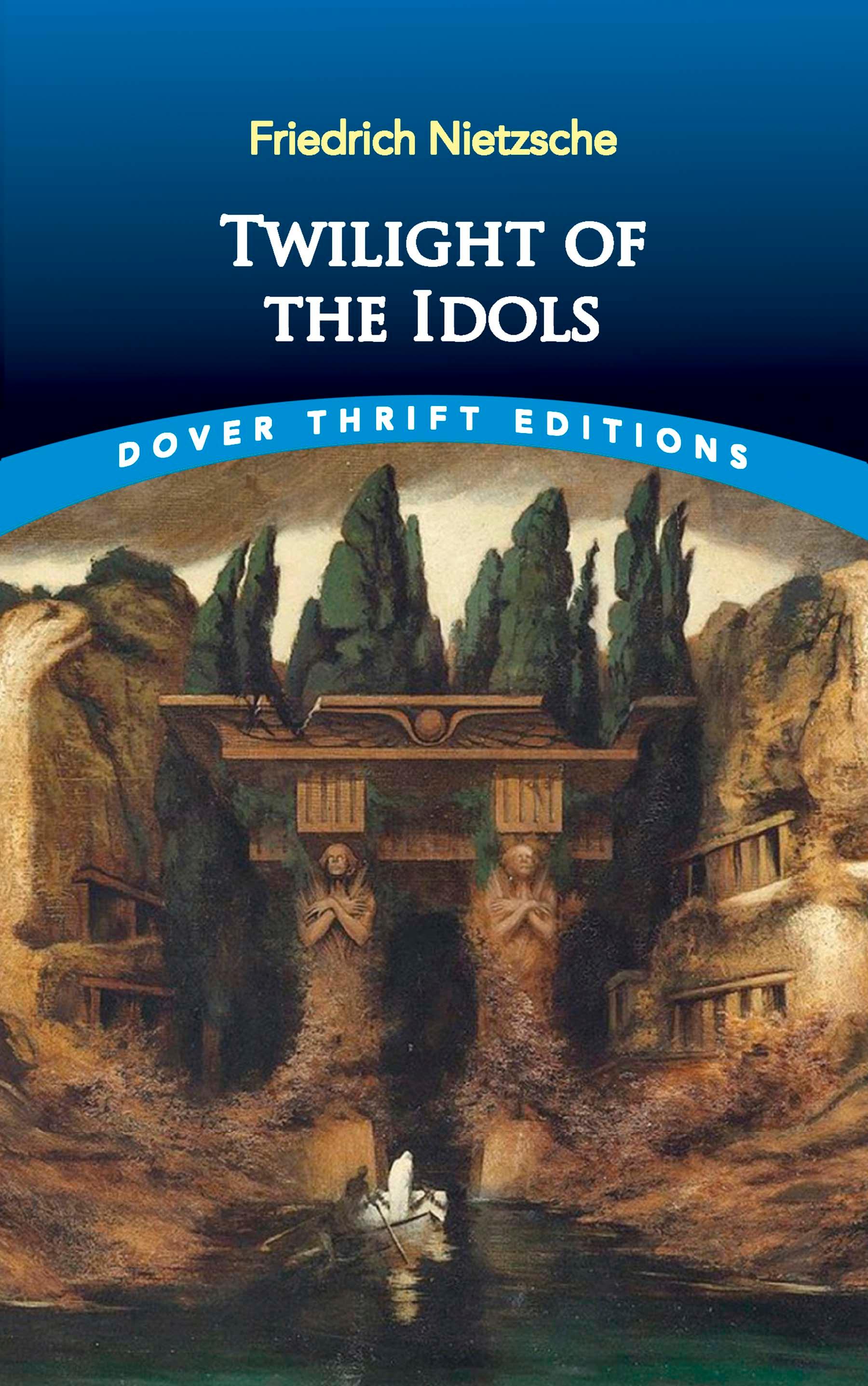
"Twilight of the Idols means that the old truth is on its last legs," declared Friedrich Nietzsche in this 1889 polemic. Forceful in his language and profound in his message, the philosopher delivered the nineteenth century's most devastating attack on Christianity. Intended by Nietzsche as a general introduction to his philosophy, it assails the "idols" of Western philosophy and culture, including the concepts of Socratic rationality and Christian morality.
Written while Nietzsche was at the peak of his powers, less than a year before the onset of the insanity that gripped him until his death in 1900, this work's proximity to the end of the author's career renders it a distinctive portrait from his later period. The source of the famous dictum, "Whatever does not kill me makes me stronger," it blazes with provocative, inflammatory rhetoric that challenges readers to reexamine what they worship and why.
Written while Nietzsche was at the peak of his powers, less than a year before the onset of the insanity that gripped him until his death in 1900, this work's proximity to the end of the author's career renders it a distinctive portrait from his later period. The source of the famous dictum, "Whatever does not kill me makes me stronger," it blazes with provocative, inflammatory rhetoric that challenges readers to reexamine what they worship and why.
Betaal eenvoudig met kaart, Klarna, Apple Pay of Google Pay. Niet tevreden? Je hebt altijd 14 dagen bedenktijd. Lees meer in onze voorwaarden. Heb je vragen, mail ons dan via hello@memmo.org.
Memmo maakt studeren makkelijker – waar je ook bent ter wereld. Wij brengen je cursusboeken en slimme studietools samen op één plek: samenvattingen, quizzen, podcasts en flashcards. En Ted, je studievriend die antwoord geeft op alles wat je je afvraagt. Meer dan 50.000 studenten studeren hier al – gebouwd om je sneller te laten leren en minder stress te geven.
Misschien vind je dit ook leuk
Koop het boek0