
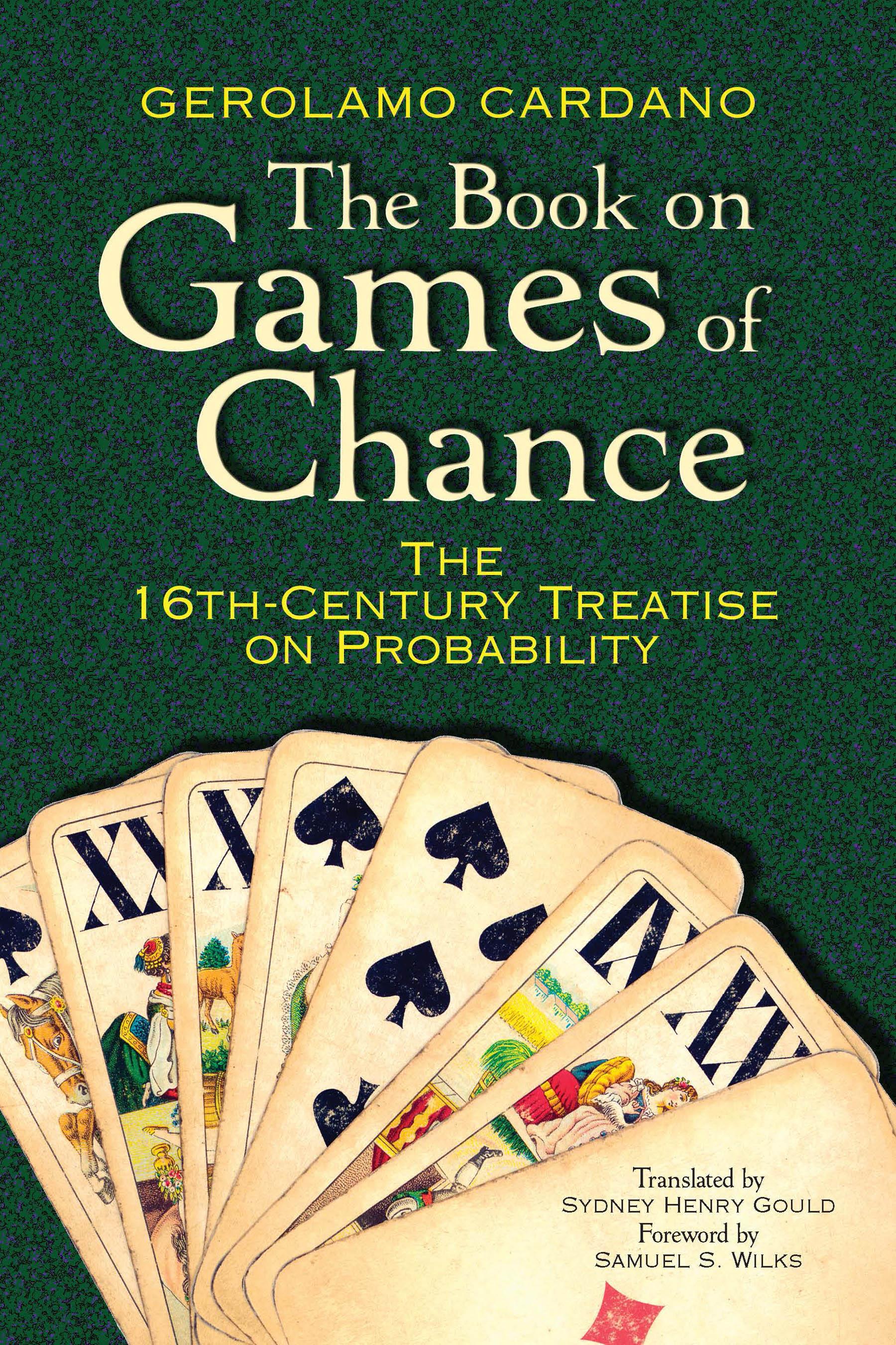
Mathematics was only one area of interest for Gerolamo Cardano ― the sixteenth-century astrologer, philosopher, and physician was also a prolific author and inveterate gambler. Gambling led Cardano to the study of probability, and he was the first writer to recognize that random events are governed by mathematical laws.
Published posthumously in 1663, Cardano's Liber de ludo aleae (Book on Games of Chance) is often considered the major starting point of the study of mathematical probability. The Italian scholar formulated some of the field's basic ideas more than a century before the better-known correspondence of Pascal and Fermat. Although his book had no direct influence on other early thinkers about probability, it remains an important antecedent to later expressions of the science's tenets.
Published posthumously in 1663, Cardano's Liber de ludo aleae (Book on Games of Chance) is often considered the major starting point of the study of mathematical probability. The Italian scholar formulated some of the field's basic ideas more than a century before the better-known correspondence of Pascal and Fermat. Although his book had no direct influence on other early thinkers about probability, it remains an important antecedent to later expressions of the science's tenets.
Betaal eenvoudig met kaart, Klarna, Apple Pay of Google Pay. Niet tevreden? Je hebt altijd 14 dagen bedenktijd. Lees meer in onze voorwaarden. Heb je vragen, mail ons dan via hello@memmo.org.
Memmo maakt studeren makkelijker – waar je ook bent ter wereld. Wij brengen je cursusboeken en slimme studietools samen op één plek: samenvattingen, quizzen, podcasts en flashcards. En Ted, je studievriend die antwoord geeft op alles wat je je afvraagt. Meer dan 50.000 studenten studeren hier al – gebouwd om je sneller te laten leren en minder stress te geven.
Misschien vind je dit ook leuk
Koop het boek0