
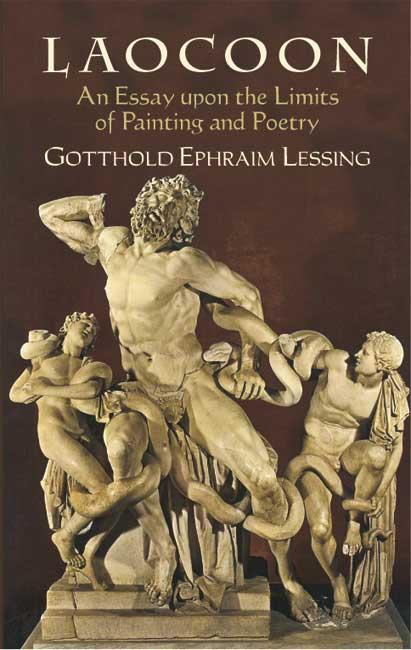
According to Greek mythology, Laocoon was a Trojan priest who, along with his two sons, offended the gods. As punishment, the three were strangled by sea serpents. The discovery in 1506 of an ancient Greek sculpture showing the three figures in their death agony not only gave rise to renewed interest in the classical period but also created repercussions in the art world. It was this work of art that German dramatist and critic Gotthold Lessing used as a point of reference for his essay Laocoon. Originally published in 1766, Lessing's inspired meditation on the distinguishing characteristics of painting and poetry became a turning point in the study of Western art. His essay on the origins, forms, and influences of these art forms aided in framing modern conceptions of the artistic medium and helped establish modernist views of the uniqueness of the individual arts.
A breakthrough vision in aesthetics, Laocoon is essential reading for anyone interested in poetry, art history, and the fine arts.
A breakthrough vision in aesthetics, Laocoon is essential reading for anyone interested in poetry, art history, and the fine arts.
Betaal eenvoudig met kaart, Klarna, Apple Pay of Google Pay. Niet tevreden? Je hebt altijd 14 dagen bedenktijd. Lees meer in onze voorwaarden. Heb je vragen, mail ons dan via hello@memmo.org.
Memmo maakt studeren makkelijker – waar je ook bent ter wereld. Wij brengen je cursusboeken en slimme studietools samen op één plek: samenvattingen, quizzen, podcasts en flashcards. En Ted, je studievriend die antwoord geeft op alles wat je je afvraagt. Meer dan 50.000 studenten studeren hier al – gebouwd om je sneller te laten leren en minder stress te geven.
Misschien vind je dit ook leuk
Koop het boek0