
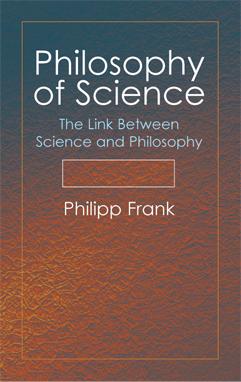
A great mathematician and teacher bridges the gap between science and the humanities in this exposition of the philosophy of science. Philipp Frank, a distinguished physicist and philosopher in his own right, traces the history of science from Aristotle to Einstein to illustrate philosophy’s ongoing role in the scientific process.
Suitable for undergraduate students and other readers, this volume explains modern technology’s role in the gradual erosion of the rapport between physical theories and philosophical systems, and offers suggestions for restoring the link between these related areas. Dr. Frank examines the ancient Greek concept of natural science to illustrate the development of modern science; then, using geometry as an example, he charts its progress from Euclidean principles through the interpretations of Descartes, Mill, Kant, and the rise of four-dimensional and non-Euclidean geometry. Additional topics include the laws of motion, before and after innovations of Galileo and Newton; perceptions of motion, light, and relativity through the ages; metaphysical interpretations of relativistic physics; the motion of atomic objects and the phenomena and formulations of atomic physics; and the principle of causality and the validation of theories.
Betaal eenvoudig met kaart, Klarna, Apple Pay of Google Pay. Niet tevreden? Je hebt altijd 14 dagen bedenktijd. Lees meer in onze voorwaarden. Heb je vragen, mail ons dan via hello@memmo.org.
Memmo maakt studeren makkelijker – waar je ook bent ter wereld. Wij brengen je cursusboeken en slimme studietools samen op één plek: samenvattingen, quizzen, podcasts en flashcards. En Ted, je studievriend die antwoord geeft op alles wat je je afvraagt. Meer dan 50.000 studenten studeren hier al – gebouwd om je sneller te laten leren en minder stress te geven.