
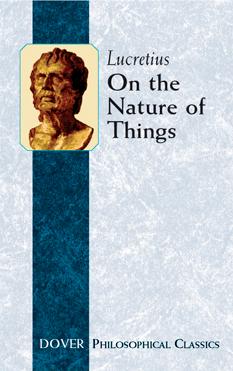
A Roman poet and philosopher of the first century, Lucretius sought to dispel what he considered the chief cause of unhappiness: fear of death and fear of the wrath of the gods. His great didactic poem in six parts, De Rerum Natura (On the Nature of Things), theorizes that natural causes are the forces behind earthly phenomena and dismisses the concept of divine intervention.
Lucretius’ discourse ranges from discussions of the motion of atoms, natural phenomena, and sensation, to assertions regarding free will and the soul’s relationship to the body. He maintains that the soul is a chance combination of atoms that perishes with the body, rather than a distinct, immaterial entity. The philosopher proposes completely natural causes for all earthly phenomena, suggesting that the world operates independently of divine agency and that fear of the supernatural is unfounded. Although he refrains from denying the existence of gods, Lucretius considers them unconcerned with human affairs and destiny.
Derived from the philosophical materialism of the Greeks, Lucretius’ writings remain the primary source for contemporary knowledge of Epicurean thought. A staple of introductory philosophy courses, this volume is also a masterpiece of Latin verse.
Lucretius’ discourse ranges from discussions of the motion of atoms, natural phenomena, and sensation, to assertions regarding free will and the soul’s relationship to the body. He maintains that the soul is a chance combination of atoms that perishes with the body, rather than a distinct, immaterial entity. The philosopher proposes completely natural causes for all earthly phenomena, suggesting that the world operates independently of divine agency and that fear of the supernatural is unfounded. Although he refrains from denying the existence of gods, Lucretius considers them unconcerned with human affairs and destiny.
Derived from the philosophical materialism of the Greeks, Lucretius’ writings remain the primary source for contemporary knowledge of Epicurean thought. A staple of introductory philosophy courses, this volume is also a masterpiece of Latin verse.
Betaal eenvoudig met kaart, Klarna, Apple Pay of Google Pay. Niet tevreden? Je hebt altijd 14 dagen bedenktijd. Lees meer in onze voorwaarden. Heb je vragen, mail ons dan via hello@memmo.org.
Memmo maakt studeren makkelijker – waar je ook bent ter wereld. Wij brengen je cursusboeken en slimme studietools samen op één plek: samenvattingen, quizzen, podcasts en flashcards. En Ted, je studievriend die antwoord geeft op alles wat je je afvraagt. Meer dan 50.000 studenten studeren hier al – gebouwd om je sneller te laten leren en minder stress te geven.
Misschien vind je dit ook leuk
Koop het boek0